 Business
How Hempel created a paint empire powering ships, skyscrapers and Farrow & Ball
Farrow&Ball is known for its outré colour names that include “Elephant’s Breath”, “Arsenic” and “Dead Salmon” but the company that owns the UK paint-maker has more than the luxury interiors market covered. Hempel a/s, a 109-year-old Danish company that owns various brands such as Crown, also manufactures cutting-edge coatings including those that adorn London’s Tower Bridge, the Louvre Abu Dhabi and Amsterdam’s Schiphol Airport. Elsewhere, its innovations can be glimpsed on the exteriors of oil rigs and gas platforms, as well as wind-turbine blades and ship’s hulls. All are rigorously formulated to reduce drag and pollution, and used for far more than their dazzling hues.Orange, the new black?Marine paintWatching paint dry has never been this fascinating or this lucrative: in 2023, Hempel’s revenue grew by a record 13.7 per cent to €2.4bn. “Our marine business has seen huge growth in the past three years,” says Michael Hansen, Hempel group president and CEO, when Monocle meets him just north of Copenhagen at the company’s headquarters in Lundtofte. “Shipping is experiencing a paradigm shift. The focus now is on the environment and decarbonisation. Our marine coatings are here to help these organisations achieve their goals. If we can solve the biggest challenges facing the wind-energy industry, there is potential for real growth there too.”The technicians in the research and development technology centre downstairs are busy tackling these issues. As Monocle dons anti-static overshoes, goggles and white coats, formulations specialist Camilla Holmberg informs photographer Mathias Eis that, due to the solvents used, this is an atex (“explosive atmosphere”) zone. For safety reasons, he’ll need to shoot at a minimum height of 80cms. First we visit the Colour Room, which is painted the most neutral of greys, where colours can be assessed under all sorts of lighting conditions. Next, Holmberg hands me a tongue of polyurethane paint that is used to coat the blades of wind turbines. Rain is an existential threat to offshore wind farms. In testing, Hempel subjects the blades to its helicopter-engined weather simulator and they come out looking like they’ve been gnawed by a colony of vicious rabbits. The paint’s rubbery texture counteracts this by enhancing wind resistance and providing protection against adverse conditions. Another of its miracle paints can help to maintain the integrity of burning buildings by puffing up to 50 times its original volume. It can withstand temperatures of 500c and is typically used for oil refineries but also coats the steel frame of Schiphol Airport.CEO Michael HansenChief people and culture officer Pernille Fritz VilhelmsenHansen is particularly proud of Hempel’s newer marine coatings: one protects hull interiors against brutal cargos while also being easy to clean, enabling a quick turnaround in ports; another super-slippery, self-polishing, silicone-based external paint can reduce drag, and therefore fuel usage, by more than 17.7 per cent. There’s even a special paint to smooth over vertical welds on a ship’s outer hull. “This is really cool because welds are structural and you can’t grind them down,” says Hansen, taking nerdy delight in the details. “Using our paint on welds alone can reduce fuel consumption by 2 to 3 per cent. And it’s biocide-free, so it’s non-toxic.” To demonstrate the challenges faced when applying marine paints, Holmberg shakes a bottle of tomato ketchup. “To paint a ship, you need to be able to spray it but it mustn’t run or drip,” she says. “Just like ketchup when you shake it out of the bottle, it has to flow with the perfect consistency.”In this context, Hansen’s move from shipping to paint, after 19 years at Danish shipping giant Maersk, doesn’t seem like such an odd career change. As he notes, Hempel started out in 1915 and Maersk was its first major customer. It was responsible for formulating the trademark “Maersk blue”. There are similarities between the company’s founders too. “Like Maersk, JC Hempel was a very entrepreneurial, outward-looking and innovative man: he went into the Middle East and Asia in the 1960s, for example,” says Hansen. “In addition to this, he firmly believed in moral responsibility.”Protective clothingThis mindset led Jørgen Christian Hempel, who died 1986 aged 91, to effectively give away his fortune in 1948 when he created the Hempel Foundation, which is still the sole owner of the company. “He did it primarily to protect the group from a hostile takeover but over the past 20 years it has grown as a philanthropic foundation, giving more and more to charity,” says Hansen. Many of Denmark’s larger organisations, such as Lego, Maersk and Carlsberg, have separate charitable foundations but it is rarer for an entire company to be owned and run by them. It does have implications when the company needs to raise funds, though. “True, it means that we have to live from our own retained earnings but we want to be the industry leader in sustainability. For that, it is an advantage to have the foundation’s long-term approach. Above all, the fact that our dividends go to philanthropy gives the people who work here a huge sense of purpose.”“The foundation is a major reason why so many people are drawn to roles at Hempel,” says Pernille Fritz Vilhelmsen, chief people and culture officer. “When we go to work, we know that our proceeds are not going straight to shareholders or an owner but towards doing good. It is a unique proposition in terms of employer branding and we do use it in recruitment.”Inside Hempel’s HQThis purpose-driven loyalty is one of the reasons why Hempel is considered to be among the best companies in Denmark to work for. Its HQ is appealing too. Built by Swedish architects Sweco, it has a central spiral staircase that emulates a can of paint being stirred. There is a fully staffed canteen and working hours are flexible. “Our Danish business is [financially] insignificant but we are still inspired by the country’s values,” says Hansen, who took over the top post a year-and- a-half ago. “We put our people first because innovation doesn’t come from nowhere. It also makes sense to be in Denmark. It’s easy to reach the rest of the world from Copenhagen; the reputation for quality of life here means that we attract overseas talent; and we have access to educated labour.” Since 2017 the Hempel Foundation has supported a science and technology centre within The Danish Technical University (DTU) that specialises in sustainable coating solutions. Once they have concluded their studies, many graduates join the organisation.7,500Employees in total (including 400 in the Danish HQ, 1,300 in the UK and 1,000 in China).400 millionTotal amount of paint produced in litres in 2023.6,500Number of Hempel paint standards.26Number of factories, plus 15 R&D centres.€21mThe Hempel Foundation: has total assets of €848m and donated a record €21m in 2022.Hempel’s business is divided into four sectors. Besides its marine, infrastructure and energy ventures, it also runs a decorative operation. Under this umbrella is paint and wallpaper company Farrow&Ball, which was founded in 1946 in Dorset, England, where it is still based. In 2021 it was bought by Hempel from US private-equity firm Ares for a reported €580m. The decorative arm also includes Crown Paints and JW Ostendorf in Germany. Farrow&Ball showrooms and Crown Decorating shops make up some of the 200 or so high street shops that Hempel runs in the UK. “Sometimes I wonder why we aren’t solely available online but the painting and decorating industry is surprisingly conservative,” says Hansen. “It turns out that professionals love to come into the shops for a cup of coffee before they start their day. It’s a big part of the appeal.” The decorative sector boomed during the coronavirus pandemic but has been hit by energy and material price hikes over the past two years. “There are still real challenges,” says Hansen. “Decorative hasn’t recovered yet.”Paint samples in the Colour RoomThe R&D lab’s paint storageAna Henriques, Hempel’s executive vice-president, head of decorative, is partly responsible for nurturing the sector back to health. Henriques joined the company from AB InBev in New York and has faith that the consumer brands can innovate their way back to greater revenues. “Farrow&Ball has always been a pioneer: we were the first to have showrooms rather than just traditional paint shops,” says Henriques.“We have also embraced working with colour consultants, e-commerce and collaborating with designers. These days we are very well connected with influencers and a have a more-than-two-million-strong following on social media. But what comes first is the quality of our products, which are known for their richness and depth of colour.” In total, Farrow&Ball uses 12 different pigments to blend its 132 current shades. Historically, pigments would have come from a wide range of unusual sources: “India Yellow”, for instance, was once made from the urine of cows fed on a diet of mango leaves. Today they are all chemically created. The company is in the middle of gently revamping its colour range – something that happens every five years. The expectation this year is that surfaces that were painted at the height of the coronavirus pandemic will be looking a little tatty. “It has been a while since everyone redecorated,” says Henrique.The air that we breathe in our homes and offices is a major topic among Danish architects right now. Volatile organic compounds (VOC), which are released when paint is applied, and over the longer term, are of particular concern. “Farrow&Ball was the first company to go 100 per cent water-based,” says Henriques. “People want their homes to feel healthy: they don’t want the smell of paint to linger, which means that they are going for low VOC options [Farrow&Ball paints are low- trace VOC – the best rating]. They also want to use colour to create specific moods.”What’s on the cards?Camilla Holmberg, formulations specialistCustomers can enlist the help of Farrow&Ball’s colour-consultancy service, which sees a representative visit homes to suggest a palette of calming tones or energising combinations. Before the end of the year the company will also offer an upgraded virtual service. It will then be possible to scan rooms, furniture included, on your phone and see the effect of different paints.As a global company, Hempel employs a cross-cultural approach to colour and finish. “We have colour-trend teams who keep an eye on textiles, fashion, ceramics and social media,” says Henriques. “For instance, customers in the Middle East look for external paint in natural shades, you won’t see dark colours on houses and finishes need to withstand sand erosion. Cooler climates tend to like yellowish hues. In hotter climates, where the use of whiter indoor lighting is more widespread, colours appear differently. Big, bold reds are having a moment in Germany but in Scandinavia everything is white. Different countries are also drawn to different textures: in the US, smooth surfaces appeal whereas in Germany more ‘movement’ is allowed.” Even the way in which professionals work with Hempel varies. “In Germany, people prefer to use an oval paint bucket so that they can dip the roller straight in, unlike in other places, where they use trays.”Looking ahead, the popularity of cold greys is waning and warmer tones might be returning to favour. But right now, Henriques detects a definite lust for coatings with depth. “Very rich green is having a bit of a moment,” she says, nodding emphatically.
 Business
Businesses we’d back: Eight ideas for Mexico that are ripe for the taking
As Latin America’s second-largest economy, Mexico has the expertise, population and market conditions to help your next venture succeed. We highlight some areas that are wide open for business.1.Manufacturing:AutomotiveA car maker to get the region moving Mexico has a long track record of making cars. Often that has meant foreign brands setting up plants in the north from which to export to the huge US market across the border. Given the country’s expertise and wealth of engineers, there is surely room for a viable Mexican motor brand that could service Latin America and, one day, export further afield. It could take inspiration from the Volkswagen Beetle that is beloved by Mexican drivers. And while its entry-level car would run on petrol, a “Made in Mexico” electric version could spotlight the country’s hi-tech manufacturing skills. This year has already seen the arrival of Mexico’s first e-bus, from exporter Megaflux and manufacturer Dina.2.Services:Animal wellnessA standout in pet careAbout 70 per cent of Mexican households have a pet and the industry is ripe for start-ups. The country might already have websites such as Pasea Perros, which finds dog walkers for owners as far afield as Campeche and Chiapas but there’s still an untapped market – whether it’s for a line-up of chihuahua-inspired grooming products or a treats brand that draws on Mexican speciality ingredients (see US start-up Wagwell, which has taken a big bite out of the market). There are also opportunities for an online-driven pet daycare service or a new breed of veterinary service. Los Angeles brand Modern Animal provides a successful model: offering pet pampering in a well-designed, trustworthy setting would quickly get tails wagging.3.Hospitality:RestaurantsA chain of tasty, stylish bistrosMexico has its fair share of star chefs, from trailblazer Enrique Olvera to fêted names such as Edo López, Lucho Martínez and Elena Reygadas. We would happily invest in a well-priced restaurant group that faithfully represents the country’s 31 states and capital, with outposts dotted around a few key cities and beach resorts across Mexico. The concept would be to reintroduce forgotten flavours from the regions to the country, with a view to a potential global roll-out. As for the look? Mexico has no shortage of graphic-design talent to work on the visual identity. For international inspiration, we like the style of Jack’s Wife Freda, whose playful aesthetics can be seen in its five outposts in New York.4.Transport:Traffic managementA company to shift cities up a gearThere have been recent mobility breakthroughs but what about a private company that could raise funds, offer consultancy services and work with municipalities to create greener town centres and reduce traffic? While we salute public transport initiatives such as Mexico City’s Cablebús gondola, it’s not solving the mess on the ground. Our plucky new start-up would assist existing mobility companies, look for new shared transit options, help implement traffic calming and improve bike-sharing infrastructure. From Nuevo León to Veracruz, regions are sprawling with urban growth and there’s a pressing need for some smart thinking to help keep cities moving.5.Cosmetics:Make-upA new face in the beauty worldAs consumer spending rises, the beauty market is poised and ready. Native brands, such as Xinú perfumery, have distinguished themselves by creating distinctive bricks-and-mortar experiences. But there’s an opening for other Mexican brands nationally, in the rest of North America and beyond. With readily available natural ingredients, such as prickly pear, cactus, tepezcohuite and blue agave, the stage is set for glowing success.6.Beverages:Soft drinksA healthy hydrator with a touch of fizzMexican Coke, which is made with real cane sugar, not corn syrup as it is in the US, is sought after far beyond the shores of Sayulita. But there’s an opportunity for healthy drinks from an independent maker too. We would love to see a range of organic drinks that draw on local herbs and flavours. Some upstart brands are already getting in on the action: take Oasis and its Club Suero electrolyte drink, which debuted earlier this year and features limes from Veracruz, agave syrup and salt. Our bubbly brew would take inspiration from the timeless label design of Monterrey’s Topo Chico.7.Retail:StationeryA shop to write home aboutMexico’s metropolises need a top-notch stationery shop in the vein of London’s Present&Correct or Milan’s Fratelli Bonvini – a place to get postcards and writing paper, and stock up on pens and notebooks. It would carry the best stationery from Germany to Japan and champion emerging Mexican brands. Mexico already has spots such as OfficeMax for work supplies and Papelería Lumen for art paraphernalia – but it’s missing a place to casually linger in. It would feature plenty of beautiful wrapping paper, much of it incorporating Mexican design and motifs – and, of course, a dedicated gift-wrapping service.8.Defence:Arms and aerospaceA regional security championMexico’s defence sector has the potential to boom, given its proximity to the vast US market. The Mexican government clearly feels the same – earlier this year the country’s president, Claudia Sheinbaum, opened the sixth edition of the capital’s aerospace fair, Famex. The fledgling Latin American and Caribbean Space Agency is based in the country too. The government is looking to push technological independence and develop “Made in Mexico” through its Plan México, including funding a range of smes. There is room for companies to make everything from whole planes to components, given that areas such as turbine production are growing. New players shouldn’t look to compete with the likes of the US, UK, Israel, Germany or Japan. Nascent plane maker Oaxaca Aerospace knows that well. Instead, they should focus on offering competitive prices that developing countries might be interested in.Read more from Monocle’s 2025 Mexico Survey:Inside Mexico’s creative gold rush: four high-growth industries to watchThree game-changing developments about to transform Mexico CityEntrepreneurs to watch: the forward-thinkers making new paths in Mexican industriesMeet the self-starters behind the clever hospitality boom in Oaxaca CityThe entrepreneurial trailblazers revitalising Guadalajara’s art sceneOaxaca Aerospace’s Mexican-built plane has beaten the odds and is ready for takeoff
 Business
Why Indonesia holds such appeal for businesses looking to manufacture outside of China
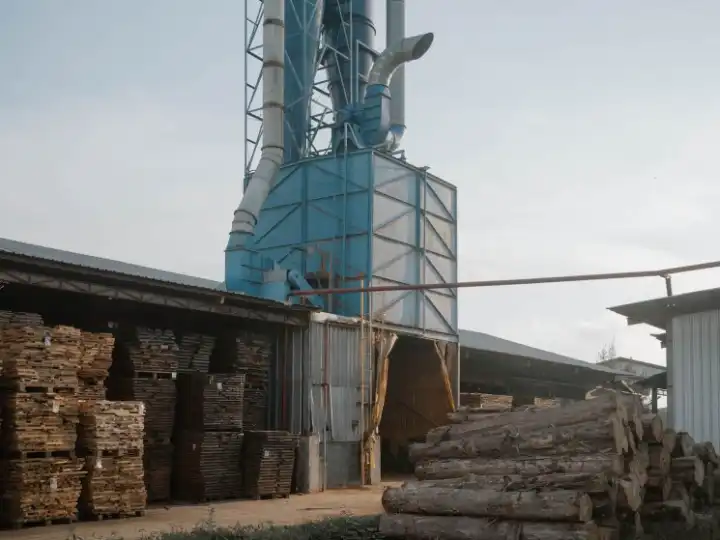
Spanning 12 palm-leaf volumes of text and illustrations, the Serat Centhini manuscript is one of the treasures of Indonesian literature. Written in the early 19th century under the supervision of the crown prince of Surakarta, it is both a story and an encyclopaedia in which characters wander the island of Java, learning about the world. Within the pages – alongside advice on Islamic practice, how to have great sex and farming – are detailed instructions for making use of teak trees. The number of branches, the surroundings of the tree, the presence of flowers and animals making their home in its trunk all influence what the wood is best used for, be it a column in a house to bring family harmony, the frame of a mosque to bring calm or a storage chest to bring wealth.Ethnicraft workers in TegalToday Indonesia is one of the world’s biggest teak producers. The timber is renowned for the beauty of its colour and grain, and the natural oil that helps to protect it from termites and the weather. These elements form the core of Philippe Delaisse’s business, Ethnicraft. All of its teak is sourced from responsibly and carefully managed forests. “The way that we win and ensure we’re competitive here is by embracing the raw materials and craftsmanship,” he says.Enchanted by beautiful teak objects he came across while travelling in Bali in 1995, Delaisse began to export antiques and local crafts, before quickly jumping into production. He started in 1996 in Rembang, East Java, where he found skilled woodworkers willing to work with recycled teak taken from old buildings. “They used very basic tools and a lot of great craftsmen were working barefoot,” says Delaisse. From this emerged a series of beautiful teak cabinets and, piece by piece, the rest of Ethnicraft, the business that he and his business partner, Benoit Loos, have built.Trade wars and the long legacy of the coronavirus pandemic have increasingly pushed companies making products in Asia to explore manufacturing options outside China. But so far, Indonesia has struggled to get a look in: complex trade barriers, tricky labour markets and corruption meant that many companies went elsewhere. Planks cure in the lumberyardBuffeted by the current trade war, the government is signalling reform. If it is serious, Indonesia has a lot to offer: a large and young labour force, a wealth of natural resources and pockets of deep expertise in various industries and crafts, of which woodworking is one. In a country where the previous president, Joko Widodo, built his fortune selling chairs, sofas and beds to the world, the hope is that others will follow.Ethnicraft is showing what’s possible. Its main operations hub of some 1,600 workers is in the coastal town of Tegal. The setup here might feature high-precision machines, sturdy safety shoes and modern production lines but the dedication to material and craft remains rooted in tradition. The process always begins with the wood. Ethnicraft buyers scour government-owned teak plantations across Java for the best logs; competition is fierce, with rivals trying to poach the choice specimens. Transported and stacked in the lumber yard, each log is tagged with a QR code with which the company can trace the exact provenance of the tree down to a few metres, ensuring both sustainable sourcing and careful inventory management.Logs are all marked with their point of originTeak is renowned for its toughnessNext the logs need to cure – dry out – until they’re ready to be worked on. With teak, this is traditionally done by simply leaving the fresh lumber out in the sun for about three to four months. Once it is sawn into planks, it then dries for another month before spending a final few weeks in a vast oven. Other woods such as jackfruit and mahogany have their own timelines. The process is painstaking because the products being made demand precision. Wood “breathes”, expanding and contracting fractionally – and planks with different moisture levels will do so in their own ways. For precise work, a moisture difference of more than 1 per cent is unacceptable. Then comes the craft. A few hundred kilometres away in Jepara, a workshop of about 600 staff produces furniture for some of Europe’s top luxury brands. Along this stretch of northern coast below the slopes of Mount Muria, woodworking skills are particularly sought after.Under a canopy of wooden beams, the process unfolds as the wood moves from turners to carvers and then to woodworkers, before being polished and varnished several times over. In their hands, simple planks, rough to the touch, are turned into exquisite tea boxes, sinuous ornaments and elegant furniture with a texture like heavy silk. And it is very much hands doing the work. The processes here involve minimal modern technology. While a few high-precision machines have been installed, sheer skill gives the workers an uncanny exactness in their movements. At one bench Marsudi leans over an exquisite panel of wood that will become a luxury chess set. He has worked here for 24 years and the work is in his blood. “My kid also works here as a carpenter,” he says.Philippe Delaisse poses at a workshop in JeparaThis tradition of generational craft is important, says Marsudi. “It helps a lot because of the skill that is needed; we’re working at a scale that is calculated down to the millimetre.” Everyone who enters the workshop must pass a rigorous test. But when such high levels of skill are required, growing up living and breathing wood helps. As we walk away, Marsudi bends over a gameboard that he is shaping. “He’s supposed to be a supervisor,” says Delaisse wryly. “But he just can’t stay away from doing some of the work himself.”This ingrained culture and the pool of expert labour that it sustains is attracting many brands to manufacture furniture in Indonesia. Despite a rocky few years in the global economy, the furniture industry remains strong. International and local entrepreneurs and businesses alike jostle for production capacity. This includes Giovanni Gallizio, who operates another furniture factory in Jepara, producing to order for clients globally. “The manual dexterity and skill of the people here is outstanding,” he says. “There are few places in the world that have anything similar.”China and Vietnam have reputations for being more efficient, says Gallizio, and that attracts many producers focusing on the low to middle end of the market. But he thinks that few manufacturers there possess the skills to match the sort of high-end work that can be produced in Indonesia’s teak heartlands. While Jepara is the zenith, skilled workers are present across Java. Back in Tegal, Delaisse’s other factory hums with activity: not just a world of sawdust, glues and varnishes but also one of metalworking, glass staining, stucco spreading and upholstery. “I’ve worked across the world and I’ve never seen a factory like this before,” says Steve Hauters, general factory manager, with a touch of pride.Skilled workers turn out products with precisionThe Bok chairThe quest to ensure quality at every stage means that as the product line has evolved – from elegant chairs in plain wood to minimalist modular sofas and elaborately patterned trays – the number of processes performed in house has grown too. From planks to pillowcases to packaging, everything is checked and rechecked at 65 quality-control stations. Such practices fly in the face of much received wisdom about how to do business: in the name of efficiency, the usual advice is to specialise. But Delaisse says that his philosophy is that the product is everything, ahead of concerns about efficiency or marketing. “If you have an interesting product, do not spend too many resources on sales. The world is a very big place. Customers will find you.”Other companies might come to discover the virtues of doing more in-house too. “I think futurewise, a vertically integrated brand is very valuable,” Delaisse says. Control over the process gives a wealth of data to analyse. And, in a world where fashion trends move fast, it lets companies experiment with greater ease.The beauty of the wood is visible on displayThe restless experimentation continues. In Tegal production of a new line of Morpho furniture for the music festival Tomorrowland is taking full advantage of the factory’s ability to combine wood, fabrics and metals in elegant designs. Back in Jepara, the firm has a new factory producing micro-cement. Spread it over foam and fibre glass, and you get a smoothly attractive and deceptively light stone-like slab that’s perfect for tabletops.Still, the older traditions remain. Decorative woodcarving – one of Java’s most appealing arts that adds grace notes to mundane objects such as doors, window shutters and benches – is seen throughout the Jepara workshop. A coffee table is chiselled with irregular lines that ripple before the eye. Exquisitely patterned cabinets are making a splash in the Chinese market. And a series of elegant one-off pieces, each unique in its design and patterning, waits quietly for the right customer to find them.This article originally appeared in the Opportunity Edition newspaper 2025, created in collaboration with UBS for its Asian Investment Conference in Hong Kong.
 Business
Long neglected on dusty shelves in Corsican bars, Cap Corse is now looking to make an international comeback
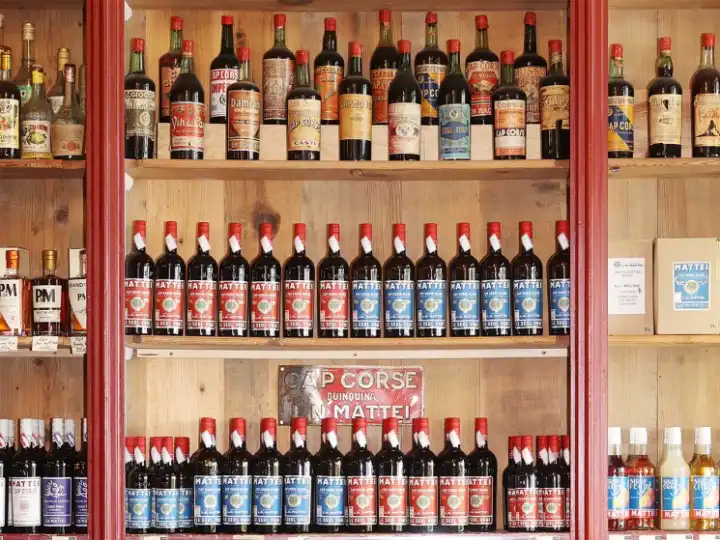
In Jacques Deray’s 1974 filmBorsalino & Cie, Alain Delon, the epitome of French cool in his hat and double-breasted suit, takes revenge on his enemies in glamorous locales, where dapper card sharks enjoy generous pours of ruby-red Cap Corse. After decades confined to the dusty shelves of old-fashioned bars on Napoleon’s native island, this Corsican liqueur is spritzing its way back to prominence.Cap Corse, which comes in white and red variants, is a wine-based drink infused with tree bark, citrus fruit and herbs. LN Mattei, the company that distils it, was founded in the early 1870s. The tipple reached the peak of its popularity during the early 20th century. In the decades after the Second World War, however, it steadily lost its lustre, becoming a drink that mostly appealed to older Corsicans who remembered its glory days. Monocle magazine, Mattei / Bastia / Corse 06-2025Inside the shopIn 2016, Corsica’s Groupe Boisson Corse acquired LN Mattei and kick-started a new era of expansion. It has gone from producing 80,000 bottles, sold almost exclusively in Corsica, to making 400,000 bottles today, 15 per cent of which are exported.“Over time, Cap Corse had evolved to emphasise the bitterness of cinchona bark,” says Patrice Gontier Ackermann, LN Mattei’s general manager. “To appeal to a broader audience, we revived the original recipe of our founder, Louis Napoléon Mattei, which balances sweetness and bitterness.” This change was informed by the tastes of the current golden age of mixology but also by the rise of the Aperol spritz, which, in less than a decade, has gone from a Venetian aperitivo to a global phenomenon. (Aperol is now the most valuable brand in the Campari group’s European portfolio.) “We recognised that offering a quirky Corsican alternative had significant potential,” says Gontier Ackermann.Mattei’s historic flagship shopHeritage brandingThe “Capo Spritz” is now served in bars across the island in large LN Mattei-branded glasses that will look familiar to Aperol fans. Expect to see these gracing a Mediterranean bar this summer. With just 350,000 or so permanent residents in Corsica and near-universal brand recognition on the island, LN Mattei needs to lean hard on exports for future growth. By 2030 it plans to double production to 800,000 bottles, with half sold outside Corsica.Cap Corse’s resurgence mirrors the island’s rise as a destination, increasingly attracting tourists from beyond France. The number of foreign visitors was up by 6 per cent last year, hitting an all-time high. LN Mattei’s shop in Bastia’s Place Saint Nicolas is an especially strong asset. Established by the company’s founder in 1872, it’s an officially recognised historical landmark. The shop, known for its dark-red open cabinets and exposed stone walls, stocks a wide array of Corsican products alongside the booze.An alcohol-free version of the apéritif is currently in the works. “That could become an important market for us in the years to come,” says Gontier Ackermann. After long being overlooked, Cap Corse is seeking to shake things up. “If we don’t keep moving, we could disappear.”
 Business
Three entrepreneurs who switched careers after being inspired by something in their kitchens
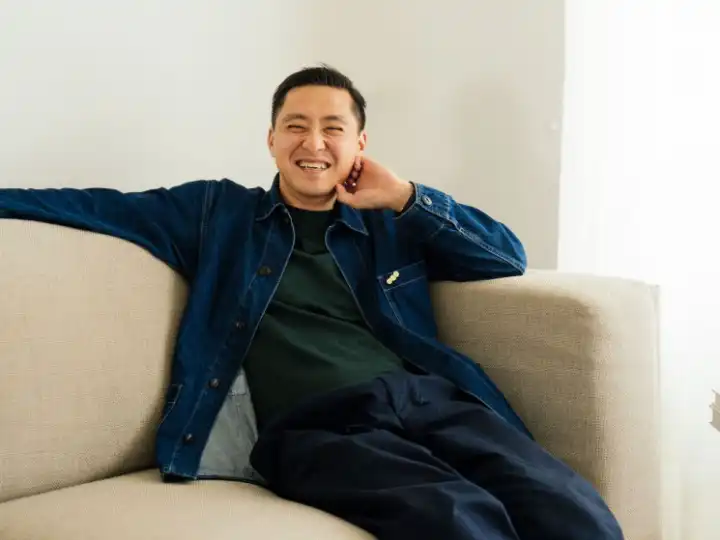
1.Leon Foo Singapore (Image: Morning)Singaporean entrepreneur Leon Foo left behind a career in accountancy to found his roastery, PPP Coffee, in 2009. But that wasn’t the end of his journey. “In 2018 I discovered how controlling the temperature, pressure and solubility of a coffee machine would create an opportunity to transpose features from a £15,000 industrial machine into a £300 capsule one,” says Foo. This led to the launch of the Morning Machine in 2018. The Nespresso-capsule-compatible contraption allows users to control the temperature, pressure and water-to-coffee ratio through an app. “We are still one of the very few companies that are laser-focused on coffee drinkers looking for convenience,” he says. Last year, Foo followed up the Morning Machine with the Morning Dream, which helps home brewers froth café-grade milk with precision. “We hope to become the Spotify of the coffee world. Just like how the streaming platform connects artists to listeners, we hope to connect roasters with coffee drinkers.” drinkmorning.com2.Shiza Shahid USA In 2012, Pakistani entrepreneur Shiza Shahid and Pakistani activist Malala Yousafzai founded the Malala Fund, which lobbied for funding for young women to access education, especially in countries where there are significant barriers. Shahid’s next solution was to a more domestic issue. Upon migrating to the US at the age of 18, she found an outdated kitchenware industry in which items were riddled with toxic chemicals. She launched cookware brand Our Place in 2019 alongside her husband, Amir Tehrani. “At the time, the kitchenware industry felt exclusive – we leaned into inclusivity,” says Shahid, who wanted her brand’s imagery to show the product in kitchens with more realistic, messier dishes. She was determined to prove that the kitchenware industry didn’t need to rely on sometimes toxic PFAs (chemicals widely used for their grease-resistant properties). “Our Place holds more than 200 patents but much of the sector is still doing things the old way,” she says.Its next foray is into kitchen appliances. “The UK market loves air fryers but most are made from plastic and coated in Teflon,” says Shahid. Her version is made from stainless steel and glass and uses a patented, non-toxic Thermakind coating. fromourplace.co.uk 3.Gen Terao Japan Rock musician-turned-entrepreneur Gen Terao founded home appliance brand Balmuda in 2003. “We realised that many kitchen appliances were just made for convenience,” he says. Tokyo-based Terao wanted to create something stylish as well as functional. Among a line-up that includes coffee makers and hot plates, the bestselling product is the much-copied toaster (two million sold and counting), which steams bread with precise temperature control to achieve a crispy exterior and a soft, pillowy interior. Terao is more inspired by his travels than by market research. “I see my music career as fundamentally the same as my work in kitchenware,” he says. “In my time as a musician, my perspective shifted. I moved from wanting to be the most popular hitmaker to aspiring to build a company that could genuinely contribute to people’s lives.Whether I’m holding a guitar or a screwdriver, these are tools that allow me to create something meaningful.” The toaster has been given a reboot this autumn, with better temperature control for perfect crunchiness, while the design “keeps the essence of the current toaster with a little more elegance”.
 Business
Reflect Orbital: The aerospace startup ‘turning on the sun’ at night
Ben Nowack is obsessed with energy. The 29-year-old Cape Cod-born has explored ideas such as damming the oceans to harness the tides, flattening mountains with gravity batteries and even latching onto the moon with a vast cable. In high school, he says, he built a kind of fusion reactor as a science project.One of his ideas is now poised to take flight. The CEO of Los Angeles-based start-up Reflect Orbital plans to launch thousands of satellites into space, equipped with mirrors that can reflect sunlight to Earth. By 2030 the company expects to have enough satellites in orbit to provide solar farms with 200 watts of energy per square metre – equivalent to the sun at dawn and dusk – during the evening hours of peak consumer demand. It also hopes to sell illumination to anyone who fancies an extra hit of sunlight, from concert and festival promoters to remote construction sites. “The range of applications for our service encompasses almost anything that an individual can do during daylight hours,” says Nowack.Inverted worldAtlas-like Ben Nowack with the world(almost) on his shouldersThe premise has its sceptics – Youtube astrophysicists relish taking pot shots at Reflect Orbital – but it has also attracted serious interest. The company recently landed $20m (€17.42m) in Series A funding, including investment from Silicon Valley heavy-hitters Sequoia Capital and Lux Capital, and had an audience with Hamdan bin Mohammed bin Rashid Al Maktoum, the crown prince of Dubai, about the project.There is an emerging global interest in what might become one of the US West Coast’s signature exports within this decade: bold, upstart energy businesses. Big Tech’s embrace of power-hungry artificial intelligence and cloud computing has generated voracious demand for electricity. Now there’s a gold-rush atmosphere among start-ups seeking to innovate clean energy sources, from mini-nuclear reactors to fusion power.But Reflect Orbital is looking for ways to better harness humanity’s oldest source of energy. When Monocle visits the company’s lab in Hawthorne, a small city in Los Angeles County that’s home to a slew of aerospace start-ups, Nowack and his CTO, Tristan Semmelhack, are eager to show off their progress since founding the business in 2021. (First, however, your correspondent must show proof of US citizenship and agree not to photograph certain aspects of the satellite-making process in order to comply with laws around technology with national-security implications.)Reflect Orbital team in Hawthorne, CaliforniaAs early as next spring, the company will launch a 100kg satellite packed into a box the size of a microwave. In space, the satellite will unfurl four triangular panels creating an 18-by-18-metre surface mounted to booms, attached like sails on a ship’s mast and position itself in orbit along the line separating daytime from night-time on Earth. Nowack and Semmelhack say that the system is reactive, allowing for precision angle changes within seconds as the Earth rotates. While this first satellite can only generate about four minutes of daylight over a 5km radius, the founders say that a ring of 18 satellites trained on the same location could illuminate one spot for an hour.The technology sounds like sci-fi but it has precedents. In 1993, Russian satellite Znamya cast a 5km-wide beam the strength of a full moon onto a narrow stretch of Europe for a few hours. In April 2024, Nasa launched the ACS3, a spacecraft that successfully unfurled a solar sail, which reflected sunlight to generate propulsion.Heliostat design engineer Robert SalazarScale model of satellites in continuous orbitThe key difference between Reflect Orbital and its space-agency predecessors is that the team wants to turn a profit. The company’s 22-person crew, expected to grow fast this year ahead of the first launch, builds its own components and does much of the fabrication itself on a lean budget. The prototyping workshop is a tinkerer’s paradise of Milwaukee tools, Fiskars rotary blades and Scotch tape, and a sample reflecting sail is laid out in a brand-new “clean room”. Semmelhack, a laid-back New Yorker climber with shaggy blond hair and wearing a flannel shirt, brings out a palm-sized scrap of the ultra-thin sail material and lets it float in the air like a plastic bag.Reflect Orbital’s do-it-yourself spirit is also evident in its car park, where the team shows off a homemade, 13-metre-long oven in which carbon fibres can be baked into booms. These coil like a tape measure, keep the reflective sail taut and weigh almost nothing.Satellite booms as light as a featherBuilding the oven cost a mere $40,000 (€34,000) and took the team a month. “If we were Nasa, this would be a million-dollar device – and the project wouldn’t make any money,” says Semmelhack. “We don’t have a huge amount of capital or time, so we have to build stuff quickly and cheaply that works well enough for our purposes.”One block away is SpaceX’s original headquarters and the tip of its first successfully recovered Falcon 9 booster can be seen peeking out from among the warehouses. Elon Musk moved SpaceX from California to Texas in 2024 but talent remains clustered in Hawthorne. “It’s very easy to get things built with machinists around every corner,” says Nowack. “If you need the perfect laser weld, the guy who did it for the SpaceX and Nasa missions is here.”Nowack interned at the pioneering commercial space company and its monument, put on permanent display by Musk in 2016, is a visible reminder that proof of concept is vital in this industry if you want to be taken seriously. The clock is ticking on Reflect Orbital’s deadline to load up a rocket and deploy its first sail in the spring of 2026. Yet the commercial space industry has become astoundingly cheap by satellite-launching standards – just $6,500 (€5,500) per kilogramme, or eight times cheaper than it was on Nasa’s now-retired space shuttles – and this is presenting an opportunity for space start-ups such as Reflect Orbital that want to get their projects off the ground.In order to deploy 100 satellites per rocket launch and reap what it believes could be billions of dollars in revenue, the company is banking on the cost of joining such launches continuing to decline. It is currently fine-tuning its design in a bid to get its satellite-production costs down from $2m (€1.7m) to less than $100,000 (€85,000) per unit.Mirror, mirror in my handSenior mechanical engineer Harsha Reddy preparing test printsSpace-age handkerchief that reflects the sun’s raysTesting reflective material under high tensionWhere that revenue will come from is still uncertain. But Reflect Orbital has its theories: municipalities seeking to save on street lighting, those engaged in search-and-rescue operations, construction firms operating in remote areas that want to extend the working day – and even Arctic villages hoping to make winters more bearable (bringing light to Russia’s Far North was one of Znamya’s goals).Objections to the technology aren’t hard to imagine, not least the light pollution and its potential to disrupt the rhythms of flora and fauna. Never mind the complaints from neighbours who don’t want dawn and dusk extended. The company has had preliminary conversations with environmental groups concerned with the matter but the founders say that the light will be dispersed rather than a harsh spotlight and the technology will allow them to quickly point the satellites elsewhere. “Give us four minutes,” says Semmelhack. “If everyone hates it, we can turn it off.”That might sound like a shaky business plan but there are more remote deployments of Reflect Orbital’s technology that make sense. Semmelhack imagines lighting up a pasture at the behest of a rancher or a ceremony for a sheikh. “We have the benefit of [working across] large areas of land that are controlled by very few people.”Reflect Orbital started taking applications for its service last autumn and, according to the company, was flooded with 164,000 requests from 157 countries. The company is planning a 10-location “world tour” once the first satellites are aloft, imagining the kind of mass gatherings that a solar eclipse can attract. Sunlight on demand is a large-scale parlour trick that will generate hype. But what drives Reflect Orbital’s mission is the energy business and making the most out of solar panels, says its chief strategy officer, Ally Stone. “It’s a way to unlock value from an already financed, already operating solar asset.”Mission control for real-time satellite monitoringReflect Orbital is one of many West Coast enterprises exploring new power-generation schemes as Big Tech pledges to stay true to its commitments to net-zero emissions. For years, data centres have been popping up along the hydropower-rich Columbia River Basin. But the current grid network is insufficient, says Julia DeWahl, a Los Angeles-based angel investor and co-founder of microreactor start-up Antares. “Forecasted energy demand is a step-function increase in growth largely driven by AI,” she says.X marks the spotEvery AI-powered Google search uses 10 times the energy of a traditional search. In response, its parent company Alphabet, alongside Amazon and Meta, have pledged to support efforts to triple nuclear-power production by 2050. Microsoft is resurrecting Three Mile Island, a Pennsylvania nuclear plant infamous for a 1979 meltdown. Meanwhile, there are entrepreneurs across North America working on small scalable nuclear reactors, such as the Bill Gates-backed Terrapower, which plans to be running in Wyoming by 2030. Elsewhere, in the Seattle area, start-up Helion is working on the world’s first fusion-power plant.“After so many years of software start-ups, there’s a boom around building real things,” says DeWahl. The location of many of these companies is no accident. “There has always been so much innovation on the West Coast.”Not every idea taken from a sci-fi novel will work but there’s smart money betting that Reflect Orbital can pull it off – with the potential for a considerable return on investment too. The founders expect public support for their solar spotlight, even if that might partly be tech-bro swagger. “If you zoom out and look at this with a bit of perspective,” says Semmelhack, “this is just so cool.”
 Business
Bringing industry back: Werkstadt Zürich’s model for city-centre manufacturing
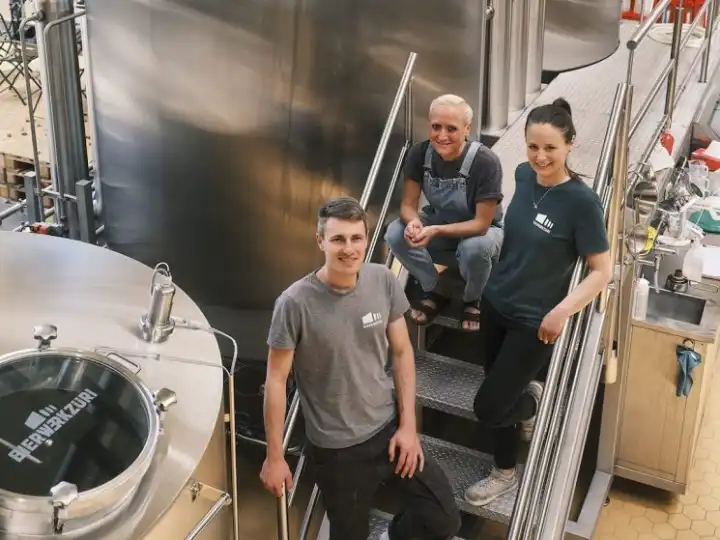
At the edge of Zürich’s historic Altstetten neighbourhood, in an area adjacent to one of Europe’s busiest rail hubs, industry is in full bloom. Monocle is inside a cavernous brick building for a “Factory Friday” open-house event on the Schweizer Bundesbahn (SBB) Werkstadt Zürich campus. The reinvention of this former SBB maintenance hall, known as Halle Q, is the first step in a wider transformation of the former railway-operations area into a thriving urban factory that offers space for businesses of various kinds to operate right in the city centre, rather than being banished to the outskirts.Bierwerk Züri team at Werkstadt Zürich“Assembly and manufacturing can work in an urban setting,” says Christian Kaegi, whose company, Qwstion, uses banana-plant fibres to create its bags. When Werkstadt Zürich opened in 2024, Qwstion was one of its first tenants. On the last Friday of every month, members of the public are invited for a behind-the-scenes look at the design, manufacturing and repair facilities of 10 businesses. About a third of Werkstadt Zürich’s tenants now participate in Factory Friday, helping to show how things are made.Werkstadt Zürich’s brick exteriorLaflor chocolates“Today there is a disconnect between the products that people consume, how they are made and what they are made from,” says Kaegi, who now runs the open-house initiative to make production more transparent to those outside the industries.As well as Qwstion’s facilities, Werkstadt Zürich is home to natural cosmetics label Soeder, gin distillery Deux Frères and young chocolatier Laflor. Each of these companies was born and bred in Switzerland’s largest city. The development is a result of a federal mandate for SBB to generate returns from its substantial property portfolio and a policy strategy by local politicians to preserve zones for urban production in the centre of Zürich, rather than allowing it to be dominated solely by white-collar offices and housing, says Ben Pohl, an urban designer from Denkstatt Sàrl.Christian Kaegi of QwstionNeumühle clothingIn 2016, Denkstatt Sàrl – now also a tenant at Werkstadt Zürich – and fellow Zürich-based urban designers kcap were commissioned to define and then design the project,” says Pohl. “One of the main reasons for their failure is a lack of a proper place to scale.” That’s why Werkstadt Zürich’s spaces range from modest 100 sq m rooms to 3,000 sq m units with eight-metre-high ceilings, giving tenants plenty of room to grow.They held a series of workshops with nascent and would-be urban manufacturers who helped to inform the design. The idea was to build a learning ecosystem that would support planners, the owner and tenants as part of a thriving whole. “It is a community for creation,” says Andreas Fehr, co-founder of apparel company Neumühle, another business that has joined the hub. Though factories disappeared from most European city centres decades ago, Werkstadt Zürich is encouraging entrepreneurs to base themselves in the heart of Zürich once again. Want more stories like these in your inbox?Sign up to Monocle’s email newsletters to stay on top of news and opinion, plus the latest from the magazine, radio, film and shop.Your EmailSubscribe
 Business
Case Study 2.0: The grassroots initiative to rebuild a more resilient Palisades
About 30km west of downtown Los Angeles, the Pacific Palisades was once a bucolic enclave famous for its design-forward addresses and illustrious residents. But in January the area was hit by the worst wildfires in the city’s history – almost 7,000 buildings were destroyed. But as the flames subsided, property-developer brothers Jason and Steven Somers, third-generation Angelenos, set out to help save the neighbourhood.The Somers brothers decided that the best way to rebuild quickly without making aesthetic sacrifices was to take inspiration from the Case Study Houses, a mid-century initiative that gave the city so many of its landmark residences, from the Eames House to Pierre Koenig’s Stahl House. The name of the brothers’ ambitious project? Case Study 2.0.Chimneys are all that remain of some propertiesJason and Steven Somers“We want to create cost-effective, time-efficient and fire-resilient solutions that are also beautiful,” Jason tells Monocle from behind the steering wheel of his electric Range Rover. The brothers are in the Pacific Palisades to meet with potential clients and contributing architects. Outside, solitary brick chimneys surrounded by heaps of ash and rubble dot the streets.“No situation is more critical than building back a community,” says Jason. The Somers brothers are the owners of Crest Real Estate, an agency based nearby, which specialises in managing the process of obtaining permits for property developments. They also have a deep knowledge of southern California’s arcane land-use codes, as well as a handy network of architects. “Our company is based on fast-tracking the development process,” he says.The aim is to build 200 houses. More than 50 designs have been commissioned so far, including a Spanish-colonial-style property with terracotta roofing and a gabled three-bedroom home with a pool and guest house. Protecting homes against fire is a must. Architect Michael Kovac, whose home we visit on the trip, explains the importance of fireproofing tweaks, including lava-rock landscaping and ember-blocking vents.The mark of a slow recoveryThe brothers check in on Doug Hafford, whose 1940s bungalow burnt down, leaving only its garage standing. Hafford is keen on an L-shaped design with a glass-enclosed great room. Steven estimates that it will cost between $650 and $800 (between €570 and €710) per square foot, 20 per cent less than a custom build. “It’s about time as much as money,” says Hafford. “We were looking for an à la carte menu like this.”The Pacific Palisades still faces headwinds. More than 200 lots have been put on the market as property owners seek to cut their losses. But having worked here their entire careers, the brothers believe that a critical mass of residents will remain. “It will feel like home again five years into the programme,” says Steven. “By year eight, the Palisades will be the most desirable neighbourhood in LA.” To achieve such a remarkable turnaround, speed is of the essence.Want more stories like these in your inbox?Sign up to Monocle’s email newsletters to stay on top of news and opinion, plus the latest from the magazine, radio, film and shop.Your EmailSubscribe
 Business
Flow Hive is the beekeeping startup that simplified honey harvesting and scaled globally
Third-generation beekeeper Cedar Anderson was frustrated by the labour-intensive process of extracting honey from his hives. So, in 2015, he and his father set about developing a device that could make apiculture easier and accessible to more people. Ten years on, the Andersons are reinventing the industry with Flow Hive, a mechanism that allows honey to be withdrawn with ease.Honey flowing into waiting jarsApiary in Byron BayAt the heart of the product is a series of rectangular plastic frames, which bees fill with wax and store honey inside, just as they would a honeycomb. To collect its contents, the beekeeper inserts a “flow key” into the top of the hive and turns it, causing the honeycomb cells inside to break. Golden honey then flows through sealed channels inside the frame and out through tubes into collection jars. Unlike conventional apiaries, which require complex equipment to extract honey from hives, the Andersons’ solution requires minimal fuss.Co-founders Cedar and Stuart AndersonWhile the contraption was originally aimed at the commercial honey-making industry (it is capable of holding as much as 20kg), the Andersons soon realised that the streamlined process that Flow Hive offers would appeal to urban beekeepers too.The entrance keeps wasps and other invaders outBusy at workFrom humble beginnings in a tin shed, Flow Hive has built a global business with thoughtful design and environmental awareness. More than 100,000 Flow Hives have been installed in 130 countries, turning rooftops, balconies and suburban gardens into havens for pollinators. What began as a father-son side project now employs more than 50 staff, with its headquarters still nestled among the gum trees of their farm. Its manufacturing process has scaled efficiently, combining traditional joinery with streamlined digital production of honeycomb frames, allowing the business to meet surging demand.Honey from the hives in Byron BayFlow Hive frame, filled with beesThe firm has also expanded its range to include pollinator-friendly gardening products, embedding itself within the climate-conscious home-and-garden movement. In redefining how we harvest honey, it has also reframed what it means to be a modern manufacturer: local, thoughtful and purpose-driven. Business is busier than ever. Want more stories like these in your inbox?Sign up to Monocle’s email newsletters to stay on top of news and opinion, plus the latest from the magazine, radio, film and shop.Your EmailSubscribe
 Business
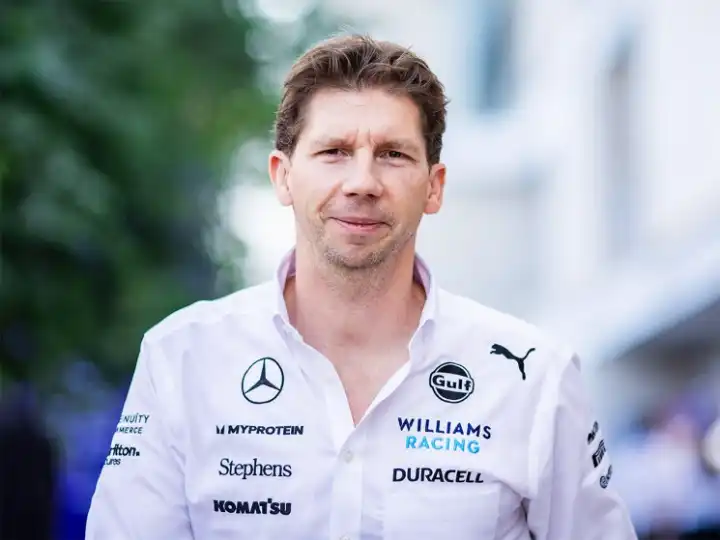
What entrepreneurs can learn from F1: Racing boss James Vowles shares 10 leadership lessons
James Vowles knows what it takes to perform under pressure. “We race on TV and in front of 70 million people,” he tells Monocle. But despite the high-speed, high-stakes nature of F1, Vowles insists that the fundamentals are the same as any business. “You want strong foundations, clear systems and smart use of data – people are at the heart of it all.”After helping to steer Mercedes to multiple Formula One titles, he took over as team principal at Atlassian Williams Racing in 2023 and quickly made an impact, playing a key role in securing Carlos Sainz Jr for the team.Now signed to a new long-term deal, Vowles heads into the British Grand Prix with Williams sitting fifth in the constructor’s standings – a vast improvement on the bottom-dwelling position they held for four of the five years prior to Vowles taking charge.Monocle Radio spoke to Vowles about how to build a winning culture for our podcastThe Entrepreneurs. Here are 10 key leadership lessons the motorsport boss shared.Eyes on the prize: James Vowles(Image: Alamy)1. Tear down what’s familiar to build something better“We had to go from settling to settling for nothing but the best, and to do that we had to break everything. Changing culture takes a shift in thinking but it works. It’s changed our mindset in a short time.”2. Don’t rest on your laurels“Our history makes me proud but it won’t win future races. I’m here to fight for championships and that means thinking long-term and aiming higher than fifth or sixth.”3.Embrace failure as part of the process“How you deal with poor performance defines you. We’re going to fail a tremendous amount. The really important bit is how you take that learning and reapply it back into what you do in a positive way.”4. Hire people more intelligent than you“I’m not the most intelligent person at Williams and I shouldn’t be. My job is to assemble world-class talent, empower them and know when to get out of their way. That’s how you build future leaders and successors.”5. Direction is often more important than the answer you provide“Indecision is worse than a wrong call. People are often afraid of making decisions. I’m not. The answer might not be perfect but we’ll be moving forward together.”6.Be visible and communicate constantly“I’ll email the whole factory three times a week and do team talks after every race. We’ll hold monthly meetings with the full company. I also make a point to walk the factory. And I know that I need to do even more.”7.Create space for the next generation“More than 10 per cent of our team is in early careers. I want success today but I’m here to build the backbone of the next 10 to 15 years. To do that, you invest in graduates, those at university and apprentices.”8.To get the best out of people, genuinely care about them“I’m hugely appreciative of people’s time, because they could be spending that minute with their family, and they’re not. They’re by my side as we work towards building this team up into championship material and that will buy infinite respect with me.”9.Stay authentic, especially under pressure“You have to believe in what you’re doing with all your heart, because ultimately, that’s what’s going to drive you on every single day when things get tough. And that’s where your true personality comes out. So if you put up a façade, it’ll eventually be broken down.”10.Play the long game“I don’t believe in any short-termism. I’m not going to go short term because it’s not right for Williams and its future. I wear the Williams shirt with pride but it’s not mine to keep. It’s mine to put into a better place and eventually pass on to future generations.”Listen to our full interview with James Vowles onThe Entrepreneurs.Want more stories like these in your inbox?Sign up to Monocle’s email newsletters to stay on top of news and opinion, plus the latest from the magazine, radio, film and shop.Your EmailSubscribe
 Business
In the UAE, flying taxis will soon be a reality
Zipping silently home from the airport in a sleek electric aircraft above the gridlock and noise sounds wonderful – and Dubai’s “flying taxis” are slated to make this a reality early next year, with four key points in the city earmarked as launchpads. November’s Dubai Airshow is a clear signal of intent. A dedicated pavilion for clunkily named eVTOLs (electric vertical take-off and landing aircraft) will see companies such as Joby and Archer showcase models that they claim could be airborne and commercially operative by 2026. “We’ve expanded the show by 8,000 square metres,” Dubai Airports CEO, Paul Griffiths, tells Monocle. “A number of eVTOL firms are planning to fly their aircraft publicly for the first time. It’ll be tremendously exciting.”Dubai has completed test flights and has plans to launch its first commercial air-taxi routes next year, linking four vertiports at Dubai International Airport, Downtown, the Marina and Palm Jumeirah. In Abu Dhabi, meanwhile, US-based Archer Aviation is to introduce its Midnight aircraft, capable of flying four passengers. It’s aiming to cut the tricky Abu Dhabi-Dubai journey from 90 minutes by road to a mere 20 minutes in the sky.Waiting in the wings: Archer’s Midnight aircraft(Image: Courtesy of Archer Aviation)“The technology is ready now,” says Archer CEO Adam Goldstein. “Tesla led a revolution in battery tech that’s made its way into aviation. Governments are working with industry to shape standards and real capital is coming in.”But why here, and not in Archer’s home market of the US? “Everyone in the UAE said, ‘We want to make this happen,’” says Goldstein. “It’s more agile and ambitious. From the Abu Dhabi Investment Office to Mubadala and Etihad, the alignment is unique – and it’s our gateway to the Gulf, India and the rest of Asia.”There’s also the fact that such innovation couldn’t work elsewhere (yet). Imagine trying to land an eVTOL in Manhattan or London, where airspace is crowded, infrastructure outdated and regulators rightly cautious. Add in noise complaints, rooftop logistics, the danger of crashes and decades of urban planning designed specificallynotto accommodate flying vehicles, and the whole thing starts to look absurdly far away. In cities where the average building permit takes months to secure, the idea of regular rooftop landings feels fanciful at best. By contrast, the UAE has space, capital, a centralised system that accelerates decision-making and even favourable weather. Crucially it has the ambition, spurred on by a friendly but fervent rivalry between Dubai and Abu Dhabi that has already delivered competing museums, megaprojects and cultural districts. Flying taxis, it seems, are the next prize.“This is just version 1.0,” says Griffiths. “Once we get greater endurance and payloads, you won’t need roads or traffic lights. You’ll simply fly.” Inzamam Rashid is Monocle’s Dubai-based Gulf correspondent.Monocle Radio’s The Entrepreneurs recently discussed flying taxis with Archer Aviation’s CEO – listen below:Want more stories like these in your inbox?Sign up to Monocle’s email newsletters to stay on top of news and opinion, plus the latest from the magazine, radio, film and shop.Your EmailSubscribe
 Business
AI is not our enemy. That’s why you should still say ‘please’ to Alexa
In his book The Atomic Human: Understanding Ourselves in the Age of AI, Neil D Lawrence asks what artificial intelligence might mean for our identity as humans. He doesn’t believe that we should try to compete with computers, which are already able to communicate 30 million times faster than we can. He also sees plenty of scope for technology to serve people better; he cites, for example, an AI lab in Uganda that helps to reduce the impact of disasters such as floods and famines by working with the UN to offer better warning systems.Lawrence, who is the Deepmind Professor of Machine Learning at the University of Cambridge and a senior AI fellow at the Alan Turing Institute, is also dismissive of some of the dystopian visions of where this technology could take us. He questions, for instance, the possibility of artificial general intelligence – the idea that machines could master any intellectual task that a human could.Here, he sits down with David Phelan, Monocle’s technology correspondent, to survey the road ahead.First of all, what should I call you?Though my official title is Deepmind Professor of Machine Learning at the University of Cambridge, I don’t work for Deepmind, the Google-owned AI firm. It endowed the chair and put in a certain amount of money with which the university pays for the position. It’s a lot less money than you might think – academics are pretty cheap. I have a lot of job titles so people normally just call me Neil.Should we be afraid of AI? In your book, you write that the possibility of machines becoming so clever that they operate beyond our control is slim.To the extent that it could happen, it has already happened. A simplistic view of AI technologies leads to significant misunderstandings. It also propagates vivid, sci-fi-like narratives, for very human reasons. But machines going beyond our control – in banking, for instance – is an interesting issue because you’re talking about a world in which there was a whole human system of interacting with, editing and controlling data. Think of systems such as double-entry bookkeeping, in which you can train someone relatively quickly to understand what they’re doing and then they’re able to bring their whole human judgement to the task. What you’re seeing with the digital world as it stands is a disempowering of people, whether they’re in banking, law or accounting. The ability of human judgement to influence an individual decision, where the context is well understood, has been sort of eliminated.Illustration: Peter ZhaoWhat are the benefits of AI? How can it help us?I use the notion of an “artificial general vehicle” in my book to show the absurdity of the idea of “artificial general intelligence”. Is there a vehicle that’s right for all circumstances, whether you want to go to the shop at the end of your road or trying to get to New York? No. There’s no such vehicle. Exactly the same is true for intelligence. Artificial general intelligence is an absurd notion and deeply misleading when it comes to how businesses should proceed.But you can imagine that, in 10 or 20 years, everyone in a business will be able to interact with a computer and steer it as finely as the best software engineer can today. That would be a major shift in power structures: to go from being restricted to a few hyperscalers [companies with huge data centres with enormous computing resources] that are able to build large-scale software systems to things being distributed throughout organisations. That would be deeply transformative.Are there dangers connected to AI?Our current structures in terms of software, hardware and behaviour are now distinctly out of date. The information infrastructure has shifted so profoundly that things are now not being done correctly. The problem is that none of us knows what the correct way is.Today there is a whole business literature around what you should do but the only thing that we really know is that those who are pronouncing what we should be doing are likely to be wrong. Well, one of them might be right – but which one? What you’re seeing is a period of uncertainty when business leaders are faced with the difficult task of making decisions about technologies with which they’re not always intimately familiar. As a result, their business judgement tends to flip: people are all in or all out. But the truth is that there’s something in between.If I tell you to pay attention to something, that might focus your thinking but then you won’t be scanning the horizon. We want our business leaders to be horizon-scanning as well as focusing on customer needs. Taking advantage of developments such as AI requires restoring business leaders’ confidence in the fact that their fundamental intuitions about businesses and customers still hold.However, because the information infrastructure has been roughly constant for years, most businesses have split what they do into different parts for efficiency. Unfortunately, that tends to disconnect the business from its customer base and undermine agility. In short, the opportunities are enormous but the challenge that we tend to face is around re-examining structures and the culture, and how it’s servicing customer needs.US scientist Roy Amara once said that people tend to overestimate the impact of new technologies in the short term while underestimating their long-term effects. Is that true with AI?Bill Gates said something similar: that things in the short term happen more slowly than you expect but, in the long term, they happen much more quickly. That’s another challenge; the type of timeframe for making decisions really sits between those two. My advice to business leaders is to refine their communication machine because that would allow them to steer around what will be a complex and evolving landscape. We can talk about making efficiencies but people know about that. It’s about how they deploy and integrate AI in existing infrastructures.How about sectors such as healthcare and education? What opportunities can AI offer them?People have wanted to see what benefits that it could bring for a decade but we have delivered virtually nothing because there’s a total separation between macroeconomic interventions and microeconomic need. There are disconnects between companies and their customers, and, even more seriously, disconnects between governments and citizens. To the extent that there’s something dystopian about AI, that’s the root of the issue.In a company such as Amazon, there’s a notion that you have to dive deep when anecdotes and data are suggesting conflicting things. People lean on data too much and I have seen Jeff Bezos quoted as saying that it’s usually the anecdote that’s right.The digital systems that we now use give people the impression that things are OK from a data perspective. That’s problematic and reflects a weird desire to centrally control everything. We know that this doesn’t work. That’s what is negatively affecting education and local authorities: the people who are at the coalface have been undermined in their ability to deliver because their tools have become separated from something that, say, a normal teacher can work with. A nurse, like my wife, might spend 30 per cent of her time on data entry.AI offers an enormous opportunity to put that right. People could sit down with a nurse and look at their day job today and give them a series of tools that could quite quickly be designed to support them in that data entry. We need a world where that nurse is capable of building that type of service themselves. And that’s a fundamental shift in our information infrastructure, which is going to take time. So, if deployed in a different way – not centralised but in smaller pockets – AI could have a significant impact.Where do things need to change?The ability to work with all of this innovation in software is currently guarded by a few digital providers. While they’re accruing power, the rest of us aren’t able to grow and benefit in terms of productivity. This has already affected health, education and social care. We are beholden to what large hyperscalers choose to deploy and they’re stuck in that loop. We need innovation by those who understand the role, the job and how to make things better, and AI is an extraordinary route to that.Finally, a matter of manners. Should we be saying please and thank you to Alexa?There are differing views on that. My answer is that I do because it’s about my own dignity. Voice services such as Alexa provide a human interface and play on our sense of interacting with other people. I think that means it’s keying deeply into my dignity and I don’t want to demean myself. What we see again and again with social media is that it’s degrading our social interactions. Now, I don’t know whether that’s right or wrong but it’s something that I’m thinking about. I’m choosing to say “please” – at least, when I remember.This article originally appeared in the Opportunity Edition newspaper 2025, created in collaboration with UBS for its Asian Investment Conference in Hong Kong.
 Business
Tivoli Gardens’ CEO on how Denmark’s most renowned theme park has stayed tech-free and relevant for 182 years
When Tivoli Gardens opened its gates in central Copenhagen 182 years ago, one of the first people through the turnstiles was Hans Christian Andersen. Since then, this compact amusement park squeezed between the Central Station and City Hall has become more than just Denmark’s most popular visitor attraction, it’s a cultural landmark and a location for national celebration that holds a quasi-spiritual place in the heart of the Danes. More the merrier: A Moorish palace in the Tivoli Gardens, circa 1965(Image: Getty Images)The park blends beer garden aesthetic with highbrow culture, live music, theatre, modern thrill rides and old-fashioned fairground stalls, all of which combine with its world-famous lighting to create a fairytale setting. Tivoli’s history is a crucial element of its appeal – but as CEO Susanne Mørch Koch knows all too well, to compete in 2025’s attention economy you can’t coast on legacy alone. Her stint as leader began with a baptism of fire. She took over in August 2020 amid the Covid crisis, as a result of which the park lost millions of kroner in revenue. But after a rollercoaster start, Tivoli posted a record for visitor numbers and turnover in 2024.Monocle meets Koch to find out more about how she has shepherded this cherished Danish brand from catastrophe to triumph, and about her plans for the future.Tivoli Gardens CEO, Susanne Mørch KochTivoli seems to hold a special place in Danish hearts. What is its appeal?Many of us carry childhood memories from Tivoli. My family didn’t have a lot of money when I was young, and looking back I now realise that my parents worked so hard and we didn’t have a lot of spare time together. But we would visit Tivoli every summer as a family, and it was something that I looked forward to for the whole week running up to it. I couldn’t sleep the night before. And that’s still true for kids today. My favourite ride was Galejen – just little boats running round in a circle but it’s quite a legacy ride today and always busy. It even has a special smell and feel. Now, I ride the old wooden rollercoaster most often.Who is your competition?Are you vying with computer games, streaming services and social media to capture the imagination of children?No, not really, because we are so different from that world. There has been pressure to gamify the park with apps – we had a suggestion for something a bit like Pokémon Go – but we have deliberately not done that. We are selling quality time and screens would get in the way of that. Of course, no one wants to stand in line and be bored, but we’re not afraid of people queuing a little: it’s where you can ground yourself, reflect on what you’ve just experienced and build anticipation. We see it as a benefit. Where apps can improve a visit, we use them – restaurant bookings, for instance – but we don’t want technology to be part of the show.Tivoli has iconic gates that seem to draw people in – how important is this exterior image? The main entrance is crucial. It’s a magical place where we welcome and say goodbye to our guests, so there’s a lot of footfall. Throughout Tivoli there is an intentionality behind every detail. Rather than having things that shout for attention, it’s an accumulation of all the little things, such as the way that we use lighting, the planting and the sentiment of the people who work here.Gates of paradise: People queuing at the entrance to the Tivoli Gardens, circa 1965(Image: Getty Images)How do you balance the history of Tivoli with a need to innovate? When I started, people warned me that I risked provoking outrage by changing things. But I’m yet to experience that. Tivoli has always moved forward, it has never shied away from change. If it had done so, it would risk becoming a postcard version of itself – what use is a theme park with no thrill? From the start, my guideline has been that it has to make sense to the people who live just outside our walls. It’s not a typical amusement park that could be anywhere – with live entertainment and good food, we cater to more than tourists and day trippers. What does the future hold for Tivoli?There is still scope to grow visitor numbers, particularly in the shoulder seasons, spring and autumn. We are choosing to expand the Halloween season as the Norwegians have an earlier autumn vacation and we want to attract them. But there’s something huge ahead of next summer – we are redeveloping our street-like layout, with new rides and scenography. The budget is somewhere between DKK100-200 million (€13.4-26.8m)and it’llfeel like a real refresh. Tivoli GardensFounded 1843Open:Apr-Sept, Oct, mid-Nov-Early JanLocation:Central CopenhagenTotal employees:high season 2,200+, low season 700-800Turnover (2024):DKK1.32bn (€177m)Visitors (2024):4.25 million, of which 35 per cent are touristsOwnership:Tivoli is listed on the Danish stock market but is majority owned by the Augustinus FondenSustainability:Net zero by the end of 2025Want more stories like these in your inbox?Sign up to Monocle’s email newsletters to stay on top of news and opinion, plus the latest from the magazine, radio, film and shop.Your EmailSubscribe
 Business
What zero-emission flying really needs: smarter planes and radically different airports
Imagine boarding your zero-carbon emissions commercial flight of the future. Is it a curvaceous wide-body jet powered by hydrogen fuel cells? A helicopter-like craft with several rotors fuelled by advanced batteries and piloted by a computer? An airship filled with gas, like it’s 1922 once again? It could be any or all of these. Or none. The truth is that very few people have truly grasped what emission-free flying might look like, let alone how to make it commercially viable enough for it to be an alternative to what we have now. What almost everyone agrees on, however, is that it’s vital to figure it out – and soon.While there are all manner of promising developments and innovations in the sector, with hundreds of companies large and small working on answering this question, one sticky issue remains: the energy density of jet fuel – the amount of energy held in a given volume – is many times greater than just about everything else we can currently come up with. That is, at least among fuels we can hope to produce and deliver to aircraft, store and use safely. So far there have been lots of lofty promises but not much to show for them.“It’s not around the corner,” says Henrik Littorin, programme manager at electric aviation development project Elis in the north of Sweden, when we ask about when zero-emissions commercial aircraft will be up and flying. “It’s obvious that the industry is struggling. Existing aviation systems and regulations were developed over many, many years and now you have to do that all over again. And you have to make sure that everything is super safe. That’s on top of the challenges of battery technology and sourcing clean energy. When you start developing something new, such as an electric aircraft, when you start to build and develop it, that’s when you really discover the challenges.”Littorin says that there is still optimism in the industry but it comes with a sense that expectations will need to be managed. This means a revolution for the entire sector, from the aircraft themselves and the infrastructure to the politics and regulatory frameworks. Everything needs to change. That is disruptive, of course, but there are opportunities too. And for any of this to be viable in the kind of time frames being talked about, every stakeholder needs to be working in concert, pursuing the same goals with the kind of efficiency and co-ordination that is rare on the scale that is needed here.Yet outfits such as Elis are not waiting for all of that to come together. It has partnered with manufacturer ZeroAvia, the airline Braathens, flight school Green Flight Academy and power company Skellefteå Kraft to launch a demonstrator project to not only fly an aircraft powered by hydrogen fuel cells but also showcase that this can be done within an entirely “green” ecosystem. This means producing so-called green hydrogen, transporting it to the airport and storing it, fuelling an aircraft and flying it to another airport and back. The idea is to show that it’s all possible, even if at a small scale for now.If you want to look at just about every possible technology we might end up with, it makes sense to look at manufacturers such as Airbus, which has gone all in on figuring out the sustainable aircraft of the future. The company knows that this is an existential question, and with its size and resources it can afford to pursue a number of avenues at once, even if some end up as dead ends.Until recently, the aviation industry has been on a steady path of incremental improvements in efficiency. Manufacturers point to the fact that since 1990, co2 emissions have been reduced by 50 per cent per passenger. This has been achieved by reducing aircraft weight, improving aerodynamics and boosting engine efficiency. However, because the number of flights has continued to grow, total emission figures remain high. “Today, these three parameters are not sufficient,” says Karim Mokaddem, vice-president Airbus Group Hybrid&Electric Strategy. “If we continue like this, we’re pretty sure we won’t reach the 2050 [net-zero] target.We need another parameter in the game – and that’s the fuel.”Mokaddem explains that there are two ways to do this: either use electrons as the fuel, stored in batteries or hydrogen fuel cells, or use a different form of fuel, which right now means sustainable aviation fuel (SAF) made from non-petroleum feedstocks.Batteries are comparatively simple, delivering electricity to engines. But they are heavy and their energy density is low. Hydrogen has a high energy density and zero emissions when used as a fuel but it comes with several complications. It can be very energy-intensive to produce and that production process can create emissions. Hydrogen could either be used directly as a fuel to run aircraft engines or in hydrogen fuel cells, which then produce electricity to run the motor.“For the moment, we don’t know what will be a viable technology in terms of maturity and the ecosystem,” says Mokaddem. “There’s no silver bullet. Speaking as an engineer, what we have today are only problems. Nothing is really working. We have difficulty finding the right electric motor. There’s no battery that can fulfil what we need.” Increasingly, it looks like different technologies might suit different segments of aircraft, so it makes sense to work on multiple avenues to achieve emissions- free flight. For instance, the current battery technology can be used viably on aircraft that have up to nine seats. That’s not a lot of capacity so it ends up being mostly the domain of “urban air mobility” or evtol aircraft (electric vertical take-off and landing).As a result, manufacturers are turning to hybrid aircraft models for the regional aircraft segment, which can carry 20-plus people. One example is Heart Aerospace, which is developing a 30-seater aircraft capable of flying 400km. Jet fuel-powered turbo generators charge the batteries that power the engines. It has purchase commitments from major airlines such as Air Canada and United, but for the moment, these commitments are mostly a matter of PR. Its first flight isn’t scheduled until 2026 and that date could well slip.Some remain optimistic about putting an all-electric aircraft into service using existing technology. Cosmic Aerospace is working on the Skylark, a 24-seater electric plane that can fly 1,000km emissions-free thanks to an ultra- efficient wing, a lightweight structure and other refinements. The company hasn’t waited for a breakthrough in battery technology and says that it can have the plane in service for 2029. “Nothing has changed for us,” says its founder, Christopher Chahine, when asked whether the firm has faced setbacks. He believes that battery-powered aircraft have an advantage because of the inefficiencies and potential emissions of power sources.“Full-system energy efficiency, from generation to usage, is crucial to ensure that the overall energy needs stay within reasonable limits,” he says. “Hydrogen and SAF generation requires many energy conversion steps, each introducing losses and additional costs. This all adds up to an inefficient use of energy overall. Battery-powered electric systems have a much higher energy efficiency, so there is less valuable energy lost between generation and usage. Energy needs directly translate to operating costs and ticket prices. If flying is to remain affordable and accessible for most people, efficient energy usage will be paramount for as long as clean energy isn’t abundantly available.”The availability of clean energy is a critical point and is often left out of the discussion. Even once these aircraft are designed and proven to be airworthy and economical, one burning question is where all that clean energy to power them will be sourced. Elan Head, who covers the sector for industry news website The Air Current, points to a recent research paper, which estimated that 9 per cent of the world’s renewable electricity and 30 per cent of “sustainably available biomass” would be required for aviation to meet its net zero targets in 2050.“Some have proposed that airports should be rethought to become energy farms,” says Head. “If you have an industry that requires massive amounts of renewable energy, then maybe the industry should be responsible for providing some of that energy.”That leads to another intriguing question: what will the airport of the future look like? Large airports might find that they need to provide multiple fuel sources at the same time, including hydrogen in gas and liquid form, sustainable aviation fuels and megawatt chargers for battery-powered aircraft. How will all these fuels be efficiently delivered to the aircraft that need them? Where will they be generated and stored? The answers are unclear, but these questions will no doubt reshape how we think of building and running airports in the decades to come.Then there are the wilder ideas for aircraft development. Magpie Aviation is working on a system for enabling longer-range, emissions- free flights without having to invent a more efficient fuel source. According to its vision, a hybrid electric aircraft takes off under its own power and then hooks up to a second or more aircraft with their batteries fully loaded, which tow the passenger aircraft towards its destination. This means that its range can be extended to well beyond 1,500km. The company says that it sees this as the only way to replace commercial flights without advances in technology that we have yet to make.The general attitude in the industry seems to be that, for now, any and all ideas are welcome. “Working together is the way to get past this,” says Mokaddem. He explains that Airbus is pursuing every possible avenue to see what works, from large hydrogen- fuelled aircraft to small battery-powered demonstrators. And it’s doing this by working not only across the whole Airbus group but also with key players across all transportation industries, from French aerospace giant Safran to automobile company Renault. “For the first time we are not alone,” he says. “Today there are synergies across different transport industries. It took a century for the auto industry to enter into electric mobility. We are willing to do it in less than 20 years.” In the end, Henrik Littorin puts it best. For now, he says, “it’s just really important to get things up in the air”.HalfAverage reduction in co2 emissions per airline passenger since 1990, thanks to improvements in aerodynamics and fuel efficiency.4.6bnAnnual passenger numbers before the coronavirus pandemic, nearly four times as many as the 1.2 billion in 1990, according to the International Energy Agency.400kmMaximum predicted range of Heart Aerospace’s electric-hybrid 30-seater plane by its launch in 2026.9 per centProportion of world’s sustainable energy required by aviation to meet net-zero emissions by 2050.A thirdApproximate amount of the world’s sustainably available biomass that would be needed to power aviation if net-zero is to be reached by 2050.About the writer:Stockholm-based Leigh is Monocle’s transport correspondent.Illustrations by Yo Hosoyamada
 Business
How Bic has kept the ball rolling for 75 years – and what it has planned for the future
It’s highly likely that there are several Bic pens in your house – and you almost certainly will have no idea how they got there. Perhaps you bought a box of them years ago or swiped a handful from the stationery cupboard at work. Or maybe you found them at the bottom of a tote bag that you were handed at some conference or other. It’s also possible that you possess – again by means that you no longer recall – a Bic lighter and even a few Bic razors. The French company, founded in 1945, is a paradox. It has sold billions of its products yet no one remembers buying them. Bic biros in particular have become a sort of collective possession. Most people wouldn’t think twice about picking up one of someone else’s; few would much care if theirs was swiped.Where your pens probably came fromBigger, if not mightier, than the sword“One of the cool things about representing this brand is that I am with our consumers all day long,” says Gonzalve Bich, Bic’s 46-year-old CEO. “People will get up in the morning and shave with our razor. And then they will use our pen at work. Maybe when they get back home, they’ll light a scented candle with our lighter.” Bich meets Monocle at the London offices of Tangle Teezer, a hairbrush manufacturer that Bic acquired late in 2024 for €200m. Bich sees it as a congruent addition to a line-up of brands known for simple yet elegant everyday items. Also among Bic’s current portfolio are lines of stationery, digital notebooks and temporary tattoos (Bic Sport, its windsurfing offshoot, was sold in 2019).In some respects, it’s surprising that Bic has survived, let alone prospered. Developments in technology, fashion and society over the past couple of decades almost resemble a conspiracy to destroy the company: keyboards supplanting pens; beards coming back in style, slicing razor sales; the number of smokers falling, reducing demand for lighters. But the company has weathered evolving habits through its strategy of fiercely protecting the brand while selectively expanding its offering.Bic Boy keeps an eye on the productEveryone is armed with a penBich, whose father oversaw the family firm from 1993 to 2006, has been its CEO since 2018. When he steps down later this year, his successor probably won’t be a Bich – but the company has had leaders from outside the family before. Bic was founded in 1944 by his Italian-French grandfather Marcel Bich, who bought the patent for the ballpoint pen from a Hungarian inventor called László Bíró. (The fact that both of their names have become synonymous with that invention attests to their success.) Marcel was the beau ideal of the eccentric European aristocrat: an heir to an obscure baronetcy who collected art, ordered his shoes from Church’s in Northampton and enjoyed 12-metre yacht racing, underwriting several unsuccessful attempts to win the America’s Cup.As Bich tells it, his grandfather refused to accept that cheap, everyday products couldn’t be stylish. “He was obsessed with design, form and function,” says the CEO. “He was very much of the philosophy that perfection is when you can’t take anything more away, rather than asking, ‘How much can we add?’ I think that we still stand for that idea. The original Bic Cristal pen remains one of our bestsellers 80 years later.”Like other Bic products, the Cristal pen is still made in France, at least for European consumers. Though the company now manufactures on five continents, it considers its Frenchness to be crucial. Bic’s HQ looks out on Boulevard Périphérique, a ring road in the Paris suburb of Clichy. Monocle is given a tour of the site by Clémence, the premises co-ordinator, who previously worked on the factory floor in the ink and cartridge workshop. Raw materials enter the facility at its southern end; finished, boxed-up pens exit at its north. Around the complex, we frequently spot the company’s cartoon avatar, Bic Boy: a schoolchild with a nib for a head, designed in the 1960s by Raymond Savignac. Bic boasts that it makes 25.4 million products every day across the globe. Watch the digital display atop a machine tracking how many red-ink Bic Cristals are being cranked out and this claim becomes eminently believable. The shift today began at 06.30. It is a tick after 11.00 and 44,723 more red Bic Cristals are on their way out into the world, possibly to terrorise the essays of the lackadaisical students of 44,723 weary teachers. (A Bic Cristal, assuming that you don’t lose it, will write for 3km. That’s a lot of statements to the effect of, “Disappointing… See me after class.”)Gonzalve BichA vintage Bic posterIt is mesmerising to witness the precision and complexity involved in the manufacture of everyday items that will barely be spared a second thought once they leave here. The ball in the top of a Bic pen is made from tungsten carbide, which is polished with diamond paste and powder to give it its shape. To demonstrate how dense the 1.2 millimetre balls are, a Bic technician passes around a small milk-carton-like bottle containing about 500,000 of them. It is only half-full but weighs almost 2.4kg. Each of these balls will soon be mounted in a brass nib and connected to the plastic tube that holds the pen’s ink. This tubing is extruded in a single length through metal trenches of cooling water at 200 metres per minute – so fast that Monocle can’t see the translucent material moving – before being sliced to pen length by a furiously whirring blade.Some of the machinery is designed and built in-house. “It’s something that we feel strongly about,” says Clémence. “When you have an idea, it’s better to do it yourself.” Quality control stations put randomly selected components to work, cranking out spirograph-style patterns to ensure that all of the pens are working as they should. On one such station, there’s a picture of Bic Boy scrutinising a nib through a magnifying glass.Putting a cap on itTicking all the right boxesThese days the idea of a “disposable” plastic product seems less like a beguilingly modernist selling point than a crime against the environment. Back at Tangle Teezer in London, Bich tells Monocle about Bic’s move towards recyclable products and packaging. In the past five years, he says, the company has gone from using 20 per cent recycled, reusable or compostable packing materials to 85 per cent – and is aiming for 100 per cent. “But we can only do that when it doesn’t affect the quality or technical characteristics of the product,” he says. “You don’t want the barrel of the pen snapping in half because we have used some kind of substandard recycled plastic.”When Bich became Bic’s CEO, the company was grinding through what was, by its standards, a low ebb. Its 2017 annual report described, with an almost audible wince, “A Challenging Year with Unprecedented Levels of Volatility”. “Things were still working,” says Bich. “But they weren’t working quite as well as they had been. There’s that optimisation curve: once you go past it, things start getting painful and we were there.”So Bich implemented “Horizon”, the first global strategic plan in Bic’s history. “We told our team, ‘You’re no longer just a maker and brand of pens. You’re a human expression company,’” he says. That meant diversifying, with forays into other products such as digital notebooks. “We opened up what we should be working on and what problems we should be solving for the consumer.”Pens in productionIndividual Bic componentsColourful line-upCorporate history, however, is strewn with the carcasses of much-loved brands that, dissatisfied with the customers they had, chased after others who proved illusory. “That’s fair,” says Bich. “But if the consumer says, ‘This is just a commoditised product and I don’t care about brand A or brand B, or how it feels,’ then you have lost that battle. As long as you’re still the best-loved brand and most recognisable product, you can put it in Lagos, São Paulo, Tokyo, New York or wherever you want.”After leaving Bic, Bich plans to concentrate on the foundation that he has launched to support families that, like his own, are contending with the challenges facing children with autism. “It will be about sharing experiences and perspectives, always with the goal of strengthening the family unit and ultimately the community,” he says, “It will yield better outcomes for everyone involved.” Nevertheless, he sounds sorry to be departing and closes our interview with some advice that he would like to share with his successor.“Always respect the past,” he says. “Those things that made the tree strong, the nutrients in the soil in which the roots are buried, the flowers around the tree – cherish them and make them grow. And follow your intuition. You have to deal with data when you’re running an organisation this big – I have terabytes of it to look at and all sorts of experts to consult – but at the end of the day humans are the ones who make the ultimate choices. Investment A or investment B? Packaging colour A or packaging colour B? Trusting your instincts over the long term as a leader is incredibly important.”bic.com1988Launch of the short-lived Bic perfume, which ceases production in 1991.1990Launch of a range of decorated lighters, joined the following year by Bic’s first electronic lighter.1992Bic purchases the US correction product Wite-Out to help its pen users correct their mistakes.1994French launch of the Bic Twin Lady bi-blade, a razor aimed at women, in pastel shades.1997Bic consolidates the correction product market by buying Tipp-Ex.2001The Metropolitan Museum of Art in New York adds the Bic Cristal to its permanent collection (the Bic Maxi lighter follows in 2005).2004Launch of the Bic Soleil razor for women and the Bic 3 – a triple-bladed implement – for men.2017Launch of Ubicuity, a collection of outdoor furniture made from recycled pens through a partner called Plas Eco.2018Launch of temporary tattoo marker BodyMark. (Four years later, Bic acquires Canada’s Inkbox and US decal brand Tattly.)2019Launch of Made for You, Bic’s first gender-neutral razor.
 Business
Five important ways the time value of money is shaping the world
During the past decade, interest rates were taken to their lowest level in history. Central banks maintained their policy rates at close to zero for a prolonged period in the US and UK. In Europe and Japan, short-term interest rates turned negative for the first time. In my view this great monetary experiment was a mistake of the first order, whose unhappy consequences we will be living with for years to come.First, some backgroundWe have data on interest rates going back more than 5,000 years. There was a lot of criticism of usury in the Ancient World because high debt burdens resulted in debtors losing their properties and even their freedom. Greek philosopher Aristotle claimed that interest was unjust because, as he wrote, “money was intended to be used in exchange but not to increase at interest”. What’s lacking in this comment is the factor of time: loans are made for a certain period. The Yale School of Management faculty director and economic historian William Goetzmann describes interest as the most important invention in the history of finance as it enabled people to transact for a period of time. Interest is the price of time.The importance of time in economic affairs was best expressed in an aphorism attributed to Benjamin Franklin: “Time is precious. Time is money. Time is the stuff of which life is made.” Franklin’s contemporary, 18th-century French economist Anne-Robert-Jacques Turgot argued that people were impatient – “a bird in the hand is worth two in the bush,” he wrote. Thus, a sum of money today and the same sum in the future couldn’t have the same value. For Turgot, interest is the price given for the use of a certain quantity of value during a certain time. The time value of money exists in all societies and economies. It is especially important for a market-based or capitalist system.Illustration: Paolo PiccininiThe time value of money shapes the world. Here’s how:1.ValuationInterest in the form of a discount or capitalisation rate is essential to every act of valuation. What we call capital is a future stream of income that is discounted (using a discount or capitalisation rate) to arrive at a current value. Without this, an apple in a 100 years’ time would be worth the same as an apple today. As John Law, the Scottish-born gambler and economist, wrote in the early 18th century, “anticipation is always at a discount. £100 to be paid now is of more value than £1,000 to be paid £10 a year for 100 years.” Law founded France’s first national bank while assembling a business enterprise, known as the Mississippi Company. He conducted an experiment, substituting paper money for gold and silver, and issuing new banknotes to bring interest rates down. As rates fell to 2 per cent, the price of the Mississippi stock soared. Alas, Law’s Scheme failed. His experiment fuelled inflation, confidence in his system was lost, and Law’s paper money was withdrawn. Every great speculative bubble has occurred during periods of “easy money”. In 2020/21, when interest rates were stuck at zero and central banks were printing trillions to buy securities, the “Everything Bubble” – stocks, real estate, contemporary art and vintage cars – entered its last phase.2.ProductionThe level of interest influences the length of production processes or the “payback period” for new investments. When interest rates are high, investors demand a quick payback and, when low, a longer payback. Interest encourages us to economise on scarce resources, spurring efficiency gains and profits. The ultra-low interest rates of recent years thwarted the process of creative destruction, slowing the tempo of production. With interest rates stuck at zero for many years, we witnessed the appearance of so-called zombie companies – inefficient firms kept alive on the drip of easy money. Low interest rates also stimulated investment in businesses with distant cash flows, such as venture capital. When rates were stuck at zero, capital flowed indiscriminately into Silicon Valley, which financed ever more preposterous businesses – autonomous cars, space tourism and dubious crypto ventures.3.Risk-takingInterest was described by Ferdinando Galiani, an 18th-century philosopher, as the “price of anxiety” or the price of risk. Galiani reasoned that lending produces anxiety in the part of lenders which must be compensated. Put another way, interest can be seen as an insurance premium received by the creditor against the risk of loss. What we find is that low rates offered an inadequate protection against loss. Easy money encouraged “yield-chasing” by investors, accompanied by a widespread decline in underwriting standards. Interest is also the cost of leverage. As the interest rates fell, governments and companies took on more debt. Government debt levels around the world have soared since u2008. Ultra-low rates spurred companies to use debt to enhance returns whether buying back shares (rather than investing) or acquiring other companies. Leveraged buyouts and mergers proliferated. As a result, global debt levels are higher than at the time of the financial crisis.4.SavingInterest has been described as a “reward of abstinence” – an inducement to save. Interest compounds savings, enabling us to retire at some stage. Low rates punished savers – what the former German finance minister Wolfgang Schäuble called “Strafzinsen” (penalty or negative rates). Without an inducement, saving rates in the UK and the US declined far below their historic averages. Low rates also contributed to the ongoing pensions crisis.5.InflationCentral bankers view interest rates as a policy lever to control inflation. During the pandemic, their fixation with falling prices kept rates at zero while expanding the money supply. After 2020, inflation suddenly reappeared and central bankers called time on the era of zero and negative rates. Renowned US hedge-fund manager Seth Klarman called it “The Great Reset”. During 2022 some $30trn (€28trn) was wiped off global bond and stock markets. The most speculative stocks dropped by 90 per cent or more. Early last year a regional banking crisis broke out in the US as several banks suffered losses on bond-holdings. Venture-capital investments started to trade at substantial discounts to appraised value. Private equity, which had been paying record multiples for buyouts, and piling on nosebleed leverage, ran into trouble. Last year the IMF observed the weakest economic growth in 30 years.The excesses of the easy money era have still not been fully expunged from the system. The US stock market has bounced back to a new peak and a mania relating to anything that AI has taken hold. Cryptocurrencies – a barometer of speculation – rebounded. US stocks are currently more expensive than they were at their 1929 highs.Housing markets from Shanghai to Stockholm have also started to deflate. China’s largest real-estate developers have failed and problems are beginning to appear in the country’s shadow banking system. Bloomberg reports that property stress in Asia is brewing in countries such as South Korea, Indonesia, Vietnam, Hong Kong and Australia. Commercial real-estate problems are also percolating. Austrian group Signa has gone bust with €5bn of debt. In the US, some $2.2trn (€2.06trn) of commercial mortgages are also due in the next few years.Highly leveraged companies, including the UK utility Thames Water and French telecoms group Altice, are struggling. Interest-rate caps and loan extensions that protected companies from the effect of rising rates are running off.Zombie companies are also under strain, especially small companies that lack access to the debt markets. The Wall Street Journal reports that bankruptcies have surged among private organisations in the US. Public finances are also stressed: Washington now spends more on debt-servicing than on defence. The US economy grew last year thanks to an unsustainably large fiscal deficit (about 6 per cent of GDP).Markets have been buoyed by excess liquidity from pandemic-era stimulus programs. This is running dry and many commentators expect bullish financial conditions to continue. Yet, after great bubbles, soft landings are rare. Investors would do well to remember Milton Friedman’s comment that monetary policy operates with a “long and variable lag”.About the writer: Chancellor is an award-winning financial historian and the author of ‘The Price of Time: The Real Story of Interest’, published by Penguin.
 Business
‘Free the laptops!’ Why Germany’s digital overhaul can’t come soon enough
Germany’s legacy administrative systems almost ruined my wedding. I have many fond memories of the build-up to the big day but also one terrible recollection: having to gather a pile of paper documents from offices across Germany to submit to the registry in Munich. Fortunately, this laborious task didn’t scupper our plans – but it was illustrative of how outdated systems are stymying the entire country.We might be the world’s third-largest economy with enviable engineering prowess but our bureaucracy and systems are notoriously analogue. So many of the processes that citizens rely on involve pieces of paper locked away in filing cabinets or make use of software that’s regarded as obsolete in many other countries. This was underlined by the coronavirus pandemic, during which the German government was derided for trying to do contact tracing using fax machines. Screen burn: Germany is finally working to bring its outdated bureaucratic systems into the digital ageMore recently it emerged that Deutsche Bahn, the national railway, still uses a decades-old computer operating system. The World Digital Competitiveness Ranking, published by the International Institute for Management Development in Switzerland, puts Germany at a tragic 23rd place out of 67 economies. A 2024 study by the Ifo Institute, an economic think tank, showed that if Germany caught up with Denmark in digitalising its administration, its GDP would grow by €96bn.Our underdevelopment on this front is symptomatic of a dispersed political structure. After the fall of the Nazis, the country went to great lengths to avoid centralising power, giving a lot of autonomy to states and cities. This often meant that they developed separate software packages to run local services, as well as their own ways of doing things. Such fragmentation still hinders co-operation. A long-held commitment to data protection has further hampered the adoption of digital services. Amid an expected third consecutive year of recession, Germany is currently in the process of rewriting the rules of how it is run. It has been working to loosen its previously airtight fiscal rules to allow for greater borrowing to splurge on defence and infrastructure. And now, somewhat late to the game, it is finally looking to go digital. The still fairly-new chancellor, Friedrich Merz, has set up a long-awaited digital ministry. Somewhat surprisingly, he appointed a political outsider as its head: Karsten Wildberger, a 55-year-old with a doctorate in physics and executive experience at firms relying on different technology networks: telecommunications company Vodafone, energy company E.On and, most recently, electronics retailer Mediamarktsaturn, where he was CEO.Wildberger was publicly received with a mix of optimism and eyerolls – one pundit described him as “the man who has been trying to sell you fax machines and now wants to take them all away from you again”. Despite the sarcasm, he has been handed real power. His newly mintedBundesministeriumhas obtained a veto over the digital projects of others, a high ranking in the government’s list of federal ministries(which serves as a kind of league table for their political sway) and responsibility for issues previously scattered across six departments, including parts of the much-coveted cybersecurity beat. Merz clearly means business about getting Germany up to speed.To do that, Wildberger has three priorities. First, he’ll seek to expand mobile and fibre-optic networks to boost phone coverage and internet access. Second, he will work to offer public services through a new digital wallet by centralising standards and establishing best practices from two pioneering federal states. Finally, he will seek to reduce annual costs for businesses by billions of euros by cutting red tape by 25 per cent. All three of these goals are now more achievable thanks to Germany’s new fiscal flexibility and its specially assigned assets of €500bn over 12 years to invest in infrastructure including digitalisation. On the back of that boost, Merz should continue to vigorously back the dynamism that Wildberger’s new ministry represents. Under Germany’s last chancellor, there was great public debate over the question of whether to send Leopard tanks to Ukraine, with some people taking up the battle cry “Free the Leopards!” Under its new plans, and its push for the future, Germany should unite behind a new rallying cry: “Free the laptops!”Schmidt is Monocle’s Munich correspondent. Germany is at a crossroads – read our reporting on the historic election that brought Friedrich Merz to power.
 Business
Hold on! Beltways are putting the world’s fastest travelator on trial
The moving walkway has long been a fringe fascination in the world of mobility. Science-fiction writers from Isaac Asimov to Robert A Heinlein imagined future cities bristling with speedy pedestrian conveyors but the technology hasn’t quite lived up to its potential. Now a US start-up called Beltways hopes to change this. In early 2026 the firm will hold a public trial at Cincinnati&Northern Kentucky International Airport (CVG) to deploy what it claims will be the world’s fastest moving walkway, capable of whisking standing users at a top speed of 16km/h. (Current travelators putter along at a maximum of 3km/h.)“Transit is only useful if it’s faster than walking,” says John Yuksel, who co-founded Beltways with his brother, Matine, and envisions his “accelerator” walkways as a last-mile system pulsing through places such as New York’s Times Square. The siblings left jobs in Silicon Valley to start the company and are bringing to fruition an idea first envisioned by their father, Edip, when he was an engineering student at Turkey’s METU university. Edip drew up plans for a modular walkway system that could cut through traffic-choked Istanbul. Previous attempts at faster walkways – thetrottoir roulantdeployed by Paris’s metro agency more than 20 years ago or Thyssenkrupp’s Accel system, used in Toronto’s Pearson Airport – ultimately ran aground, largely due to mechanical and financial problems.The first moving walkway was set up at the World’s Columbian Exposition in Chicago in 1893, then a revised version by the same architect, Joseph Lyman Silsbee, featured at Paris’s Exposition Universelle in 1900. More than a century later, the “street of the future” might be about to arrive, and quicker, than you think.CommentMoving walkways can make urban spaces more walkable, efficient and sustainable. We’d be delighted to hop on.Want more stories like these in your inbox?Sign up to Monocle’s email newsletters to stay on top of news and opinion, plus the latest from the magazine, radio, film and shop.Your EmailSubscribe
 Business
Inside Mexico’s creative gold rush: four high-growth industries to watch
1.Film production“We came to Mexico and never left,” says Austrian Alexandra Ruths Braas, explaining how she ended up in the country alongside her business partner, Paul Krauskopf Romero, a German of Mexican heritage. The pair arrived in 2014 with a grant to make documentaries. More than 10 years later, Ruths Braas is still here, while Krauskopf Romero helms the Munich outpost of their company, Romero&Braas, which facilitates international film productions in Mexico, as well as making original content. “We help productions feel at home away from home,” says Ruths Braas. That means everything from location scouting to dealing with permits and sourcing technical providers. “There are people in Mexico who are used to an American way of working,” says Ruths Braas. “There’s amazing talent here.”Alexandra Ruths BraasNetflix recently announced an investment of more than $1bn (€850m) in Mexican films and TV series over the next four years. The deal cements the country’s status as a rising filmmaking nation, which can only bode well for the likes of Romero&Braas. “There has been more growth in the past four years than in the past 15 or 20,” says Ruths Braas.romeroandbraas.com2.Graphic designMexico City-based studio owner Adolfo López-Serrano didn’t set out to build his own studio. What began as a solo consultancy evolved into Base Agency in 2018, which today works with brands such as Revolve and Wix. Base is one of many Mexican firms helping to redefine where the world turns to for design. “We have a dynamic creative ecosystem here and great talent,” says López-Serrano. As a bonus, operating costs are relatively low.Base Agency’s officeBase co-founders Adolfo López-Serrano and Ronald CustodioDeduce Design teamBy the end of 2024, Mexico was home to more than 60,000 graphic designers. UK-born Andy Butler is the founder of Deduce Design, a Mexico City-based practice that has worked with everyone from Nike to Grupo Habita, the country’s leading hotelier. International perceptions, he says, are rapidly shifting. “Mexican designers are being sought out not just for value but for their creative vision.”While Mexico City leads when it comes to the concentration of designers, some of the strongest work is coming from unexpected places, such as Cocay Branding in Quintana Roo and Prizma Studio in Sinaloa. Walk through any Mexican city and you’ll see the fruits of the nation’s design scene all around you – in street signs, protest posters and hand-drawn menus. This colourful visual culture is making Mexico a magnet for creative talent.3.HospitalityMexico’s F&B sector is expected to grow by 6 per cent in 2025, buoyed by a rise in food tourism (which received a boost when Michelin launched its first guide to Mexico City in 2024). Opportunities abound for those trying something new. Take the capital’s Baldío, the nation’s first zero-waste restaurant and one of eight places in the city to have been awarded a green star by Michelin. Baldío’s designers Jachen Schleich and Sana FriniBaldío’s cosy interiorSeasonal greensSweet treat at BaldíoThere are new openings across the country: in Mexico City, Masala y Maíz has a smart take on fusion, combining Mexican, African and Indian cuisines. In Guadalajara, Xokol has embraced the communal-table experience, while Mesa Temporal in Oaxaca offers a walking dinner in which patrons eat in different rooms, exploring specific ingredients in each. These risk takers are taking the country’s hospitality scene in fresh directions.4.Department storesWhile US department stores such as Macy’s have been struggling, the picture couldn’t be rosier south of the border. Leading the pack is El Palacio de Hierro (The Iron Palace), a luxury player that has bet big on Latin American shoppers’ love of experiential shops, while also snapping up exclusive distribution deals with brands such as Loewe and Hermès. Last year its net profits were up by 23 per cent on 2023. How does it do it? First, it doesn’t skimp on costs. In 2015, for example, it spent almost $300m (€259m) on refurbishing its pyramid-like flagship in Mexico City. Second, it continues to branch out into new markets, with the most recent being in León in 2024.El Palacio de Hierro in Mexico CityEl Palacio de Hierro isn’t the only department store that is demonstrating that multi-brand, in-person retail is a growth sector in Mexico. Take Liverpool, a group that dates back 175 years and operates 345 outposts across the country. Alongside a recently acquired 49.9 per cent stake in the US’s Nordstrom, it plans to open about 30 new shops in Mexico this year, many of which will be its smaller-format Liverpool Express stores. Meanwhile, another retailer, Coppel, has announced a $4.2bn (€ 3.6bn) investment in e-commerce and new shops. The skies are bright for Mexico’s department stores.liverpool.com.mx; elpalaciodehierro.comImages:Jeffrey Isaac Greenberg/Alamy Stock Photo, Anna Pla-Narbona, Alejandro Ramirez, Alejandra VelazquezRead more from Monocle’s 2025 Mexico Survey:Three game-changing developments about to transform Mexico CityEntrepreneurs to watch: the forward-thinkers making new paths in Mexican industriesEight ideas for Mexican businesses that are ripe for the takingMeet the self-starters behind the clever hospitality boom in Oaxaca CityThe entrepreneurial trailblazers revitalising Guadalajara’s art sceneOaxaca Aerospace’s Mexican-built plane has beaten the odds and is ready for takeoff
 Business
How a pregnancy craving led to Dubai chocolate and a new chapter for Emirati food culture
When Dubai-based entrepreneur Sarah Hamouda was grappling with pregnancy cravings in 2021, she never imagined that she would also give birth to one of the most remarkable Emirati food-and-drink success stories in history. Dubai chocolate consists of a brick-like bar roughly the same thickness as a deck of cards, loaded with pistachio cream, tahini paste and crunchyknafeh(shredded filo pastry). The original was made by Hamouda’s Fix Dessert Chocolatier. At a relatively hefty AED68 (€16), not everyone could afford it, so cheaper alternatives to the unpatented indulgence began to proliferate, creating an entire Dubai-chocolate ecosystem.Since then, makers from London-based chocolatiers Maison Samadi to Swiss heavyweight Lindt and German supermarket chain Lidl have come up with versions of Hamouda’s best-selling creation. Chocoart uae has launchedknafehpistachio chocolate and Chocovana Chocolaterie has taken batch orders for their pistachio-stuffed bars. Noon Minutes – Dubai’s express delivery service – has collaborated with luxury brand Vocca to make its own. Dubai Duty Free says that it sold $22m (€19m) worth of various brands of Dubai chocolate in the first quarter of 2025, equivalent to 1.2 million bars. The sweet that began as an experiment in Hamouda’s home hadn’t just gone viral – it had become ubiquitous.What do you do when a product takes on a life of its own? Hamouda’s business partner and husband, Yezen Alani, admits feeling frustrated by copycat bars. Hamouda is more sanguine. “It’s incredibly flattering,” she tells Monocle. “It’s a testament to how influential Dubai’s appetite for creativity and innovation has become. It doesn’t annoy me. In fact, it makes me proud to have played a part in defining what Dubai chocolate means.” Imitation bars often have little of the gooey indulgence of Fix’s original creation, mainly because these cheaper, mass-produced versions are designed to have a longer shelf life. Yet all of this activity has proved to be an inspiration for Fix. “We’re exploring collaborations, expanding our flavours and looking into new ways in which people can experience us,” says Hamouda, hinting at plans for international expansion. She hasn’t forgotten where those first bars came from. “I think that people genuinely felt the creativity, care and authenticity behind it,” she says. “It wasn’t just another chocolate bar. Fix has become about much more than just chocolate.” Want more stories like these in your inbox?Sign up to Monocle’s email newsletters to stay on top of news and opinion, plus the latest from the magazine, radio, film and shop.Your EmailSubscribe
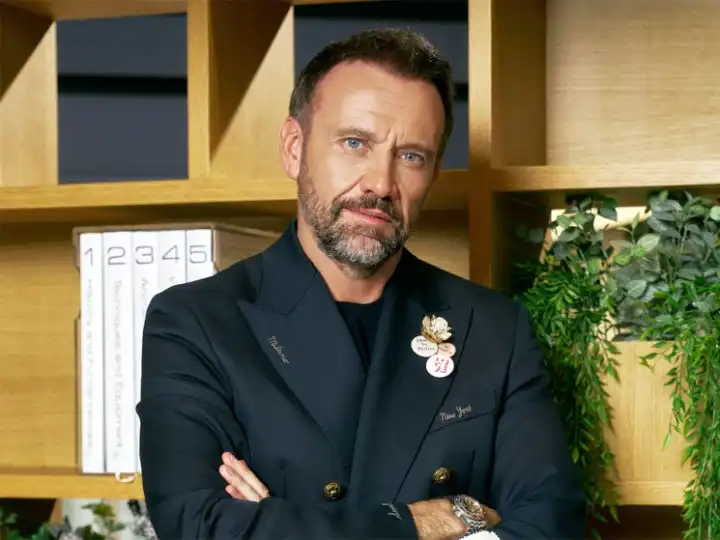 Business
How to fall in love with a big brand: Samsung’s first chief design officer is sending a clear message
Samsung is the world’s leading seller of both smartphones and TVs. But it doesn’t matter how successful you are – the electronics market is a competitive field. Today’s number one might not remain so tomorrow. In April, the South Korean giant appointed Mauro Porcini as its new chief design officer, a job that had not previously existed at the company. With such a title, could he become to Samsung what Jony Ive was to Apple?Porcini has held the same role at his two previous companies, 3M and PepsiCo. Speaking to Monocle in New York after Samsung unveiled its latest foldable smartphones and smartwatches, he is dressed in a white open-necked shirt, an understated suit and eye-popping trainers. He’s keen to explain that his new role goes beyond creating chic designs or selecting fun colours for upcoming products.Mauro Porcini“It’s about understanding people: what they need and what they want,” says Porcini. “For the company, it’s about understanding the technology, its manufacturing capabilities, branding and business models. From there, we define the innovation strategy of the business – what is Samsung’s portfolio going to be in 10 years?”Porcini, who was born in Gallarate, Italy, 50 years ago, talks about products having “emotional benefits and semiotic needs”. Semiotics, or the study of signs and symbols along with their use and interpretation, is important to the design executive. He wants to know what buying a certain brand says about a person – what kind of statement does wearing a digital watch over a classic one make to the world about the wearer? You could also say that an Apple, Samsung or Google watch each projects a different image of its user.When the conversation moves to AI, Porcini seems relaxed. “AI is a tool, right?” he asks. “I studied design at the crossroads between analogue and digital. I started with a pencil and Pantone markers, then suddenly had to learn how to use software. Everything was done with computers and renderings. Many designers thought that they would lose their jobs and machines would take over. Now we realise that human intuition, interpretation, creativity and imagination are still needed.”Porcini, whose talk of design focuses on what it means to the users of the products,wants more AI in Samsung’s gear. “If you think about the company’s portfolio, the products are with you wherever you go and they can monitor your body wherever you are, even while you sleep.” Porcini is animated – the benefits of this technology for human health seem to be a topic close to his heart. The latest Galaxy Watch, he tells us, has a sensor that can inform you when your antioxidant levels are low (perhaps you need to eat more carrots or kale). In the not-too-distant future, Samsung refrigerators could access this information and not only tell you which food is nearing expiration but also encourage you to choose vegetables over a slice of cake. Alternatively, your TV could remind you to exercise for five minutes before you sit down on the couch. It’s all very impressive but do we want our appliances to mother us? Should an oven count our calories? How will Samsung get the right tone? “We often say that designers create ‘meaning’ – we don’t design products or brands,” says Porcini. “And different ingredients play into the creation of meaning. You have a sender, a message and a receiver. You have a code, a media, a context and a noise,” he says, explaining the elements meticulously. “Take me talking to you right now: I am the sender and you are the receiver. What we’re talking about is the message and English is the code. My body language, the way that I’m dressed and my Italian accent might be different from someone else and could change the meaning of the message,” says Porcini passionately. “You could do everything right but it won’t work if you have the wrong tone.”“Samsung is already in people’s lives in many ways,” he says. “Our products clean your floors, dishes and clothes. They preserve your food or entertain and connect you with others. It’s already a caring presence.” And this is what Porcini wants Samsung to be: a business where “high-quality, reliable or innovative” are not its only characteristics but also tangible human values.But the executive might have his work cut out for him. Can people learn to love a behemoth brand in the same way? “In big corporations, the dilemma is always the same: how can we please everyone while remaining relevant?” he says. “We need to have the courage to speak directly to people with a certain tone and an original point of view. That’s when they will fall in love.”
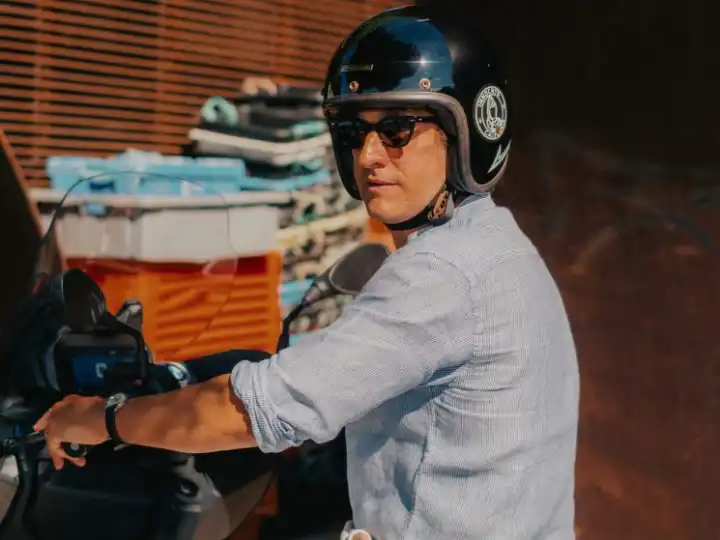 Business
The commute: Join José Miguel de Abreu biking from Porto to the central Ribiera district
In the first of a new series joining people we admire on their way to work, we hitch a ride with Portuguese entrepreneur José Miguel de Abreu, co-founder of menswear brand La Paz. As a keen surfer and photographer, De Abreu has an eye for the sublime.He uses his short scoot east from his home in the riverside neighbourhood of Lordelo do Ouro to the central Ribeira district to study the light on the water, stop at a portside café to see what the locals are wearing and unplug a little before the day ahead.Ah, you’ve got a helmet on, so perhaps you’re not walking to work. Tell us about your vehicle of choice.It’s a BMW c400 GT motorcycle that I’ve had for the past two years. It’s on the bigger side so perfect for riding in the city.A soundtrack? Are there any headphones under those flaps?That’s not possible, I’m afraid. I’ve got to listen out for other vehicles. An accident in a car could leave you with a few scratches. On a motorbike, you’re a little more exposed.And for the day, what reading material do you bring?I’ll always pack a book as well as my computer. I’m readingA Whole Lifeby Robert Seethaler andThe Way of the Worldby Swiss photographer Nicolas Bouvier. I also packPúblico,a Portuguese daily, to keep me informed.Best time to beat the traffic?In Porto it’s about 08.30. There’s lots of investment in transport for commuters and there are a few metro lines under construction. But right now, there’s a lot of congestion because often only one lane on most roads is available. So it gets busy in the morning; a journey of 4km could take 40 minutes. People in cars get stuck – that’s why I ride.Any pit-stops?Most mornings there’s an espresso at Paparoca da Foz, a café in the port where the Douro River meets the ocean. I soak in the atmosphere and see the locals; it’s very different to the city centre.And, since you’re in the business, let’s talk outfits. No leathers?In winter, I’ll wear a heavier jacket, which helps with safety. Usually it’s just the clothes I’m wearing that day.How is Porto’s road etiquette?Drivers here don’t beep their horns too much. They’re pretty polite and respectful. Even so, if you’re on a motorbike like me, you have to keep your eyes peeled.Some people see the commute as a means to an end but you seem to enjoy it. What’s the best bit?The view. There’s water everywhere, with bridges taking me over the river and the ocean on the horizon. In the evening the light on the waves is beautiful.
 Business
Why working online might be making you less productive
Perhaps online efficiency isn’t all that it’s cracked up to be.After the coronavirus pandemic, many people hoped to establish ways of working that would make us more flexible, more productive and happier. Instead, we now find ourselves in a culture of constant distraction and perpetual availability. Digital collaboration has significantly increased; our calendars are filled with calls and meetings from dawn to dusk. We compulsively check work emails and chat threads after hours and on our supposed holidays. Concentration or contemplation is becoming increasingly impossible. The relentless pace of digital processes robs us of every moment of pause and reflection.Knowledge workers today spend almost 60 per cent of their time using communication tools. The number of meetings that they must sit through has more than doubled since the period before the pandemic. Most employees report lacking sufficient time and energy to complete tasks, and are finding it more difficult to be innovative or to think strategically. Leaders complain that the lack of innovation or groundbreaking ideas within their teams is a problem too.(Illustrator: Xinmei Liu)We are organising and collaborating more and more but creating less and less. We use the most advanced tools available but the quantity and quality of innovation seem to be declining worldwide. At the same time, the promise that technology and self-organisation would allow us to work more efficiently – and thus less – is not being fulfilled. In 2024, German employees logged approximately 1.2 billion overtime hours, more than half of which were unpaid. Work is becoming more tightly scheduled, while also increasing in volume.It’s all a bit absurd. One of the very companies whose products distract us, keep us in meeting loops and encourage a permanent state of collaboration seems to have suddenly realised that this way of working might not be such a good idea, after all. Microsoft – whose office tools, such as Outlook, bombard us with emails and whose Teams platform enables endless chats and video calls – has said, in effect, “Sorry. It was an oversight. Things aren’t working out so well.”The Microsoft Work Trend Index, a global, industry-spanning study on the state of our working world, has come to the conclusion that we are “all carrying digital debt”. “The inflow of data, emails, meetings and notifications has outpaced humans’ ability to process it all,” write its authors. “The pace of work is only intensifying. Everything feels important so we spend our workdays trying to get out of the red.”The leading provider of productivity software is shocked to realise that its tools are making us less productive. Frankly, this has come a little late, as almost all companies have stocked up on such tools and built their workflows around them. So what now? German health-insurance provider IKK Classic recently wanted to find out which types of work bring happiness and which don’t. This topic is central to its business because, as its CEO, Frank Hippler, explains, “Higher job satisfaction has positive effects on mental and physical health.” Since IKK Classic insures many craftspeople, it focused on this sector and commissioned a representative survey. “The results were quite surprising in a positive way,” says Hippler.It turns out that craftspeople have significantly higher job-satisfaction levels than the average worker. Some 80 per cent of them say that they are happy with their occupation, compared to only 55 per cent in the general population. One reason for this is that craft produces visible results. At a time when other professions are grappling with crises of meaning – leading to phenomena such as “quiet quitting”, in which employees disengage from their job and fulfil only the minimum requirements – these figures raise fundamental questions.Gallup consultancy has found that the number of people who lack an emotional connection to their employer is at an all-time high. Many are mentally “checking out” of their jobs. Roofers and plumbers, meanwhile, don’t seem to need team-building trips or lofty purpose statements to enjoy their vocation.To better understand what craftspeople can teach us about job satisfaction, I spoke to Ricarda Rehwaldt, a psychology professor and leading expert on happiness at work. “In craft, you do something that people need,” she says. Before her academic career, Rehwaldt trained as a carpenter. For knowledge workers, she says, the sheer number of digital tools and the density of meetings lead to alienation. “The calendar dictates our life – in essence, we are back to Taylorism,” she says, referring to a division of labour focused on efficiency, from which knowledge workers thought that they had freed themselves.From crafts, one can learn that such high levels of scheduling are often unnecessary. “In a workshop, you’re not distracted by constant pinging or notifications,” says Rehwaldt. “At most, the foreman would call to say what needs to be done next and then you’d have a drawing showing what you were building.” This allows for a different type of focus. “Standing at the circular saw for an hour can be quite meditative too.”Today, Rehwaldt has to work with digital ticket systems in her academic environment and finds this exhausting. She believes that it would be better if more tasks were handled by one person who could take responsibility for completing and owning them. Instead, she says, work often requires additional co-ordination and standardisation, and often lacks real purpose. “It all feels rather Kafkaesque,” she adds. By contrast, she fondly recalls the sense of community that she enjoyed in the past when working with others to create something tangible. “It used to generate an energy that I don’t feel when filling out a Jira ticket.”Author Seth Godin echoes craftspeople’s secret to job satisfaction with a concept that he calls “shipping”. “If it doesn’t ship, it doesn’t count,” he says. “If it’s not creatively productive, it’s not helpful. And if we’re lucky, this is the heart of our work – the work of creation in our chosen medium.” Increasingly, all knowledge work is subject to the relentless monotony of the digital. There’s no beginning and no end, and hardly any climaxes. A new day brings yet another stand-up meeting, the next asset to move along. That’s why we need a different, better narrative of what successful work can look like. It will not come from technology companies – but it just might from roofers and carpenters. About the writer:Markus Albers is a writer and longtime Monocle contributor. His new book,Die Optimierungslüge(The Optimisation Lie), is out now in German, published by Rowohlt/Brand Eins.
 Business
How Cha Haeyoung is steering South Korea’s Nonfiction beauty brand towards global recognition
South Korea’s beauty industry is renowned for its trend-setting skincare products, often promoted by the country’s film and music stars. But 42-year-old Cha Haeyoung, the CEO and founder of perfume and skincare brand Nonfiction, wants to outgrow the K-moniker. “I have so much respect for K-beauty but I don’t want to be defined by it,” says Cha, who tends to stay out of the spotlight. With plans to expand to the US and Europe, she wants to create a borderless brand that transcends nations and any ties to her as founder and majority shareholder.Dressed in black, Cha meets Monocle in Seoul’s Hannam neighbourhood, home to many of the country’s richest families. In Nonfiction’s boutique – one of 11 outposts in South Korea, alongside two in Japan and one in Hong Kong – yellow tulips bloom on display tables, adding colour to the brand’s monochrome aesthetic.Floral scents have become Nonfiction’s flagship product line, popular with both men and women. These include The Rose, the latest perfume created by French perfumer Maurice Roucel. Cha says that she has always had a sensitive nose, though fragrance wasn’t in her original blueprint for the company. “This is embarrassing but I wasn’t used to buying South Korean perfumes,” she says. “There was a perception that the best scents were made abroad, so I didn’t think about making fragrances.”A few years ago, Cha was introduced to well-established perfumers in France. At her first meeting with Roucel, the 79-year-old showed her original fragrance samples inspired by Nonfiction, created at his own initiative. “Maurice is the wittiest, coolest French grandpa,” says Cha. “He told me that Nonfiction inspired a minimalist, clear feeling. Something that brings out the very fragrance of our skin.” This encounter yielded their first collaboration, The Beige, in 2024.Nonfiction’s turnover last year surpassed €30m. Annual revenues are averaging double-digit growth and the six-year-old company now has almost 150 employees in South Korea alone. While perfume is powering its current growth, the coronavirus pandemic proved to be the first unexpected business opportunity. Nonfiction launched in 2019 with a collection of body washes and hand lotions sold at Sephora. These products became a viral gift for South Koreans to send each other during lockdown and, by the end of 2020, first-year sales of about €50,000 had soared to almost €3.5m. This growth was “shocking” for Cha. “At the time, I didn’t even know what that success meant,” she says. “I was scrambling to answer emails and attend meetings. The growing pains were indescribable. I had no time to feel happy. I was working all the time.”Cha started Nonfiction with two employees. They would meet at her home, a “fairy-tale” period before rapid growth that she compares to falling in love. Cha describes her first showrooms, in Hannam and Busan, as having “the warmth of our grandmother’s living room”. The retro-themed shops were a hit, face masks and social distancing notwithstanding. “Good branding is about different elements coming together in harmony,” she says. “When I enter spaces that reflect that, I feel a huge thrill.”“I have always loved clothes,” says Cha. “Since I was young, I have wanted to experience everything first: the best hair salon, the best natural wine, the best bread.” Now customers race to Nonfiction shops to be first to buy a new scent.As international markets beckon, her advice to other entrepreneurs reflects her brand’s evolution. “Trust your instincts and be wary of flashy exteriors, especially your own,” she says. “What is seen by others is fiction. Explore what lies beneath.”Six years since founding Nonfiction, Cha takes more holidays and strives for a better work-life balance, something she credits to her married life. Yet she remains committed to the business. “I love creating a product, making it sell well and building revenue,” she says. “If, some day, I’m OK with my company changing colours without me, I’ll let go then.”nonfiction-beauty.comWant more stories like these in your inbox?Sign up to Monocle’s email newsletters to stay on top of news and opinion, plus the latest from the magazine, radio, film and shop.Your EmailSubscribe
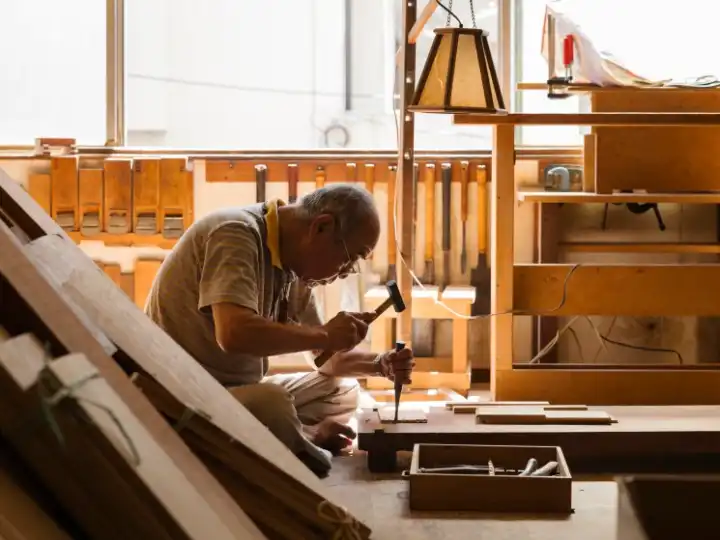 Business
Editor’s letter: Where to look for inspiration and how to act on it
People used to say that everyone had a book in them. Today there’s a creeping sense that every Jeff, Arianna and Elon is sitting on a business idea that can change the world – and not always for the better. But what makes a worthwhile business and what does it take to nudge people into starting one? Where and how does inspiration strike? And what do they learn along the way?Metaphors only stretch so far but the publishing parallels run throughout this issue ofThe Entrepreneurs, Monocle’s handbook for budding business owners and anyone looking to pen the next section of their own story. So where to begin? Well, Jaime Daez of Fully Booked had little to no experience in retail when he began selling the architecture magazines that became the basis of his now thriving business, one of the Philippines’ leading bookshop chains. Good ideas can start small before growing in volume. Just look at Deezer, the Paris-based music-streaming service that pays artists fairly.Expo, Tokyo.Honing your craft can take timeWe also speak to career-switchers – one of whom traded his dreams of being a rock star to reinvent the toaster (he knows which side his bread’s buttered). We also solicit some advice from fashion firms on when to start, pivot and say a fond farewell. The business life cycle is celebrated too, from the ups and downs to the unexpected twists and turns.Running your own concern takes graft but humbler company heads admit that there’s an element of being in the right place at the right time too. No, not in California: that moment has passed. Instead, we shine a light on Mexico, where entrepreneurs are rethinking everything from aviation to the art scene. We also visit Côte D’Ivoire to capture a moment of extraordinary optimism and opportunity in Francophone West Africa.Elsewhere, we meet the CEO penning fresh lines at family-run firm Bic, which makes products that many people have but few feel they own, and the developers creating desirable new workspaces on Wall Street, where a fightback against remote working is in full swing.We also profile three artisans crafting wares in the hearts of Florence, Tokyo and Stockholm in our visually appealing Expo – it’s about the businesses, of course, but also a meditation on what we all lose when cities become the exclusive remit of those with fat wallets, service jobs or white collars.The idea of “making it”, of what success actually looks like, remains subjective. Most of the businesses featured across our pages, however, aim to give a little back. Perhaps they endeavour to include their neighbourhoods in their activities, improve the lives of their staff or solve problems without costing us the earth (figuratively or literally). So, whether you’re looking to start writing a fresh chapter or toss away the old manuscript and begin again with a blank sheet, we’ve got ideas aplenty and stories to share. Isn’t it time to turn the page?
 Business
How to build real estate businesses from conversion, not demolition
When property entrepreneur Ben Gattie set out to restore one of his first heritage site in Singapore, he began with a disused 1920s-era biscuit factory with high ceilings and an ornate stuccoed façade. The site had been unoccupied for a couple of years and, though it was a little weathered by time and neglect, Gattie immediately saw its potential. Within a year, it had become The Working Capitol, a co-working space, complete with a lively mix of cafés and restaurants. Ben Gattie“Thanks to the building’s conservation status, it couldn’t be torn down,” says Gattie. “Instead, we considered how we could bring it to life. And it turned out that the site’s character made it the ideal property for the project. It helped us to attract and anchor the dream tenants that we wanted alongside the corporate ones.” The Working Capitol was just the first of many. Today, Gattie’s Singapore-based real-estate company, Triple P, oversees more than 35 conservation properties across the island state’s Chinatown neighbourhood. Indeed, restoring heritage sites has become its principal mission. Exterior of The Working Capitol “Adaptive reuse gives you flexibility,” says Gattie. “We can develop our layout and user experience based on a property’s unique configuration. It is exciting when you can instil your brand vision around a property, instead of the other way around.” Office spaces Part of the appeal of working with heritage sites for property projects is that, in addition to their uniquely Singaporean identity, these spaces tend to be distinctive enough to attract both international and local brands. Triple P’s constellation of heritage buildings along Keong Saik Road, for example, has enticed several global tenants, including Indonesian hospitality brand Potato Head and Canadian athletic-clothing retailer Lululemon, which sit alongside home-grown brands such as milliner Hat of Cain and restaurant La Cabane. And just around the corner at 89 Neil Road, a factory that once produced herbal pain-relief medicine Tiger Balm now accommodates bespoke workspaces for businesses that include software company Figma and concert promoter Live Nation. La CabaneTraditional shophouse shutters restored For the next phase of Triple P’s growth, Gattie is focusing on residential projects. The firm has acquired two old walk-up style apartments in the Little India district, on the doorstep of the city’s business quarter. These have been repurposed into 16 individual residential units for a co-living operator, which opened earlier this year and offers easy access to the city, as well as a sense of community and security. As an entrepreneur, Gattie saw an opportunity in a city that is renowned for its make-it-new attitude but also has a wealth of underutilised architectural marvels. “When working with heritage sites, you have to remain open-minded,” he says. “There has to be a compromise between nostalgia, romanticism and practicality for the spaces to be both special and commercially viable.” Want more stories like these in your inbox?Sign up to Monocle’s email newsletters to stay on top of news and opinion, plus the latest from the magazine, radio, film and shop.Your EmailSubscribe
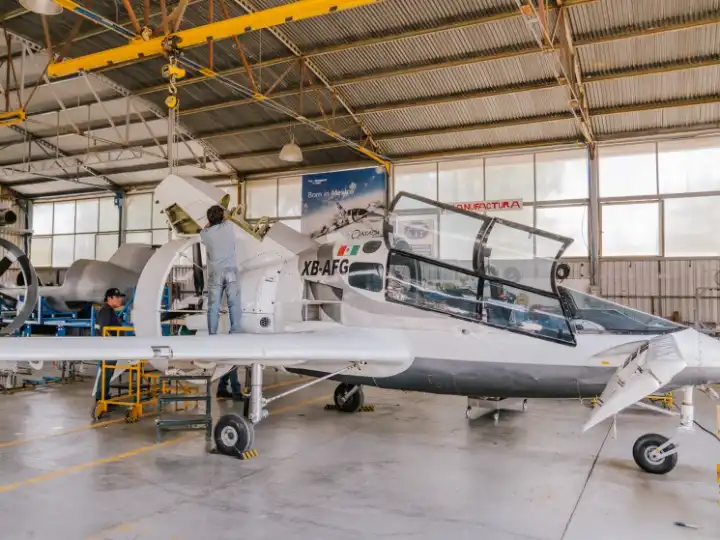 Business
Oaxaca Aerospace’s Mexican-built plane has beaten the odds and is ready for takeoff
Based between the Mexican capital and Oaxaca City, the Fernández clan – best known for transportation business Traylfer – is developing and building a “Made in Mexico” aircraft in a country not well known for its plane-making prowess. The family’s Oaxaca Aerospace has built a series of prototypes for its diminutive Pegasus jet, with its distinctive “canard” formation (small wings at the front) and large ducted propeller at the back. The impressive PE-210A was followed by this year’s P-400T, unveiled at the Famex aerospace fair in Mexico City.Rodrigo Fernández in a Pegasus cockpitRodrigo Fernández is the family business’s second-generation leader. The general manager says that Oaxaca Aerospace, which foresees military and civilian applications for its planes, is now ready for takeoff. The next step is to conduct further flight testing, with the goal of eventually converting the family factory that lies about a 20-minute drive from Oaxaca City into a production line for a full-fledged international plane developer.How did Oaxaca Aerospace come about?We’re a family business and my father is its president. For many years we specialised in fabricating trailers for transporting cargo. We have been making them for 40 years. My father has always loved aviation and has been up in those small, stripped-back Cessna planes that don’t have much technology. At some point, he wondered, “Why can’t we make a plane like this in Mexico?” and decided to do it. He began gathering together engineers and then we made our first drawings – that was in 2011. We had our first prototype by 2015 and began testing.The PE-201A prototype in OaxacaWas it difficult to develop and build an aeroplane in Mexico?Yes, because there isn’t much of an industry here when it comes to making aircraft. Mexico has focused on the maintenance and manufacturing of parts, rather than on the design side. So it has been hard to find experts in aeronautics. We had to look overseas to universities and to retired people to help us keep the project moving forward. We do our wind-tunnel testing in Madrid, for example.Instrument panelA snug fitHave you identified a market for the Pegasus?Our market is principally made up of emerging countries. We’re not about to take on advanced countries that have aircraft that are much more complex and sophisticated. Our proposal is more about military observation and safety missions, pilot training and things like these. There are a lot of countries in Latin America, as well as in Asia and elsewhere, that require this type of aircraft for these types of missions. If we can build a plane that has a low cost for maintenance and operation, it will be very attractive.How far are you planning to go?The dream is to eventually sell our planes across the globe and for the company to grow. We would also like to sell executive planes, such as a seven-seater.aeronavespegasus.comSteps to success1.Believe in what you do: Passion can take you a long way. In this case, a family’s love of aviation trumped the lack of an established industry.2.Find the right people: Don’t be afraid to look abroad. Gather experts around you wherever they are in the world.3.Know your market: Oaxaca Aerospace knows that its offering can’t compete with advanced jets so it is creating its own niche.Read more from Monocle’s 2025 Mexico Survey:Inside Mexico’s creative gold rush: four high-growth industries to watchThree game-changing developments about to transform Mexico CityEntrepreneurs to watch: the forward-thinkers making new paths in Mexican industriesEight ideas for Mexican businesses that are ripe for the takingMeet the self-starters behind the clever hospitality boom in Oaxaca CityThe entrepreneurial trailblazers revitalising Guadalajara’s art scene
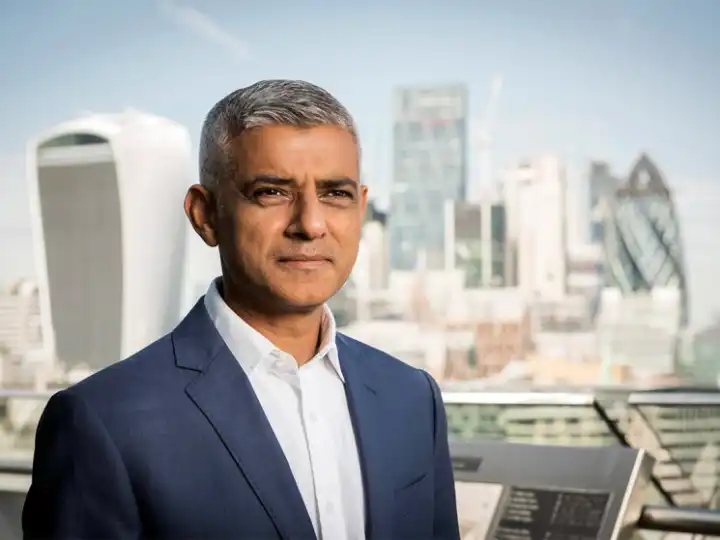 Business
Sadiq Khan supports “a better Heathrow, not a bigger one” as £21bn runway plans are submitted
Heathrow Airport has formally submitted detailed plans for a third runway as part of a proposed £49bn (€56.5bn) infrastructure expansion. The government claims the project could deliver major economic benefits – including the creation of 100,000 jobs – and boost the UK’s status as a global transport hub.The proposed 3.5km runway, which would require rerouting part of the M25 motorway, is projected to support more than 750 additional daily flights and increase Heathrow’s annual passenger capacity to 150 million. Airport officials say the scheme is “shovel-ready” and aim to have the runway operational within the next decade. They argue that it would unlock at least 30 new international routes.Up in the air: London Heathrow Airport(Image: Getty Images)However, London mayor Sadiq Khan remains a vocal skeptic of the expansion, despite acknowledging aviation’s contribution to the economy. Following the submission of the runway plans, Khan said he “remain[s] unconvinced that you can have a new runway at Heathrow, delivering hundreds of thousands of additional flights every year, without a hugely detrimental impact on our environment.”“City Hall will carefully scrutinise the new Heathrow expansion proposals – including the impact these would have on people living in the area and the huge knock-on effects for our transport infrastructure, which would require a comprehensive and costed plan to manage. I’ll be keeping all options on the table in how we respond.”In a recent interview, Monocle asked Khan whether Heathrow’s proposed growth could spark conflict with central government, particularly as national leaders push for accelerated infrastructure development and increased air-travel capacity:“Aviation is important for our economy but I support a better Heathrow, not a bigger one,” he told Monocle’s editor in chief, Andrew Tuck. “The noise pollution already affects more people than all major European hubs combined – and that’s with just two runways.”Looking ahead: Sadiq Khan (Image: Caroline Teo/Greater London Authority)“Air quality around the airport is still poor and a third runway would only worsen it. Plus, the Climate Change Committee says that aviation growth must meet carbon goals. Can Heathrow do that?”“Then there’s the infrastructure; rerouting the M25, tunnelling, upgrading the Piccadilly line, the Southern Rail and the Elizabeth line. It’s not the best use of money. Though I agree with the government on most issues, on this, maybe not.” As the project moves into the planning approval phase, it’s clear that the debate over Heathrow’s third runway is far from over and might become a defining test of the UK’s infrastructure priorities in the face of climate and public health concerns.Read Monocle’s full interview with Sadiq Khan here.Want more stories like these in your inbox?Sign up to Monocle’s email newsletters to stay on top of news and opinion, plus the latest from the magazine, radio, film and shop.Your EmailSubscribe
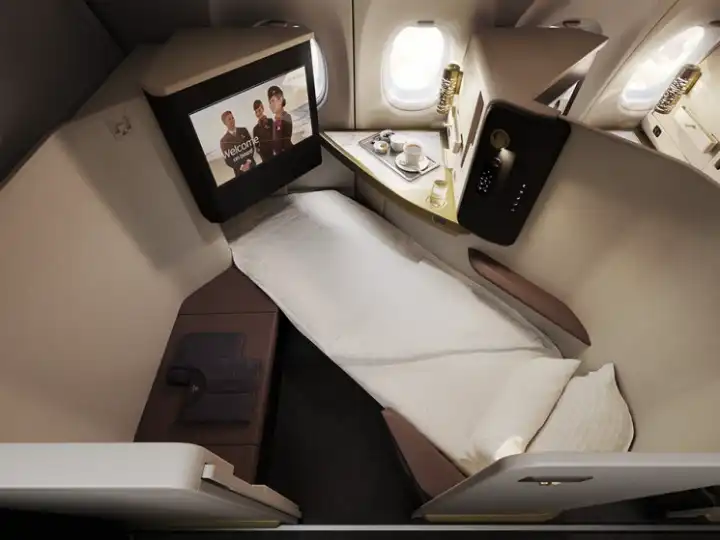 Business
Small planes with big ambitions: Etihad brings lie-flat first and business class to short-haul flights
Etihad Airways’ first Airbus A321LR enters commercial service today, 1 August, debuting on the Abu Dhabi-Phuket route before expanding to Bangkok, Chiang Mai, Copenhagen, Milan, Paris and Zürich.The aircraft represents a bold step for the company, being the first single-aisle jet in the world to feature a dedicated first-class cabin. It introduces long-haul features such as lie-flat beds and private suites into shorter-distance markets previously served by more basic cabins. The move is a calculated bet on the future of luxury travel.Short and sweet: Etihad Airways brings long-haul luxury to the Airbus A321LR(Image: Etihad Airways)Monocle’s transport correspondent Gabriel Leigh joined the Middle Eastern airline on the passenger jet’s delivery flight from Hamburg to Abu Dhabi, and Georgina Godwin onThe Globalistto report on the “premium-heavy” onboard atmosphere.“They’re trying to give premium-level passengers a seamless transition from long-haul widebody flights to these new routes, where they still get lie-flat beds, privacy – even closing doors in first class,” he says. “It’s a very beautiful aeroplane on board.”The A321LR, which is part of the A320neo family, is configured with two private First Suites offering wireless charging, Bluetooth pairing and space for a guest. Business class is comprised of 14 herringbone seats that convert into lie-flat beds – a layout usually reserved for the likes of the A380.Cabin fever: Business class gets an upgrade(Image: Etihad Airways)The airliner’s long-range capability allows companies to operate longer and fly less conventional routes that wouldn’t have been practical before. “Airlines such as Etihad can experiment a bit,” says Leigh. “They couldn’t fly to many places – say Krabi, Medan or Phnom Penh – with wide-bodies, but this aircraft lets them reach those destinations and see how the routes perform.”Aviation experts agree. Paul Charles, CEO of the PC Agency and former director at Virgin Atlantic, says the move signals a shift in how high-end travel is delivered, and a big step ahead of competitors. “Etihad is saying, ‘This is the new battleground for us,’ and they’re determined to make it a success, especially with rising competition from new carriers such as Riyadh Air. The food quality is superior too.”The new jet arrives amid the air carrier’s growth spurt, with 27 new routes launched or announced in 2025 alone.The UAE airline’s gamble is clear: that premium passengers will pay for comfort, even on mid-length flights. “Most travellers don’t even think about aircraft type,” says Leigh. “If the seat, space and privacy feel the same, Etihad may convince them that single-aisle luxury can match long-haul expectations.”If customers are willing to pay more for a better experience, even on shorter routes, Etihad is making sure that it meets the mark. Will other airlines rise to the pressure and catch up? Listen to the full report from 51:10, below:Want more stories like these in your inbox?Sign up to Monocle’s email newsletters to stay on top of news and opinion, plus the latest from the magazine, radio, film and shop.Your EmailSubscribe
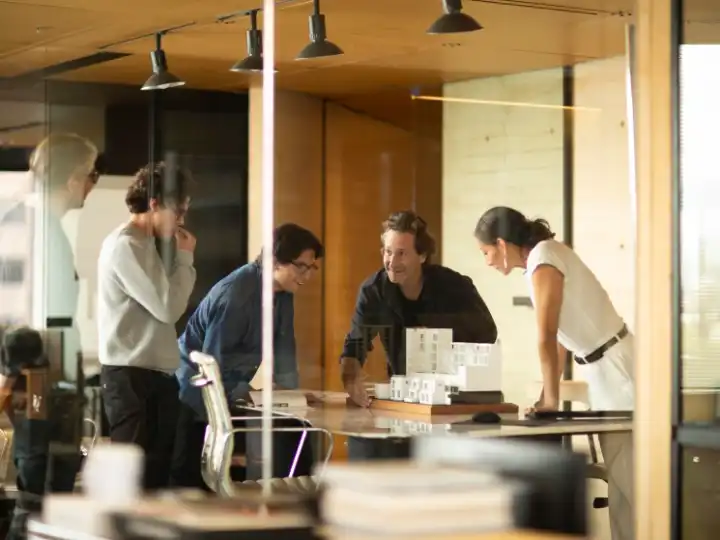 Business
Three game-changing developments about to transform Mexico City
Mexico City is buzzing with energy, fuelled by a population that, over the past five years, has grown by about 700,000 to reach 22.5 million. Tourism is booming too, surpassing pre-pandemic peaks. This surge in residents and visitors has sent demand for housing, office space, restaurants and retail into overdrive, keeping developers and architects on their toes. Here we highlight three entrepreneurs who are doing things a little differently.1.Best for:The high lifeMeir Lobatón CoronaGlance at Mexico City’s skyline and you’ll see clusters of reflective buildings. “They don’t make sense in this temperature,” says architect and developer Meir Lobatón Corona. Mirrored buildings might work in cities such as New York but not here, where the temperature is relatively mild.Monocle is visiting Torre Gutenberg, a recently completed 13-floor office tower in Anzures, two blocks away from Chapultepec Park, designed as a flexible structure. When tenants take occupancy of a floor, they move into a cement-and-glass shell that’s designed to be transformed over time and can be repurposed as an apartment or hotel room. “We thought, ‘Since we’re going to build it, let’s make it last’,” says Lobatón Corona. “The only way to do this was by building it as a structure, not as an office tower.”Torre GutenbergFrom inside Torre Gutenberg, where the look is softened by travertine floors and oak panels, you can see the entire city unfolding before you. “It’s completely transparent,” says Lobatón Corona. Unlike many contemporary office towers, these spaces aren’t temperature-controlled grey boxes. Every floor has a large balcony with big glass doors and windows that allow air and light to flood in.Meir Lobatón Corona (middle right) Model craftsmanshipTorre Gutenberg is a well-ventilated, bright space that will hopefully be as relevant in 50 years’ time as it is today. “We’re starting to understand that we don’t have to innovate just for the sake of doing something new,” says its designer.Barrio to watch: EscandónWedged between Condesa and San Pedro de los Pinos, Escandón offers easy access to the city centre.PricesA two-bed flat costs between MX$6.5m and MX$6.7m (€296,000 to €305,000) on average.Local finds: SorboThe area’s smallest wine bar, with the laid-back atmosphere of a Sicilian enoteca.Ingenieros 41, Miguel Hidalgo, 118002.Best for:Rethinking the officeAndrés Martínez, IterativaWhen Andrés Martínez, a co-founder of Iterativa, discovered an office building on Reforma Avenue that had stood empty during the pandemic, he decided to bring it back to life. Iterativa partnered with an investment fund, which took over the lease, and then set about redeveloping it. Today it houses offices and a restaurant and nightclub, as well as co-working space Público.Iterativa co-founders Andrés Martínez, Alfonso López-Velarde and Emilio IllanesIterativa doesn’t completely own the buildings that it works on. “We find the opportunity, execute the project and operate it,” says Martínez. Alongside co-working spaces, the company is rolling out hotels and serviced apartments to meet the demand for housing and accommodation in Mexico City. When Monocle meets him in the Reforma 333 building, he shows us around the businesses that now occupy the former office block.Público, which has big grey couches and glass windows that look out at the city’s Angel of Independence, was designed to be a hub where creatives could collaborate. “Instead of following the WeWork recipe of creating a huge common area and little spaces, we spread out the communal areas in different parts of the building,” says Martínez. Despite it being a towering office block, he was adamant about giving it personality. “We wanted to design the building [like a] house, to create something much more natural where people can meet.”3.Best for:Adaptive reuseRodrigo Rivero Borrell, ReurbanoDeveloper Reurbano has a well-earned reputation for breathing new life into Mexico City’s historic buildings through adaptive reuse and urban regeneration. And in a city that’s peppered with architectural gems awaiting restoration, there has been no shortage of structures for the firm to work with.Rodrigo Rivero BorrellWhen Monocle meets Rodrigo Rivero Borrell, founder and CEO of Reurbano, on the edge of the leafy Condesa neighbourhood, he whizzes us around the ground level of Zamora 15, a mixed-use space that, when completed, will also have 20 apartments. When he purchased the 80-year-old buildings in 2014, they had been abandoned for more than 25 years. Today Zamora 15 houses not only his brick-clad office but also an array of tenants who are all young entrepreneurs.For Rivero Borrell, the choice of renters is integral. If there isn’t enough variety, “you lose a lot of the value,” he says. At a building that he developed in Roma, Reurbano welcomed tenants such as Eno, a restaurant chain popular with local residents, but also kept a grocer who had been in the building for years.Reurbano HQ“The grocer is very important to the community,” says Rivero Borrell. “When you see what these people who belong to a community contribute to their area, you realise just how much good you can do by keeping them there.”And while fostering a sense of locality and belonging is good for residents, the grocer’s presence also makes sense financially. “You cannot imagine how much a well-selected commercial space on the ground floor increases the value of the properties,” says Rivero Borrell.Read more from Monocle’s 2025 Mexico Survey:Inside Mexico’s creative gold rush: four high-growth industries to watchEntrepreneurs to watch: the forward-thinkers making new paths in Mexican industriesEight ideas for Mexican businesses that are ripe for the takingMeet the self-starters behind the clever hospitality boom in Oaxaca CityThe entrepreneurial trailblazers revitalising Guadalajara’s art sceneOaxaca Aerospace’s Mexican-built plane has beaten the odds and is ready for takeoff
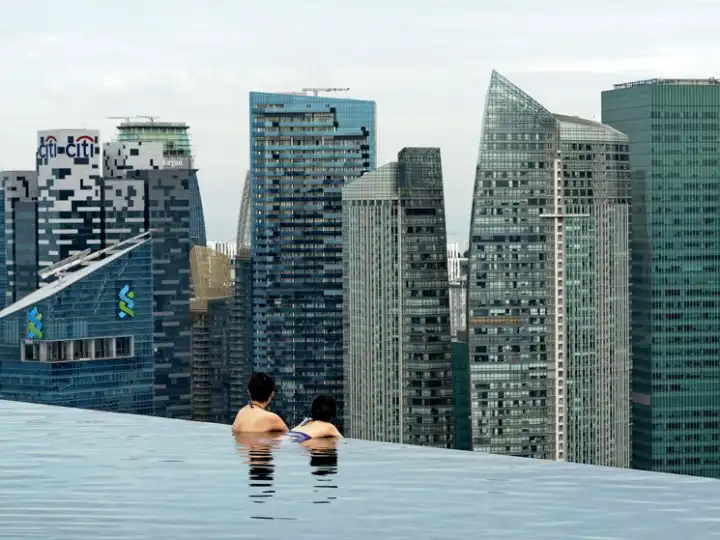 Business
Singapore’s star is rising – but it can’t afford to let rent hikes sink independent businesses
Singapore’s undeserved reputation for being dull is, mercifully, mostly behind it. Anyone who has visited recently will have seen those long-promised green shoots of growth and sophistication bearing lush fruit in everything from hospitality and design to entrepreneurship. Plus, doesn’t being safe, steady and predictable seem rather appealing today, given the fractious global backdrop?But there’s a thorny issue that still threatens the country’s success. Having finally achieved the cultural and creative cachet that they craved, Singapore’s budding restaurant, retail and hotel scenes had a slower-than-hoped-for Q1. Rent rises from private developers and landlords are now fast outstripping what smaller businesses say that they can comfortably afford.When good businesses on tight margins go under in a squeeze, their neighbourhoods pay a steep price. Once-thriving Tiong Bahru has lost some of its former lustre and you only need to look as far as the sad closure of the Thambi Magazine Store in Holland Village to see how one lively independent operator – of more than 80 years’ standing – can unite and delight an area, then leave it wanting when it’s gone.Shop in style: The masterful mixed-use New Bahru development(Image: Finbarr Fallon)The issue of peaking rental prices was unavoidable among the people I spoke to on a recent reporting trip with our Asia editor, James Chambers. One Singapore-based owner of a Japanese clothing brand told us about staging a trunk show in Seoul to test the market as costs soared at home. Two others in the hospitality trade told us about upcoming trips to Jakarta to scope out spaces where their money could go further (both near Plaza Indonesia, if you’re looking yourself).Luckily, some solutions are close at hand. Our trip to New Bahru – a handsome school-turned-shopping precinct – is a lesson in what decent, walkable, human-scale design that brings local brands together can do for footfall (plenty). Owned by The Lo&Behold Group, the space’s 40 or so tenants include a great bookshop, a spa, restaurants, multi-brands and places to drink that offer daylong allure. It’s a blueprint for designing a destination from scratch and keeping the creatives close. A much-anticipated phase two opens next year.Coffee up: Bowen and Leon Foo (on left), co-founders of Morning(Image: Finbarr Fallon)Over dinner at Marcy’s on Duxton Road I discussed the matter with the seafood bistro’s owner, Goh Tong Hann, who returned to his native Singapore after a stint in New York and is now patiently building a small but influential F&B outfit called Pleasurecraft Group. While he insists that his success has been a matter of luck, Hann has also demonstrated a handy resourcefulness. Rather than forking out for expensive refits, for instance, he has put his talents into designing the restaurants (see Chinese restaurant Maggie’s for a flavour) and has quickly pivoted on concepts and spaces that weren’t working. It’s a post-pandemic success story among all too many less fortunate ones.To see where rampant price inflation leads, you need only wander through one of the umpteen over-air-conditioned malls stuffed with samey international shops that have little in the way of personality. If Singapore wants to remain an exciting place to eat, drink and shop – and end the lazy chatter about it being boring once and for all – then it can’t afford to overlook the cost conundrum. It’s the city’s vibrancy that will suffer if rents continue to rise unchallenged.Fehnert is Monocle’s editor. For more on the New Bahru development, read our reporthere. And for tips to help you get the most out of your stay in Singapore, read ourCity Guide.This story originally appeared in The Monocle Minute…Monocle’s free-to-read daily newsletter. Sign up to get insight from Monocle in your inbox every day.Your EmailSubscribe
 Business
Digital decency: 10 rules for better online behaviour
Technology is everywhere, but our acceptance of its ubiquity is taking a toll: on our health, wellbeing and the quality of our conversations. Did digital media kill our discourse, or did we just let it? Do we need to spend every minute glued to a screen, barking down the line or listening to tinny gibberish on a phone speaker? Of course not, and the tech-peddlers aren’t exactly pinning us down and forcing us to do so either. So perhaps it’s time we all sought a better balance ourselves. With this in mind, I’ve whipped together a manifesto for a more dignified relationship with all things digital, from occasionally leaving our devices behind to being a little kinder and more cautious online. So, pop your phone on silent, take out your earbuds, ignore your emails for a moment and read on for ten ideas about firming up the online social contract.1.Have some perspective.Just because you have an opinion (about the news, your neighbour’s haircut or the warranty of the lawnmower you just bought), it doesn’t mean you should broadcast it to the world. So much of what’s smeared online to shame people and companies could be as easily solved with a friendly note, a jot of patience or a deep breath and a tap on the delete key.2.Have heart.So you’re having your say – great. But did the person that you’re pursuing or decrying deserve the condemnation? Are they the problem or someone who can solve it? Would you have been so thoroughly and unsparingly rude in person? What if the person you’re haranguing knew your name and was standing in front of you? The anonymity of the internet tends to make interactions harsher at a moment in history when a little give and take is much more useful.3.Forgive and forget.OK, so whoever you were taking a pop atdiddeserve it after all. But will pursuing a point publicly prove much? Do you feel better? Remember that it’s a human on the receiving end of your indignation: often a college-fresh social media manager, a naïve young girl or boy, or just someone doing their best to wade through the bilge and ire of below-the-belt comments and trolling. Think twice and give people the benefit of the doubt.4.Have some humility.Those white lies once reserved for CVs or after a third glass of wine have seeped onto websites, posts and online proclamations. Maybe you are a Productivity Jedi or an Online Experience Gatherer – and here’s a photo of you swimming in a friend’s pool necking free champagne… Social media has inflated our sense of self but it’s possible that the world isn’t all that impressed.5.Don’t overshare, part one.Secrecy is all too scarce a resource. Today, despite what most people tell you, you’re a person not a brand. Get a good night’s sleep and switch off now and again. No one wants to seetoomuch – of you, your home, those dark unexcavated, barely formed opinions that you’re blurting out at the same time as you’re committing them to the public record. Keep a little mystery, have a little dignity, maintain some allure.6.Watch your tone.Emails are oddly ambiguous ways to communicate and passive-aggressive behaviour is quickly amplified if you don’t check yourself. Take special pains to be clear and pleasant. No excuses, no-one’s too busy for manners and a little decency can go a long way – we’d all feel less stressed if the people on the other end of the keyboard were more positive, polite and kind.7.Don’t overshare, part two.Fewer emails will make everyone happier. Everyone’s busy – even more so as our work pursues us into our homes and leisure time. When it comes to work, we all need to think more carefully and ask, “Does that last missiveneedsending?” The office might be paperless but it hasn’t gone away; it has morphed into vast energy-intensive servers packed with useless data, nowhere emails and round-robins that were never opened. Be sparing.8.Be humane.You’re talkingthrougha phone nottoone. It’s too easy to forget the human at the other end. Instant messaging is excellent for efficiency but it takes more than a phone in every pocket to overcome our hardwired human (and hard-to-emulate-online) sense of trust and camaraderie. Don’t cut and paste a response; say something and mean it. Also, marketeers and mass emailers, there’s nothing less flattering than an automated reply or, worse, a cookie-cutter response with the wrong name at the top.9.Ask permission.Not everyone wants to be in your home movie, your advert, your brand launch, your family video-call quiz, your panoramic phone shot or your selfie. Spare a thought for the passerby who didn’t consent to star in your self-made, one-person psychodrama. Take pictures and capture the important moments, by all means – but leave others out of it unless they have agreed to participate.10.Seek out both sides of the argument.The internet doesn’t do nuance but you can. Algorithms guide us to people who agree with us and our echo chambers become ever more entrenched to the point of polarity: we don’t recognise the people we disagree with or the common ground we share. That’s dangerous – and it’s up to us to solve it. You might not get a full concession to your opinions. The important thing is how you conduct yourself – and when you decide to walk away.
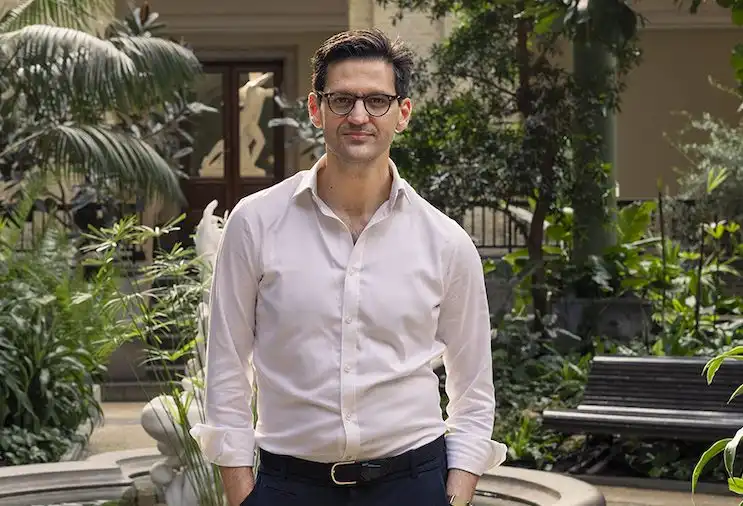 Business
Sustainable investing: how natural capital could outperform traditional assets
Earth Security is a think tank that connects global finance with nature’s capital and creates opportunities to invest in climate solutions. Its CEO, Alejandro Litovsky, is originally from Argentina and currently based between London and Copenhagen, where we caught up with him. He founded the company in 2011. A publisher of thought-leadership reports, Earth Security regularly works with investors, foundations, companies and governments. Litovsky says that you’ll never see mangroves in the same way once you find out about their ability to generate carbon credits or how they can provide cost-effective coastal protection.So, is making people see nature as an asset to invest in an easy sell? “It’s hugely sexy and everyone is interested,” he claims. “Now the question is, ‘What does that mean in practice?’” Earth Security has plans there too: the creation of an investment platform to scale opportunities. Monocle caught up with Litovsky to find out more.What made you want to set up Earth Security?I have always been an environmentalist at heart. In 2009 the global science community published a very influential report called Planetary Boundaries. A collective of top Earth-system scientists collaborated on a study to measure what could be the key limits and thresholds for things such as climate change, fresh water and biodiversity to keep the planet operating within stable conditions. It asked whether we had crossed certain security thresholds and the visuals were very stark. Of nine categories, three were already in the red.My sense back then was to say, “There has to be a way to translate this Earth-level analysis into a practical, almost country-by-country understanding of tipping points and resource bottlenecks.” There was a need to connect the understanding of companies in their headquarters with the reality of what to expect and show them how to create more sustainable investments that wouldn’t just be about ethical developments but would yield long-term resilience and business viability. If you’re operating a manufacturing plant that depends on water and that particular region is experiencing droughts and will have no water in 30 years, that’s something that should be on your radar. Earth Security started as a think tank producing analysis that would show different sectors how to value natural ecosystems and nature to help the services that they’re providing today.Is it about rebranding how people see the concept of investing in nature?The basic idea is that nature is already providing us with some fundamental services that we take for granted. Think about pollination: at least half of the world’s crops wouldn’t exist if it weren’t for bees. And what about the recycling of fresh water and where rain comes from? It involves the functioning of a complex ecosystem that one could really think about as a type of infrastructure. We need to be investing in these natural assets to maintain our long-term viability.In the past decade we have demonstrated very practically with numbers the value that nature has for a range of industry verticals. Coffee is one. By 2050, half of the land that is being used to cultivate high-value Arabica coffee won’t be suitable for growing the crop. Just imagine the bottlenecks and the price volatility. It has been proven that cultivating coffee under the canopy of the forest has a range of different resilience benefits.The key question is, how do you transition global industrial-scale value chains of coffee production into more nature-based production systems that are fundamental for the supply security of that crop?Case study: MangrovesEarth Security has numerous sides to its business, from working on viable places for individuals to invest in nature to encouraging companies to value natural assets. In the Philippines, it has been working with state and private players to help them recognise the value of mangroves – shrubs or trees growing in coastline waters – in providing coastal protection from climate change. Earth Security’s research suggests that they could reduce flooding and save €65bn a year in losses from extreme weather events. A five-year project in partnership with the Philippine Insurers and Reinsurers Association showed how those in the sector could price nature into policies, reducing costs for companies and the premiums that customers would need to pay. The project’s aim was to demonstrate how the insurance industry can make a big impact by investing in nature-based solutions. Three mangrove insurance products will be available next year.You have talked about companies seeking to guarantee their future supply chains but is it a good investment for individuals to look to nature?A lot of our first decade was about translating the knowledge that exists in science. In many ways, we are credited with really setting global agendas for things such as mangroves [and their protection], and putting them at the heart of global industry. What we are doing now is starting to think about how to start to work with investors, whether these are individuals, family offices, institutional investors or fund managers. How do you start to connect that capital and that interest in getting some exposure to natural capital? Where should people invest? How do you move their capital? That is what we are working on right now, which is really the next phase for Earth Security.So you’re bridging a gap in many ways?We find and aggregate a pipeline so that if you have a person who says, “Look, I would like to invest, where are the opportunities?” we are then able to provide a portfolio of opportunities that are nature-positive but that also offer a return. They’re offering a positive effect on the planet’s ecosystems and, by extension, local communities but they also have a return profile.Do you have to play the long game for a return on investment?There isn’t a one-size-fits-all solution. We’re not talking about nature as having one risk-and-return profile. We would like to work towards a scenario in which we can create diverse portfolios but also standalone investments, which are an interesting addition to other portfolios that already exist and are exposed to more traditional asset classes. We shouldn’t pigeonhole nature as either philanthropic or “patient” (meaning low- return) capital. I’ll give you an example. When you transition a farm to regenerative practices, first you will need a lot of upfront investment to plant trees and train people, and sometimes you will have a dip in productivity over the next three to five years as the ecosystem is, in effect, rebooting. And after that, what will happen is a massive upshot in productivity, perhaps 300 per cent more than what you had originally. The question is, who puts up the money for that initial lost income to farmers? And that’s where, for some of these opportunities, blended finance is really important – the use of philanthropic or public money when it’s used to de-risk or support a project.So what do you think are the most interesting investments?Regenerative forms of agriculture that are growing high-value crops are the place to be. It’s just a question of understanding what kind of companies to look for and what stage of the value chain you want to be at.Litovsky’s CV1975Born in Buenos Aires, Argentina.1990Receives a degree in international relations and political economy studies at Universidad Torcuato Di Tella in Buenos Aires.1998Takes part in COP4 in Buenos Aires as part of the Greenpeace International delegation.2000Starts working for a Swiss venture-philanthropy fund across Latin America.2003Moves to London to pursue a master’s degree at the London School of Economics (LSE).2004Awarded the Hobhouse Memorial Prize in 2004 by LSE and begins working for Shell Future Scenarios and sustainability consultancies AccountAbility and Volans.2011Founds Earth Security.2012Wins the BMW Foundation Global Responsible Leader Award.2022Named a UBS Global Visionary for his work on natural capital and global investment.
 Business
Boeing’s rocky flight path to recovery hits turbulence with Dreamliner crash
Another aviation accident, another three-digit coded Boeing airplane. After years of bad press dogged Boeing’s 737 line, the 787 Dreamliner now faces its first major reputational hit following the fatal crash of Air India Flight 171 on Thursday. While the exact cause of the incident won’t be known for many months, the disaster immediately resuscitated whistleblower complaints about production flaws in the wide-body aircraft – and proved that new CEO Kelly Ortberg’s turnaround efforts at the aerospace behemoth still have a long way to go.The maiden voyage for Boeing’s 787 Dreamliner took place in 2009 at Paine Field, its flagship manufacturing facility in Everett, Washington. The Dreamliner doesn’t cut as dramatic a profile as the double-decker Airbus A380 and holds fewer passengers than the Boeing 777. But as the name suggests, it provides a smoother ride than its peers for long-haul flights with more comfortable cabin pressure, higher humidity, better air filtration, dimmable windows and anti-turbulence technology.Wings of promise: A Boeing 787 Dreamliner taxis before its maiden flight in 2009(Image: Stephen Brashear/Getty Images)Like many global carriers, Air India has been stocking up on Dreamliners to replace an ageing fleet of 747s. While the Queen of the Skies is a beloved aircraft, the more fuel efficient Dreamliner is an ideal workhorse for flights between secondary airports, such as Thursday’s route from Ahmedabad to London Gatwick. Just last month, Ortberg joined president Donald Trump and Qatari emir Tamim bin Hamad Al Thani for the signing of a $96bn (€83bn) purchase agreement that includes 130 Dreamliners – the largest order for a single model of jet in Boeing’s history.The blockbuster deal in Doha papered over lingering concerns about the Dreamliner, concerns that the Air India accident has now propelled to the forefront. The same year as the 787’s inaugural flight, Boeing broke ground on a final assembly line in Charleston, South Carolina, that could handle wide-body aircraft – only the third such facility in the world after Everett, Washington, and Toulouse, France. The move was widely interpreted as a jab at Boeing’s unionised workforce in Washington state, as South Carolina state law prohibits compulsory union membership. The powerful machinists and engineering unions crowed that the lower-cost non-union labour in South Carolina would build inferior airplanes.Wreckage and reckoning: Aircraft debris at the crash site of Flight AI171 in Ahmedabad, India.(Image: Siddharaj Solanki/Bloomberg)Indeed, five years ago, Boeing discovered small gaps in the joins that could weaken the fuselage and production halted for two years to correct the issue. In 2024, whistleblowers testified before a Senate committee that Boeing had taken shortcuts and was “putting out defective airplanes,” an allegation the company denied by pointing to the thorough revamping of how it makes the Dreamliner’s carbon-composite airframe. The Federal Aviation Administration, which in the past has been accused of being asleep at the switch and effectively letting Boeing certify its own aircraft, oversaw the process. Media were also invited into the Charleston plant to see the improvements first-hand.The Dreamliner that crashed on Thursday, however, was built in Everett by union machinists and delivered in 2014 (before Charleston fully took over wide-body production). Any potential problems with the flagship wide-body jets cannot be reduced to a simple question of union or non-union labour. There are perhaps deeper structural issues facing the inordinately complex engineering of a modern aircraft such as the Dreamliner; it’s also possible that a fluke, such as a flock of birds, caused the crash, as with Jeju Air Flight 2216 in December. Boeing will, of course, dispatch a crack team to assist US and Indian authorities with the crash investigation. In the immediate aftermath, Ortberg has the toughest assignment for any aviation CEO – damage control in the wake of a fatal disaster that has shaken the confidence of the public. Whether he can pass this test with flying colours will prove the true mark of the man who has taken on one of the most daunting leadership roles in global business.Scruggs is Monocle’s Seattle correspondent.
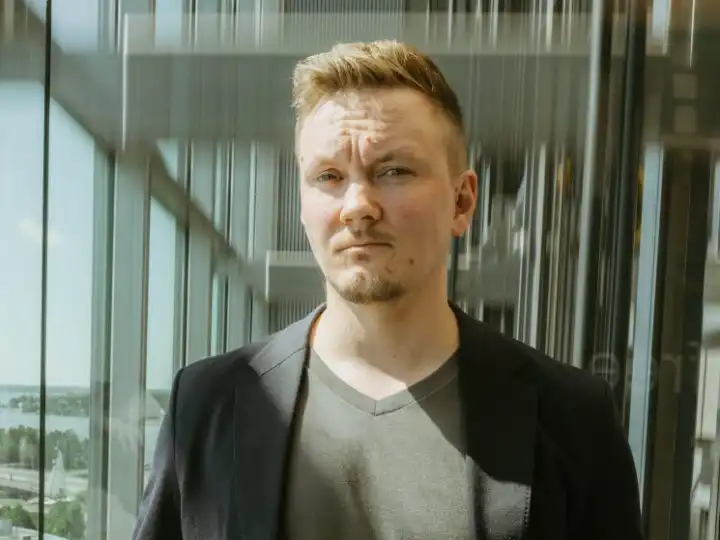 Business
Kone: The Finnish lift company quietly reshaping cities
“We talk about thinking outside the shaft,” says Jussi Herlin, vice-chair of Finnish lift-engineering firm Kone’s board of directors. He is the fifth genaration of his family to help steer the company; his father, Antti Herlin, is chairman of the board and former long-time CEO. “We build lifts and maintain them – but our real job is designing how people move through built environments,” says Jussi.Founded in Helsinki in 1910, Kone now operates in almost 70 countries and employs more than 60,000 staff. Its products move a staggering two billion people every day. When Monocle visits Kone’s high-rise headquarters in Espoo to meet 41-year-old Herlin (pictured), we’re told that he is waiting for us on one of the building’s upper floors. So we take one of the company’s signature lifts, which glides silently up 16 storeys and politely pings before its doors slide open. Beyond the HQ’s plate-glass windows are sweeping views of the Baltic Sea and Finland’s coastal archipelago.Herlin’s great-great-grandfather bought Kone more than 100 years ago, when it was just getting started in the business of lifts. The Herlin family, one of northern Europe’s wealthiest dynasties, has been associated with Kone ever since, both for being its biggest backer and for running the firm for most of its history. The company, which has an annual turnover of about €11bn, manufactures and services lifts, escalators and automatic doors, and prides itself on being a Finnish export. It has continued to service Ukraine’s lifts in metro stations, hospitals and residential buildings throughout the country’s war with Russia. “Functioning lifts are essential infrastructure, especially when cities are under stress,” says Herlin.The increasing digitisation of how buildings operate is Kone’s next frontier and the firm is hoping to rise to the challenge. Its elevators now connect to the cloud and communicate in real-time with building systems, maintenance teams and, increasingly, with users themselves, to help anticipate maintenance needs, shorten wait times or even turn on the air-conditioning in your office as you enter the building. Sensors monitor everything from vibration and temperature to acceleration and door cycles to ensure smooth travel and to optimise energy use.Kone in numbersFounded:1910Active in:About 70 countriesNumber of people who use Kone products every day:2 billionEmployees:More than 60,000Annual turnover:€11bnPatents filed:More than 3,000These inputs help predict breakdowns and optimise performance. “We can see how a lift behaves over time,” says Jussi. “We use AI to predict issues before they happen and make maintenance proactive. This improves reliability and reduces downtime.” Kone has also opened up its systems to third-party developers, allowing smartphones, delivery robots and more to interact with its lifts.Elevators are often described as the world’s safest form of public transport. Kone’s business has hinged on providing reliability at scale. Its systems operate in the background of daily life, helping billions of people to get around without thinking twice. But the company’s ambition goes beyond just being dependable behind the scenes. “Our one clear aim is to shape the future of cities,” says Antti Herlin. “We know cities and have enabled them to grow taller, more energy efficient and more accessible for more than a century.”According to UN projections, by 2050 about two-thirds of the world’s population will live in urban environments. Kone sees plenty of opportunity in helping this mass of people to go about their lives smoothly. One of the firm’s innovative products is Office Flow, which offers touch-free access through turnstiles, mobile elevator calls (allowing users to summon and control lifts using a smartphone app) and real-time wayfinding. Meanwhile, Kone’s flagship DX Class elevators feature built-in connectivity, through which third parties can connect its elevators to the likes of service robots, accessibility guidance systems and other advanced people flow solutions. In mass transit, Kone is piloting digital modelling software in metro stations in Helsinki, blending sensor data from escalators and corridors to model crowd patterns. This works to prevent bottlenecks and improve commuter experience at peak hours. “AI is revolutionising urban infrastructure and services,” says Antti Herlin. “We are constantly looking at how we can add technology to what we sell and our ways of working.”In addition to Kone’s 3,000-plus patents, Herlin points to milestones such as the development of the “machine room-less” elevator in 1996 as evidence of Kone’s ability to lead, not just follow.. One of its latest innovations is Ultrarope, a carbon-fibre hoisting solution that reduces the weight of elevators and allows them to travel further using less power. Another example is energy recovery, in which lifts are equipped with regenerative drive technology, which can recover up to 40 per cent of power used and put it back into the building’s electrical grid.As cities become more vertical and digital, the way that people move within them is becoming increasingly important – and complex. Kone’s answer is to build tools that are elegant, intuitive and all but invisible. Its products seek to make movement feel seamless, whether you’re stepping into a metro station, navigating an airport or returning home at the end of the day. “That we move two billion people per day is not just an abstract statistic,” says Jussi. “It’s a human reality. And our job is to make every one of those journeys feel effortless.”Five places to see the Finnish firm’s ascent1.New HavenUSAKone helped to transform Hotel Marcel into the first net-zero hotel in the US by modernising its lifts, which now return excess energy to the building’s power system.2.LondonUKFrom the Jubilee Line to the Elizabeth Line, Kone has helped to make the Underground accessible, reliable and ready for millions of passengers per day.3.Kuala LumpurMalaysiaKone installed more than 100 lifts and escalators in the Merdeka 118 skyscraper, including some of the fastest in the world.4.KunshanChinaAs part of a major urban-renewal project, Kone upgraded more than 2,000 lifts in eight months, improving life for more than 50,000 households.5.AucklandNew ZealandTo support growing visitor numbers at the 328-metre Sky Tower, Kone upgraded the lifts to handle long travel distances and strong winds while maintaining a smooth ride.
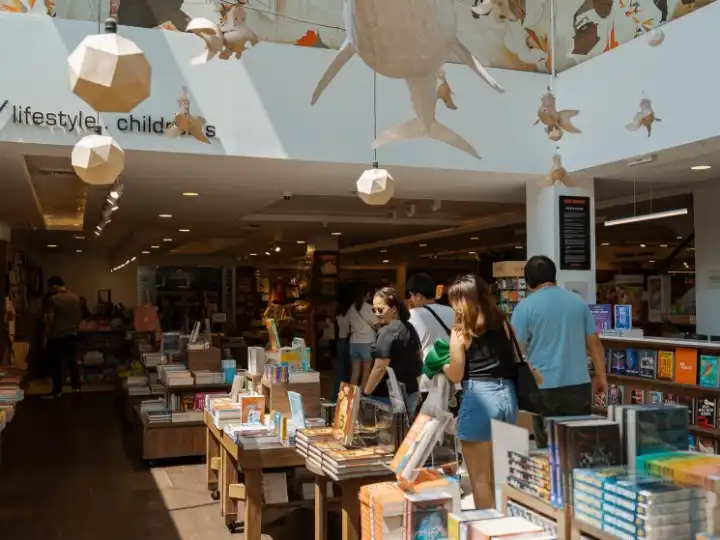 Business
How one fax led to Jaime Daez building the Philippines’ fastest-growing bookstore
Jaime Daez didn’t have much of a business plan when he started selling books: he just wanted to buy copies of Spanish architecture magazineEl Croquis(and, if possible, at a discount). Daez had started reading the publication as a student at the University of Navarra in Pamplona; after returning home to the Philippines in 1994 he was keen to keep collecting issues. “Amazon was nonexistent back then,” he says. “One day I decided to send the publishers ofEl Croquisa fax, presenting myself as a possible distributor,” he says. To his surprise, the magazine’s team agreed to give him 60 per cent off the retail price if he ordered 100 copies. Two sheets of fax paper later, Daez was a fledgling magazine and book distributor.Jaime DaezSitting in his office inside the Fully Booked shop in Manila’s Bonifacio Global City (BGC) neighbourhood, Daez tells Monocle that he started off more like a door-to-door salesman than a conventional distributor. “I would flick through theYellow Pages, looking for architecture firms and interior-design agencies to sell to,” he says. “The bigger the font, the better, because that meant they probably had a bigger budget for buying books.” His approach was simple. He would call a company and then visit its offices in person, with the hefty copies ofEl Croquisin tow.Four months into his improvised career, Daez secured an appointment with a renowned Filipino architecture firm. He arrived at its building only to discover that there was a power cut – a frequent occurrence in the country in the 1990s. The lifts were out of action and the firm’s office was all the way up on the 19th floor. So Daez trudged up the stairs, carrying more than 20kg of titles; half an hour later he was still only on the 10th floor. Huffing and puffing, he suddenly realised that, because of the blackout, the architecture firm’s office was probably closed. “I tucked the box of magazines in a corner and ran up to the 19th floor,” he says. “There was no one up there.”. For Daez, this moment was a turning point. “The incident made me ask myself, ‘Am I willing to put up with all of this?’” Despite the frustrating experience, he realised that he was.Daez’s next step was to use half of his mother’s 30 sq m sweetshop to sell an expanded range of titles focusing on tropical, Asian and Mediterranean architecture. Sales were encouraging. Eventually he took over the entire shop, widening its selection to include business and children’s books, as well as fiction. In 1997, Daez opened his first official bookshop in Glorietta, a shopping centre in the Makati precinct (Fully Booked now occupies a bigger site in the same complex). This was followed by a series of openings across Manila.Despite his swift success, that moment of clarity in the stuffy staircase as a 24-year-old continued to play an outsized role in Daez’s career. It steeled him as the Philippines’ publishing industry faced a succession of difficult challenges, from the 1997 Asian financial crisis to the rise of e-books. “Within the span of about three years in the late 2000s, the use of e-books increased by almost 10 times,” he says. “I remember thinking, ‘I might be out of business soon.’”Despite the uncertainty, Daez went on to take his biggest business gamble: securing a 15-year land lease to build a four-storey bookshop in the then-underdeveloped BGC precinct. “The head of [shopping-centre chain] Ayala Malls asked me, ‘Jaime, are you sure? Don’t you want to be conservative and focus on two floors first?’” But Daez believed that having his own land parcel would anchor the business in stormy times; he also suspected that BGC would soon become the new city centre. So he went all in. His instincts proved correct: today, BGC is one of the Philippines’ leading central business and lifestyle districts, the port of call for all of the biggest brands. Here, Fully Booked BGC stands as a beacon for book lovers. It’s an attractive flagship shop with plenty of natural light, a big acrylic painting by US artist Mike Stilkey that uses discarded books as its canvas and whimsical paper sculptures of marine animals that hang from the ceiling.The four-storey Fully Booked BGC shopPaper sculptures hang from the ceilingBy 2020, Fully Booked had 31 thriving bookshops across the city but lacked a strong online presence. This became a big problem when the coronavirus pandemic forced all of Fully Booked’s shops – which the authorities deemed as non-essential businesses – to close for two months. No one was permitted to enter. “Our online sales were only 1.5 per cent of our total revenue at the time,” says Daez. “It was a matter of survival. I told my managers to bring home their laptops and encode every single book for our online shop.” Despite the lockdown, his team upped its productivity and added 10,000 titles to the business’s website within four months.This agile response to the crisis made all the difference and cemented Fully Booked’s position as the Philippines’ go-to bookshop chain. Its biggest competitor, National Book Store, seems to have shifted its focus towards textbooks and office supplies. “National Book Store used to be a temple of the written word,” says Ric Gindap, co-founder of rising Manila-based magazine shop Spruce Gallery. “But stepping inside today, you feel like you’re preparing for a third-grade science fair, rather than feeding your literary soul.” By contrast, Fully Booked has continued to diversify its selection of fiction titles, art books, graphic novels and more.An inside lookStaff prepare for openingThe team is on hand to helpThe company’s growth looks good on paper too. Since the pandemic, Fully Booked’s online business has grown by 2,400 per cent and 17 new shops were added during the same period. Its e-commerce operation has been such a success that it has caught the eye of US publishing giant Penguin Random House. “Its executive vice-president told me that we were its case study in Asia because no one had pivoted better and more quickly than we had,” says Daez.The biggest endorsement came when Japanese bookshop Kinokuniya chose to team up with Fully Booked for its expansion into the Philippines in 2022. Together they opened a co-branded shop in the Mitsukoshi BGC shopping mall, with a selection of 20,000 Japanese books. The move has enabled Daez to tap into the growth of manga (and Japanese pop culture in general) in the Philippines. “Manga exploded during the coronavirus years and Japan is unsurprisingly the top destination visited by Filipinos,” he says. It’s a partnership that is blooming. In October, Daez will be opening another co-branded shop with Tokyo matcha café Wasachi in the upscale Rockwell neighbourhood.Fully Booked has bucked the trend of bookshop closures because Daez has always found a way to evolve with the times. While books are the foundation of the business, Daez isn’t afraid to expand its offering. He recently set aside a section for “blind boxes” – sealed packages that each contain a randomly chosen product from a wider series, such as a key-ring doll. These might seem like a departure from books but Daez thinks of this hugely popular trend as a crossover. “Many of these blind-box characters originated from books,” he says. “People come in with the intention of buying one of these boxes but might also pick up a book along the way. We’re not selling something random, like Christmas lights.”Daez is already plotting his next move: creating a suite of Fully Booked-branded merchandise. To him, the gold standard is New York bookshop The Strand, whose own branded wares are almost as well loved as the books on display. “Its shop sells so many variations of its own tote bags, T-shirts, socks and more,” says Daez.An assortment of bestselling titlesOff-the-wall merchandiseComic reliefCustomers pick up their next readIt has been almost 30 years since that fateful fax but Daez’s zeal for what he does remains undiminished. “I put in more time working now than when I started the business,” he says. While his strategies continue to shift according to the market, there’s one constant: his love of books. “I’m a bit of a romantic when it comes to my business,” he says. “I believe that if you have passion for what you do, it can be felt in your stores.”The CV1994:Returns to Manila from Pamplona, Spain1996:Starts distributing copies ofEl Croquis1997:Opens his first full-fledged bookshop in Glorietta2007:Opens the Fully Booked BGC flagship shop2021:Fully Booked’s e-commerce business rapidly grows2022:Inks partnership with Kinokuniya 2025:Fully Booked is on track to have 49 shops by the end of the year
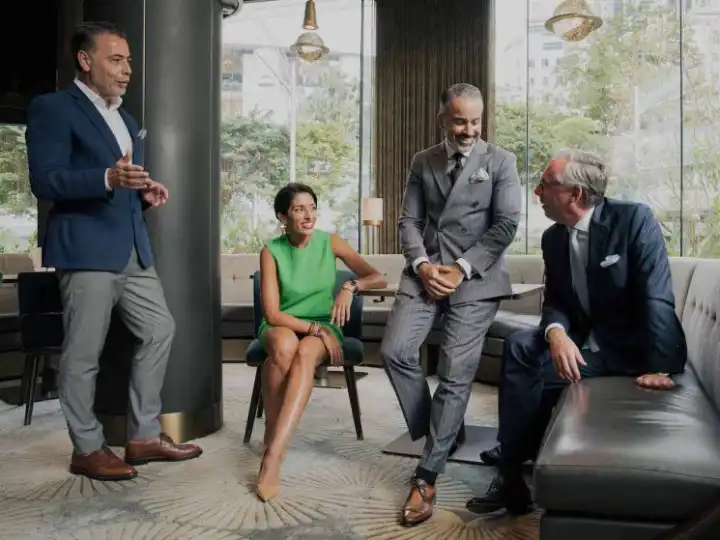 Business
Four hospitality GMs share their strategies to return bookings to pre-pandemic levels
Upbeat, optimistic and creative – that’s the mood in Hong Kong’s hospitality sector, according to the general managers (GMs) of some of the city’s top luxury hotels. Crisis mode is over, they say, and Asia’s favourite business hub is primed for a strong second half of the decade with new openings and new infrastructure in the pipeline. There’s still plenty of work to do to win back long-haul travellers and nudge room rates back to where they were before the coronavirus pandemic but, as ever in Hong Kong, the private sector is leading from the front. Hotel owners and bosses are putting competition aside and working together to co-ordinate marketing efforts and shift the narrative. Monocle took the opportunity to join one of these friendly get-togethers for a conversation about technology and talent at one of the best tables in the city.Our panel:L – R: Michel Chertouh, Kristina Snaith-Lense, Anas Bencheqr, Christian PodaThe Old World standard bearerChristian Poda, Four SeasonsHospitality runs in Poda’s family, with three generations working in hotels and restaurants. The Berliner cut his teeth in his hometown, learning the ropes at The Kempinski Bristol Hotel and Palace Hotel before beginning a long career at the Four Seasons. Poda has since spent much of his career in Asia, returning to Hong Kong in 2022 to lead the Four Seasons, the venue of the UBS Asian Investment Conference 2025. The globetrotterMichel Chertouh, Regent Chertouh’s almost 40-year career at Intercontinental Hotels&Resorts has taken him around the world, with postings in Paris, London, Rio de Janeiro, Miami and Tokyo. A graduate of the École Hôtelière de Paris, the dual French and Brazilian citizen landed in Hong Kong in 2021 to become the general manager of the new-look Regent. The 497-room hotel on Victoria Harbour reopened in 2023 after a three-year overhaul by Chi Wing Lo. The hometown host Kristina Snaith-Lense, Upper HouseBorn in New York and raised in Hong Kong, Snaith-Lense has spent most of her 20-year career in hospitality at The Upper House, the André Fu-designed property in Swire Hotels’ House Collective. Before joining as director of guest experience in 2012, she spent two years at The Landmark Mandarin Oriental in Hong Kong, her first managerial role after graduating from Switzerland’s École Hôtelière de Lausanne.The high flyerAnas Bencheqroun, Ritz-Carlton and WBencheqroun currently oversees two neighbouring hotels in West Kowloon for Marriott, including the world’s highest, the 312-key Ritz-Carlton on the top floors of the icc, Hong Kong’s tallest skyscraper. Bencheqroun began his 20-plus-year career in hospitality at The Four Seasons in Paris before joining Marriott in 2013. He returned to Hong Kong’s loftiest lodgings in 2021 as manager before landing the top job and taking over responsibility for the W.This is a convivial after-work drink, but aren’t you supposed to be competitors? Kristina Snaith-Lense:We see each other most frequently at international trade shows. At ILTM in Cannes last December we talked about the need to promote Hong Kong as a group. When we returned, we began organising monthly lunches to discuss how we’re selling the city to the international market.Christian Poda:We’re competitors but we all love Hong Kong. So we want it to do well. For a while the city had a very bad narrative but it’s much better this year.Michel Chertouh:Overcoming that narrative has been a sacred journey, not just for the government and the tourism board but also for us in the hotel industry.What are occupancy rates like?Anas Bencheqroun:We are all at above 70 per cent. The first quarter was quite strong, markedly better than last year.KSL: With the Kai Tak stadium now open, we finally have a world-class venue. Having Coldplay as the first international act there was huge. But it’s crucial to keep that momentum going.Who hasn’t come back yet?KSL: The US market hasn’t fully recovered. But new ones have emerged, such as the Middle East and Russia.AB: India is strong for us.MC: Southeast Asia is back but Europe and Japan are still a challenge.What more could Hong Kong be doing? MC: It’s all about telling Hong Kong’s story from fresh angles and new perspectives. It’s less about infrastructure and more about branding. That’s where the private sector comes in. We can’t rely solely on the government. It’s up to us to reimagine the city and present it in a compelling light.Kristina, your guests can now find a dry bag in their room’s closet, alongside the usual shopping bag and umbrella. What does that say about the type of luxury traveller coming to Hong Kong?KSL: We’re seeing more people wanting to explore the hiking trails and the outlying islands. We need to be showcasing experiences that go beyond just dining and shopping. MC: We are noticing a shift in demographics. There’s a younger clientele coming in from mainland China, whereas before the pandemic, the crowd was older. With that shift, you see changes in behaviour too.Could you give us an example? MC: Drinking habits have shifted quite noticeably. People are opting for quality over quantity. There’s also a broader trend away from alcohol.CP: We see the biggest shift in our Michelin-starred restaurants. Guests are still eager to dine there but their preferences have evolved. Instead of a three-hour tasting menu, they prefer a 90-minute meal and they want to eat less.Kristina Snaith-Lense, Upper HouseChristian Poda, Four SeasonsWhat are your guests telling you about technology? Are they saying that they want more – or that they want a break?AB: They want more but also to be given a choice about it. Luxury is all about having the choice, so we need to provide the technology for people to use.MC: And make it simple.CP: Sometimes give more, sometimes give less. It really depends on the occasion.How is your role as GM changing?CP: Today we run serious, complex businesses. I oversee 900 employees and a multi-million dollar-per-year operation. That marks a real shift from the past. The romantic notion of simply being a hotelier is increasingly giving way to the demands of a CEO. How much face time do you tend to have with guests?CP: Probably about an hour a day – not as much as before because there’s a lot that can’t be managed from the lobby.AB: I shouldn’t be spending more time at the desk than in the lobby but the balance has shifted. GMs from 10 to 15 years ago didn’t have the data that we have today. Whether it’s guest satisfaction or KPIs, the data helps us to manage our businesses better but it’s also taking us away from the operation.MC: But it’s still an industry that requires you to give a lot of yourself and to invest your heart into it. I believe that you need to spend time with the guests and we’re not spending enough.Hong Kong’s most recent big openings were the Rosewood in 2019 and the Regent in 2023. What do you think will be next? MC: When you compare Hong Kong pre- and post-pandemic, the evolution is remarkable. With all the launches this decade – West Kowloon Cultural District, the stadium, the airport expansion – the city has never been static. It’s incredible to see that, against all the odds, Hong Kong has continued to invest and progress, and evolve to where it is today.KSL: Kimpton is opening later this year and Andaz is opening in the next few years.MC: That lifestyle element was probably missing from Hong Kong.AB: Yeah, we only had the W. Now I will have some competition.KSL: Aman is also looking for a site.AB: Bulgari too. Everybody is looking.CP: Think of the quality of hotels here, at a price point that is, frankly, much lower than in pretty much any other key gateway city. Compared to London, Paris and New York, Hong Kong is a bargain.Anas Bencheqroun, Ritz-Carlton and WMichel Chertouh, Regent Which city is Hong Kong’s biggest competitor in Asia these days: Singapore or Shenzhen?KSL: Shenzhen. We have seen it, especially over the Easter break this year when about two million people left Hong Kong. We know that a huge number went to the Greater Bay Area.AB: Neither. It’s Tokyo. Because a large part of our business is coming from mainland China and their spending in Tokyo has tripled. That increased spending would usually have come to Hong Kong.MC: Tokyo and also Bangkok, which has evolved as a dining destination. Hospitality there has improved too. CP: If you want to do business with China you have to be in Hong Kong, not Singapore or Tokyo. Shenzhen is so cool but that’s good for Hong Kong. I know it’s a competition, in a way, but Hong Kong has a prime role to play in the Greater Bay Area. We just need to figure out how to coexist. Short-term pain, long-term gain. AB: With more synergies between the cities around us, such as Shenzhen and Guangzhou, we could easily become the Silicon Valley of Asia. Business travel is still lagging but we see the demand coming back. And with what’s happening in the world right now, Asia will definitely be a destination for new businesses.What’s your single biggest challenge – or perhaps headache – for the second half of the year?AB: Finding and holding onto people. The numbers in hospitality education have dropped by 30 per cent compared to before the pandemic. And there is a good 20 per cent of the workforce moving out, so we have to be careful. KSL: One challenge for us is rates. We need guests who are willing to book premium room categories to achieve those pre-pandemic rates.MC: Visibility is an issue too. Last-minute bookings have become a trend, adding complexity to staffing and making it harder to plan investments in activities.CP:We need less volatility and an easing of global tensions. I was really scared after “Liberation Day” [in April, when Donald Trump announced sweeping new tariffs] but now I feel a lot better again. If the world’s number one and two economies can get on better, it would be amazing for us.This article originally appeared in the Opportunity Edition newspaper 2025, created in collaboration with UBS for its Asian Investment Conference in Hong Kong.
 Business
Can Candela build the perfect all-electric Med ferry?
Per-Arne Hjelmborn, Sweden’s ambassador to Spain, arrives early at Sotogrande, an upscale harbour on the southern coast of Andalucía. Standing on the quay in the soft morning sunlight, dapper and tall in a suit, tie and sunglasses, he says, “We’re about to set a milestone. We will be connecting Africa with Europe [in a new way]. This is a great day for Swedish technology.”Hjelmborn is about to boardElina, the fully electric hydrofoil boat that is attempting to set a world record for being the first all-electric vessel to traverse the Mediterranean. The plan is to graze past the Rock of Gibraltar, dock at the Spanish city of Ceuta on the African continent for a quick charge of the boat’s battery and then return to the Spanish mainland in the afternoon.Elinais a C-8 hydrofoil, a nimble and lightweight 28ft (8.5-metre) leisure boat built from carbon fibre that comes with battery technology and upholstery designed by car manufacturer Polestar. The boat, which is built and developed by Swedish firm Candela, can reach speeds of 30 knots (55.6km/h) and travel 40 nautical miles (74km) on a single charge. Candela’s crossing of the Med is not just about breaking records; it’s also a charm offensive. This will introduce the technology behind the firm’s larger hydrofoil, the P-12, which can take 30 passengers and is already running a successful commuter service on Stockholm’s waterways. If Gustav Hasselskog, Candela’s founder and CEO, gets his way, the two million people who travel between Algeciras on the Spanish mainland and Ceuta every year on large, polluting ferries will, in the near future, have the option to board Candela’s P-12 instead. “We’re proving that it is possible to revolutionise transport at sea,” says Hasselskog, as he climbs aboardElina.Since launching Candela in 2014, Hasselskog has added more funding (€35m raised in the latest round), staff (currently 220), an HQ in Stockholm and a factory outside the Swedish capital. The company will soon inaugurate a second factory in Poland. He has sold the P-12 to 10 countries so far, including Germany, New Zealand, the US and Saudi Arabia, where the hydrofoil will frequent the canals of the futuristic new megacity, The Line, once it’s built.The potential to electrify sea traffic is there and the market for smaller, faster and cleaner vessels is wide open and untapped. “These sea lanes have existed for thousands of years but we’ve lost sight of their potential,” says Hasselskog. “Ferries are expensive and dirty. We’re paving the way for a new zero-emissions mode of public transport.”Per-Arne HjelmbornTV crews interview Gustav HasselskogKarim Bulaix García-ValiñoCandela’s mottoHasselskog is hopeful that his hydrofoils will appear everywhere, from Mumbai to New York, and believes that people on the Costa del Sol would be quick to jump on a P-12 between, for instance, Málaga and Marbella, cities that can often only be reached via traffic choked roads.“We have a product that delivers a fast, clean and reliable alternative to clunky, dirty ferries,” he says. “We also have no competitors.” Hasselskog steersElinaout of the harbour and sets the bow towards the open sea. Candela boats run on a software system similar to that found in fighter jets; it stabilises an essentially unstable craft using ultrasound sensors that gather information about wave movements, adjusting the foils accordingly for the boat to stay on course. Lowering the foils into the water, the CEO then pushes to full throttle.Cresting the waves alongsideElinais a fossil-fuel-powered speedboat, which struggles to keep up with the C-8, with its foils that lift the craft about half a metre above the water’s surface. She’s silent, fast and stable – unlike the speedboat, which smashes hard onto the waves, roars and smells of gasoline.Fully electric P-12 ferry in SwedenExcept for the fog that envelops the harbour entrance at Ceuta, the trip over the Mediterranean runs smoothly – and we’re accompanied by schools of tiny dolphins. At 25 knots (46km/h), it takes about an hour to travel between continents. Upon arrival in Ceuta, Hasselskog’s PR manager, Mikael Mahlberg, who rode in the speedboat next toElina, shouts to his boss, “We have a world record!” and gives a thumbs up.As Hasselskog moors the hydrofoil, he and his team are surrounded by a scrum of journalists and TV crews, who are there to record the historic crossing, and are then greeted by dignitaries including Karim Bulaix García-Valiño, president of Ceuta’s chamber of commerce. “Ceuta is reinventing itself,” says García-Valiño. “We want to be smart and green. Candela fits right into that.” This sentiment is echoed by Ceuta’s diminutive mayor-president, Juan Jesús Vivas, who expresses his enthusiasm once Hasselskog shows him a reel of the P-12 cruising Lake Mälaren in Stockholm in more explicit terms. “Es de puta madre,” he says, which roughly means, “It’s awesome.”The man who is most likely going to operate a fleet of Candela P-12s between Ceuta and the Spanish mainland is Manuel Gómez Guiterrez-Torrenova, the president and CEO of Avangreen, a multinational green-energy infrastructure firm that recently opened a solar-panel park in Ceuta harbour. “We can plug in the boats to charge right here,” says Guiterrez-Torrenova. “Millions of people visit Andalusia every year but many don’t realise how close they are to Africa. There’s a big gap in the market. These people could easily pop over to Ceuta on a Candela boat.”To understand how a small Swedish firm could become a world leader in the electric hydrofoil market, you have to understand its founder. Hasselskog’s core team describes his leadership style as open and hands-on. He certainly looks the part of a technology entrepreneur: black T-shirt emblazoned with the company’s logo, shorts and a Candela cap. He also speaks like one when he says that he is ready to dominate the world’s waterways.Candela team with Ceuta’s mayor-president, Juan Jesús VivasThe 53-year-old, who has an engineering degree, is quintessentially Swedish, hiding his intelligence and entrepreneurial prowess behind a measured and humble attitude. And, judging from the boyish glint in his eyes, Hasselskog retains the same curiosity for research and development that he had as a young man when he would tinker with anything that he could disassemble and reassemble – then improve.That is further confirmed when he talks about the beginnings of Candela. “I had achieved all that I wanted,” he says. “I had the corner office, the money, the nice car. But I realised that no one cared about what I did. Nobody would remember me for my corner office.”Hasselskog, who talks with great affection about his two teenage sons – “They don’t take after me,” he says with a laugh, sounding content. “One paints, the other makes music” – explains how he stumbled across the idea of launching a company that makes electric hydrofoils. “I’d spend €50 on petrol to take my sons in our motorboat from our summer house in the Stockholm archipelago to the nearest kiosk in town to buy ice cream,” he says. “Those ice-cream runs were far too expensive. I had to do something about that.” Now, just over a decade later, Hasselskog knows that he did the right thing when he spent part of his savings on renderings of the first boat and embarked on the schlep to find investors, sketches in hand. Out of 90 venture capitalists, all but two turned down meeting him, though they too ultimately said thanks but no thanks. It took investment from Christer von de Burg, a Swedish rare and antique bookseller in London, to get things going. “Hasselskog is an inventor,” says Von de Burg over dinner with representatives from Málaga’s local government. “He is passionate about his project. He gets things done. He’s the real deal.”That assessment proved wise. Though Candela’s first prototype failed to lift out of the water and brought the team back to the drawing board, the next iteration, the C-7, worked – and Hasselskog’s doggedness and belief in his product has delivered a clean way to travel by sea. “We flew across the Mediterranean today,” he says back at the quay at Sotogrande, looking relaxed and happy. “That has never been done before.”Candela timeline2014:Hasselskog launches Candela2019:The first hydrofoil, the C-7 model, is launched2021:Launch of the C-8; 60 orders are made within the first five weeks2022:Candela opens a factory in Rotebro, Sweden. First US Candela test centre opens in San Francisco2024:The P-12 starts a commuter service in Berlin and Stockholm.The C-8 crosses the Baltic Sea from Stockholm to Mariehamn, the capital of Åland, for the first time2025:Candela sets a world record for an all-electric hydrofoil crossing the Mediterranean. New factory in Poland is scheduled to open at the end of 2025
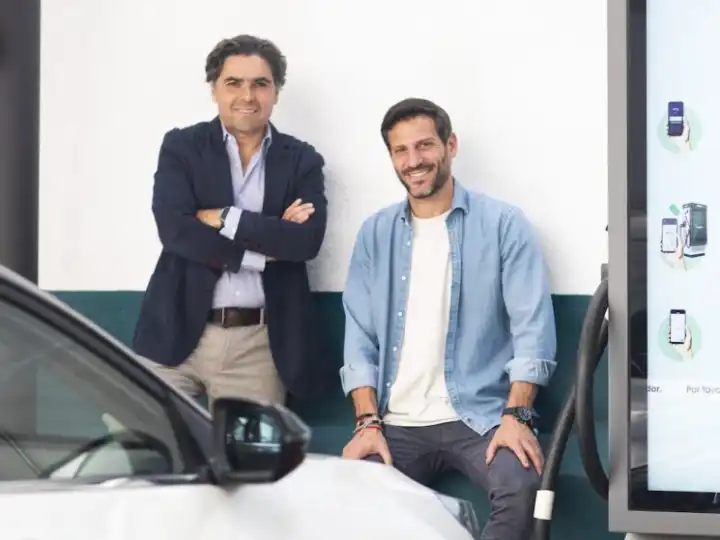 Business
Entrepreneurs to watch: the forward-thinkers making new paths in Mexican industries
1.Roberto Rocha and Germán LosadaCo-founders,Vemo, Mexico City“The first time that we met one of our investors, he said, ‘You either have the best electric-mobility model that I have ever seen or you’re totally crazy,” says Roberto Rocha, Vemo’s co-founder and CEO, sitting in a ninth-floor office in Mexico City’s Polanco neighbourhood. If the past few years are anything to go by – Vemo recently raised $63m (€56m) for further expansion – it’s safe to say that the company falls into the former category. “We have proven that we have the winning formula for a market such as Mexico,” says Rocha.Vemo founders Roberto Rocha and Germán LosadaOpposite him sits Germán Losada, his Argentine co-founder and chairman. The former investment bankers founded their mobility start-up in 2021. Noticing that the take-up of electric vehicles (EVs) in Mexico was low, they hit upon their clean-mobility idea. A core part of their business is an EV lease-to-buy programme called Vemo Impulso for ride-hailing drivers who can’t afford to buy cars right away. “We provide leasing to people who are typically not taken care of by the traditional banks because they don’t have good credit histories,” says Rocha.Vemo, which partners with ride-hailing platforms Didi and Uber, has had to create both the supply and the demand, since little infrastructure existed before its arrival. It has been developing an extensive EV-charging network across the country and paying 1,600 ride-hailing drivers fixed salaries to work two shifts per day in its cars through its Vemo Conduce arm. “In the absence of [state] subsidies, for the economics to work, we required significant utilisation,” says Losada. A third string in Vemo’s bow is operating EV fleets for businesses.Vemo’s lease-to-own venture is now operating in five Mexican cities, while the rest of the business also expands. “Today we have the country’s largest public charging network,” says Losada. “And in terms of charging sessions, we’re the largest in Latin America.” Mexican sales of fully electric vehicles in the first four months of 2025 almost tripled year on year and Vemo sees opportunities in other Latin American nations. “We have a unique business model that’s proven to work,” says Losada.vemovilidad.comSteps to success1.Build an ecosystem: Vemo realised that it needed to grow both supply and demand – and set about doing so.2.Corner the market: It moved in an aggressive way at the beginning, acquiring four companies in the first three months.3.Be cost efficient: The company has explored working with US EV brands but the economics don’t work for now – hence the use of Chinese models.2.Adrián Marfil and Juan Manuel GarcíaCo-founders, Los Patrones, MonterreyFurniture brand Los Patrones has been tapping the domestic market for what it does best: metal. Founded in 2015 by Adrián Marfil and Juan Manuel García, it is continually evolving. In 2021, for example, the company took control of its production process. Los Patrones has become a benchmark for metal-furniture excellence in Mexico and is eyeing expansion both at home and abroad.Los Patrones founders Adrián Marfil and Juan Manuel GarcíaMonterrey is an industrial city. How did you harness its manufacturing side?Adrián Marfil: Most of the materials that we use are metal, which is produced here. We have taken advantage of our geographical situation.How did you end up taking over your factory?Juan Manuel García: At the beginning, our provider was my father’s company. In that post-pandemic period of sluggishness, he suggested that we absorb it, along with all of the employees.How are you evolving?AM: We’re developing stainless steel for gardens and swimming pools, which would allow us to work better with hotels and other big projects. Then we want to look at e-commerce and retail sales.Do you see yourselves as entrepreneurs?JMG: We saw an opportunity and we took it – the perfect definition of entrepreneurship. The factory is part of the muscle but the heart and soul of the brand is the design.lospatrones.mx3.Maye RuizFounder, Maye, San Miguel de AllendeWhen interior designer Maye Ruiz moved from Mexico City to the town of San Miguel de Allende in her home state of Guanajuato, she was initially concerned that being away from the epicentre of art and design would hinder her career. But the move – which was prompted by her desire to be with her husband, Daniel Valero, the founder of artisan-focused studio Mestiz – gave her the chance to get out of the CDMX bubble. “It is really refreshing,” she says.Maye Ruiz in San Miguel de AllendeIn 2021, Ruiz established design studio Maye, which unabashedly embraces bold colours. “What matters most is working with people who bring a unique sensitivity and a strong creative drive,” she says. Her workplace, on a cobbled street near the centre of town, exemplifies her distinctive style. Visitors enter through a primary-blue steel door into a tranquil courtyard, where windows are framed in the same vivid hue. The bathroom and kitchen, meanwhile, are lined with ruby-red tiles.Studio details“My style works really well in San Miguel de Allende,” says Ruiz. Many of her clients own multiple residences worldwide, which makes them more adventurous in their design choices. “They’re bold about colour here,” says Ruiz. Because the city is famously vibrant, with streets fringed with houses in shades of peach and pink, it’s easy to break away from beige.Beyond residential projects, Ruiz has ventured into commercial design. Notably, she collaborated with her husband on the restaurant at Casa Arca hotel in San Miguel de Allende. Located in the historic Casa Cohen, it features Ruiz’s playful décor, including large woven lampshades.Having firmly established herself in the city, Ruiz now aims to grow and diversify her business beyond Mexico and expand into product development. “We are always looking to partner with people and brands that share our vision and push us creatively,” she says. But she has no intention of straying from her new base. “Mexico City is such a vibrant city with so many things to do but it can also be really distracting,” she says. Being in San Miguel de Allende presents a unique opportunity to grow her practice. “It’s a place where you can focus on your business.”maye.mx4.Luis González and Ana HolschneiderFounders, Cervecería Hercules and Caralarga, Querétaro“I’m restless and have my own ideas,” says Luis González, the co-founder of Hércules brewery, a glass of sour beer in hand. His wife, Ana Holschneider, who is sitting beside him at a beer-garden table in Santiago de Querétaro, agrees. “He’s always talking about the next project,” she says. González and Holschneider, who met in Mexico City and have four children, are entrepreneurs in every sense – even though Holschneider says that they established their careers “without knowing it” and González confesses that he has never put together a business plan. It all started 14 years ago when, after a stint in Hong Kong, the couple moved to Santiago de Querétaro to take over part of a half-abandoned textile factory that belonged to González’s family. Ana Holschneider and Luis GonzálezEyeing the beautiful factory buildings dating back to 1846 – as well as the grand hacienda attached to it – González saw potential and undertook an impressive renovation project with his twin brother, Carlos. The first step was to establish Cervecería Hércules, an independent craft brewery in a country dominated by big groups. “We saw the chance to make a quality beer in Mexico with profound brewing values,” he says. Grandiose detailsMaking of a Caralarga pieceIn step with González, Holschneider started a design studio called Caralarga, influencedby pre-Hispanic Mexico. Having previously experimented with silk and pearls, she hit upon the idea of using the threads from the Querétaro textile factory. “I walked around the factory and saw the leftovers, which looked likequeso Oaxaca[a stringy cheese],” she says. “I said, ‘If we can make jewellery from this thread, it will be spectacular.’”The couple have come a long way. Caralarga, which employs 50 people, has moved into making large wall-hangings for collectors and interior designers across the globe. Cervecería Hércules, meanwhile, has invested in expanding its capacity. Alongside the two brewery bars – and organising concerts, film screenings and dance classes at the Hércules site – it has opened a beer hall in Santiago de Querétaro, as well as a restaurant and a shop in Mexico City. “We don’t want to open something just to open it,” say González.The latest piece of the puzzle has been Hotel Hércules, which launched in July 2023 in the former hacienda. It has 40 rooms with a mid-century aesthetic and wall hangings from Caralarga. Holschneider and González aren’t finished yet. “I never thought that all of this would happen to me,” says Holschneider.almacenhercules.mx; caralarga.com.mxSteps to success1.Give back:Former textile workers and residents get discounts on beer.2.Deliver something fresh:Querétaro previously lacked a gathering space that offered so much. Identify local needs.3.Have the right people:Holschneider’s business partner, Ariadna García, and artisan María del Socorro Gasca are key, as are Udo Muchow (García’s partner), friend Santiago Migoya and brother Carlos for González.Five more entrepreneurs to watch1.Juan José GutiérrezCEO, Jelp Delivery, Tijuana: Logistics solutions software for last-mile delivery.2.Montserrat MesseguerCEO, Montserrat Messeguer, Mexico City: Making boots inspired by the north of Mexico since 2017.3.Mario BallesterosFounder, Ballista, San Miguel de Allende:Curator and former magazine editor Ballesteros runs a platform for art and homeware.4.José García TorresInvestor, Mérida:The gallerist is an investor in Mérida ventures Salón Gallos and Pizza Neo.5.Laura NoriegaFounder, Tributo, Guadalajara:Design company from Jalisco’s capital that uses artisans from across the country.Read more from Monocle’s 2025 Mexico Survey:Inside Mexico’s creative gold rush: four high-growth industries to watchThree game-changing developments about to transform Mexico CityEight ideas for Mexican businesses that are ripe for the takingMeet the self-starters behind the clever hospitality boom in Oaxaca CityThe entrepreneurial trailblazers revitalising Guadalajara’s art sceneOaxaca Aerospace’s Mexican-built plane has beaten the odds and is ready for takeoff
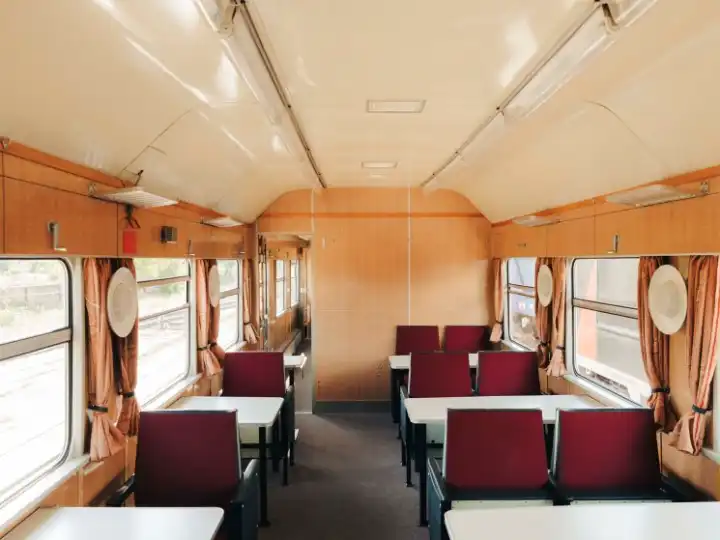 Business
Can this Cold War-era train revive the romance of rail travel?
In the Cold War’s great game of global prestige and influence, East Germany’s most mobile ambassador didn’t carry a passport – it carried people. Unveiled in 1963, the VT 18.16, later known as the SVT Görlitz, was the GDR’s answer to the West’s glamorous trains. A sleek, diesel-powered bullet of beige metal and burgundy, it transported party delegates, foreign dignitaries and business travellers from Berlin to Prague, Copenhagen and Vienna at a stately 120km/h. Inside were beech-veneer panels, deep-blue upholstery and rotatable seats modelled after those in a jetliner.The SVT Görlitz was built not merely to move passengers but to stage a performance of modernity. That it was reservation-only – almost unheard of at the time – only burnished its brand. “Boarding the train felt like stepping into another world,” says Matthias Hebenstreit, who was just 18 years old when he took his first and only journey aboard it during a work trip. “It was like catching a glimpse of the future.”The SVT Görlitz’s aerodynamic designRise and shineFirst-class compartmentDubbed a “diplomat on wheels”, the SVT Görlitz offered a rare corridor between East and West. By the late 1970s, however, railcars were falling out of favour and the train was gradually withdrawn from service. Of the original eight, only three survived reunification. One sat mothballed for years in Nuremberg at the museum of national rail network Deutsche Bahn (DB), lacking a working engine or brakes.It is this SVT Görlitz that is finally getting back on track. In a hangar in Halberstadt, a town in the state of Saxony-Anhalt, a team of railway enthusiasts and engineers is painstakingly restoring one to its former glory with the aim of resuming a service within Germany next year. “Getting a high-speed train such as this back on the rails is a way of making a legacy visible again,” says Mario Lieb, who is leading the effort.More than 70 volunteers – mechanics, electricians, upholsterers, administrators and planners – have spent the past six years sourcing parts, stripping paint, replacing windows and reinstating fixtures with forensic attention to detail. Among them is Andreas Haufe, who oversees operations planning for the train’s return to the rails. A driver with DB in Dresden, he’s responsible for staff co-ordination, training and regulatory oversight – a wide-ranging role that reflects his personal commitment to the project. “For DB, I drive modern trains to Berlin, Hamburg and Rostock,” he says. “But this one is different.” Born into a railway family, Haufe was four years old when his uncle, one of the SVT Görlitz’s last certified drivers, brought him along on a refuelling run between Dresden Neustadt and Altstadt. “I still remember the sound, the atmosphere,” he says. “For me, it’s the most elegant train ever built in Germany.”Driver’s cab of the SVT GörlitzOf the €7m restoration budget, €5m came from public funds. The project aligned neatly with talk in Berlin of reviving the network’s international rail express routes. The restoration also happens to coincide with a moment when DB – beset by persistent delays, last-minute cancellations and overcrowded trains – is seeking to repair its battered image. Just 62.5 per cent of German long-distance trains arrived on time last year and the public’s patience is wearing thin. Patrick Schnieder, the transport minister, recently said that the state of the railways had become a national barometer. “People feel that things no longer function in the way that they should,” he told the German Press Agency. “That’s not just seen as a failure of infrastructure. It’s perceived as something more fundamental.”Berlin-based revenue analyst Jessica Neumann joined the restoration as a volunteer, signing up as a photographer for the project. “It’s amazing how many people have a personal connection to this train,” she says. One couple wrote to say that they met in the SVT Görlitz’s dining car on a journey to Karlovy Vary in the 1970s. They struck up a conversation, fell in love and eventually married. Decades later, they hope to take that journey again.Wherever possible, the restoration work is done in-house. “We have people here with a great deal of expertise,” says Lieb. But restoring the SVT Görlitz requires not just technical skill but an eye for nuance. “There was no unified interior across the eight trains,” he adds. “They were built in four batches, two units each, and there were notable differences in detail.” The team approached what remained with archival precision. Swivel seats, originally clad in grey-brown corduroy, were reupholstered in deep red with black side accents. The pattern of the dining-car curtains was faithfully reproduced. And the lighting? “The worn-out lamps had been replaced with pressed-glass fixtures,” says Lieb. “We had new ones produced by a local lighting maker, closely modelled on the originals.”Refurbished dining carBuilt for comfort: newly reupholstered deep-red seatingRestored lights in the dining carDining carAll of the fabrics now meet modern fire regulations and hidden systems such as toilet technology and door locking have been discreetly introduced to meet cross-border standards. Other aspects needed no improvement. “There was hot and cold running water on board already,” says Lieb. While the exterior, originally developed by Berlin-based architect Hans Gutheil, was leaner and sleeker than the more bulbous silhouettes emerging from West Germany, the interior was far more restrained. The aesthetic nodded subtly to Bauhaus principles, especially in the dining car, right down to the decorative end panels. “Of course, they had to work with what was available,” says Lieb. “But they still made something elegant.”Though the SVT Görlitz emerged from a combination of constraint and ingenuity, the railway itself would soon face a very different challenge. After the fall of the Berlin Wall, the newly unified train network was less a public service than a profit-driven enterprise. “The early years were genuinely positive,” says Christian Böttger, a professor at Berlin’s University of Applied Sciences for Engineering and Economics, and an expert on Germany’s railways. He explains that as passenger numbers grew and freight volumes increased, new high-speed routes helped to make the national railway company a respected enterprise.While the DB remains a pillar of German mobility, the emotional contract that it once held with the public has quietly lapsed. The railway still moves people but not, perhaps, in quite the same way as before. What’s missing isn’t just modern infrastructure or newer trains, even though the federal cabinet has just approved a €107bn support package. It’s more a sense that the railways belong to everyone.Lighting the wayBauhaus-informed kitchenSleek exteriorThat spirit, say the restorers, is embodied in the SVT Görlitz. If all goes according to plan and the train returns to the rails in 2026, there will be space for 238 passengers to come aboard, plus 23 in the dining car. “We even have a chef,” says Lieb. For some, the journey to Prague will be a sentimental one. For others, it might offer a glimpse of how rail travel once looked, sounded and felt, when it carried a sense of purpose and promise.svt-goerlitz.deMonocle commentFocusing on function alone will only ever get you so far in the world of mobility. One reason why this train (and any worthwhile travel experience) lives long in the memory is that it embodies an idea missing from most providers today: generosity. It might sound idealistic – even improbable, given the degradation of the lower ends of train and plane travel – but zipping between cities or stops should be enjoyable. More often than not, this means natural materials, good low lighting, some soundproofing and sturdy construction. And what about some fun too? The odd plush finish – such as this deep-red upholstery – is a reminder that a little drama in our designs can go a long way.
 Business
20 hard-earned business lessons from entrepreneurs at the top of their game
Want to build a business that works? We have gathered 20 lessons from global entrepreneurs and industry leaders at various stages of their journeys. In candid conversations on Monocle Radio, they shared with us their thoughts on what it takes to succeed, from carving out a niche and building a purposeful brand to knowing when to trust your gut or pivot with grace. The ideas here span six continents, with sharp insights from founders and CEOs in fashion, media, manufacturing and robotics. Some spotted overlooked markets, while others turned to the past, stacking skills to create something new. What unites them is a willingness to rethink the obvious, be bold and keep building, whatever the size of the idea or the field they’re in.For more smart thinking and fresh perspectives, tune in to Monocle Radio’s weekly showsThe EntrepreneursandEureka, your blueprint for the best in business, retail and leadership.1.Pursue what challenges you“I didn’t set out to start a beauty brand. Cutting through in such a saturated market is incredibly challenging – it’s a steep hill to climb. But I saw problems that were worth solving and it felt meaningful to me to try. I decided that I wanted to bring new thinking into the industry and make it more sustainable, introducing products that combine nature and efficacy.”Emma LewishamCo-founder and CEO of Emma Lewisham skincare2.Value traditional techniques“Greece has an incredible jewellery heritage that isn’t celebrated enough. I have always thought that ‘Made in Greece’ should mean something, just as ‘Made in Italy’ does. Seeing the artisans of the country at work their craftsmanship, the goldsmithing techniques – made me realise that we could create something beautiful that was rooted in culture and truly worth sharing.”Alexia KaridesCo-founder and CEO of London-based jewellery brand Ysso, whose handcrafted pieces are made in Athenian workshops3.Digital doesn’t have to mean disposable“Speed tends to be prioritised over quality in digital journalism. Newspapers often save their well-researched long-form content for print, while digital news outlets churn out quick, low-quality updates. We saw that there was demand for depth over volume amid the relentless breaking-news cycle. The more polarised society is, the greater the need for a product that takes its time.”Tav KlitgaardCo-founder and group CEO of Danish digital-only news outlet Zetland4.Turn a pain point into match point“As a tennis player, I was always annoyed by how much time I would spend picking up balls instead of actually playing. So we built an autonomous robot that does it for you. Other players immediately supported us because it’s a common frustration in the sport. We knew that we had something that would do well, not just in the US but in all big tennis markets.”Haitham EletrabiCo-founder and CEO of Alabama-based company Tennibot, which makes ball-collecting robots for racquet sports5.Take advantage of overlooked market opportunities“Growing up in Oaxaca, I would find delicious mezcal everywhere. But many people in Mexico City dismissed it as a cheap peasant drink. I never imagined that it would become a global phenomenon but once the big chefs in the capital started talking about it, tourists came and everyone wanted a taste. At the start I just wanted to keep my grandfather’s recipe alive.”Yola JimenezFounder of Yola Mezcal, an artisanal brand based in Oaxaca, Mexico6.Build in sustainability from the start“The things that you need when you’re young and moving in with your partner for the first time aren’t what you want when you have two children and a bigger house. We wanted to design furniture capable of growing with our customers so that they don’t have to replace all their pieces – they can be adapted to evolving needs.”Anders ThamsCEO and co-founder of Moebe, a Danish design brand making interior goods that are easy to ship and simple to repair7.Keep things simple“Over the years, we have spent a lot of time thinking about the growth of the team and what happens when you bring 5,000 people together. Our biggest challenge is how to keep the culture vibrant, with everyone working together, while setting increasingly ambitious goals.“At Canva, we have a two-step plan. The first is to become one of the most valuable companies in the world. The second is to do the most good that we possibly can. When we bring in an investor, we ensure that they are very clear about what their money is going to do, what our vision is, what our mission is and what we are trying to achieve.“One of our core values is to make complex things simple. Thirteen years ago, when we set out to apply this to design, we wanted to make a product that wasn’t just serving the 1 per cent of the world that could think deeply about the subject for 10 hours per day. We wanted to produce something that would unlock the power of design for everyone – what we call ‘Empowering the world to design’. The first version of our graphic design platform did this and we spent the next 12 years making sure that the product stays simple but powerful.“Creating a better organisation and being a responsible actor within society is a key part of Canva. We have given away more than $1.5bn (€1.3bn) worth of our product every year to teach students and benefit non-profits all around the world. That’s an amazing thing that’s extremely simple for us to do, because we just flick a switch in our database to give people the product for free. It helps to improve people’s lives and their organisations, and non-profits to drive their mission. Students are able to learn more effectively and teachers can engage their students in a better way. It’s a win-win.”Cameron Adams Co-founder and chief product officer of Australian software company Canva8.Embrace uncertainty“We often strive to predetermine things. The temptation is to decide, ‘This is how my business should run.’ But the longer I do this, the more I realise how important it is to be adaptable. You never know how things will go on any given day, so you need to be able to pivot.”Tom Àdam VitolinsFounder of Berlin-based loungewear brand Tom Àdam, renowned for its pyjamas9.Stay in your own lane “I launched my brand to create my own space, not to fill a gap. At the time, South Korea’s perfume market was almost nonexistent. It was a risky move but I believed in my vision. I’m not trying to please everyone. I would rather know that one person really loved a scent. My biggest fear is making a forgettable fragrance that no one has an opinion about.” Jun LimFounder and creative director of Born to Stand Out, an artistic perfumery in Seoul10.Break the rules for long-term growth “Businesses need to make money if they want to continue to exist and thrive. Expansion can present new challenges but the shackles have been kind of thrown away a little bit. We always try to remember that we don’t need to be constrained by a certain set of rules. This allows all of the things that we love and care about – from hospitality to music, art and design – to shape and influence what we do next.” Johnny Smith and Daniel WillisCo-founders of hospitality group Smith & Willis11.Start in a niche to gain momentum and credibility“We began in the indoor-climbing industry because we knew that it was the fastest way for us to create an impact as we had access to the community. That gave us a way to test our material and connect with people who are eager for a solution to the problem of plastic use in climbing gear. Starting small helped us grow our vision in a way that felt organic.” Marta Agueda CarleroCo-founder and CEO of Material Alternative Design, a Berlin-based company making high-performance materials using mycelium, the root-like structure within mushrooms12.Unleash your inner nerd to find the recipe for success Lena Patriksson Keller: “While I have the greatest respect for anyone who has a full lifestyle brand, Jonas and I agreed to do something very specialised. We said, ‘Let’s be nerdy, go deep and dive into something where we can excel on all levels.’ Jonas especially has a long history in denim. Does the world need another denim brand? Probably not – but we felt that there was space for one with European values that moved away a little from Americana.”Jonas Clason:“We don’t use so many different elements but concentrate on the perfect fit, fabric and packaging, as well as on sustainability. We wanted to team up with industry leaders to create something new – owning the supply chain, threads and fabrics, and so on. We started with a laboratorioin Castelfranco outside Bassano del Grappa in Veneto. Instead of sending patents and finishes to a supplier,we made the ‘recipe’ there.”LPK:“There is a completely different level of knowledge today among customers and in the supply chain. At the beginning, we said that the industrial set-up was crucial for the whole business because a European brand is all about culture. As a new company, we were fortunate to have a close relationship with suppliers, developing all of these things for us. At an early stage, we said, ‘What Loro Piana is for cashmere, we want to be for denim.’”Jonas ClasonCo-founder and creative director of JeanericaLena Patriksson KellerCo-founder and chief brand officer at Jeanerica and executive chair of the Patriksson Group13. Rebuild long before you’re forced to do it“We took the whole company apart and rebuilt it to be more sustainable. Every business should do the same. Even without a crisis, act as though you have one. Re-evaluate your team, costs and core offering. Strip it all back, be clear on your purpose and build a strong, focused strategy.”Johan HellströmCEO and owner of Swedish haircare brand Björn Axén14.Seek out like-minded collaborators“I wanted to create the first African-owned high jewellery brand that honours the communities where the gemstones that are used come from. The first PR firms that I approached told me to tone down the African influence as it would be a hard sell with editors – so I chose to work with someone else. The whole purpose of founding this business was to celebrate that African heritage.”Vania LelesFounder of African high-jewellery brand Vanleles15. Build before you’re ready“We didn’t have engineering backgrounds but we kept experimenting. We tinkered with existing technology, tested countless prototypes and learned from every failure. Eventually, we realised that our makeshift headsets could become a business. The real breakthrough came when we saw the demand for personal use so we shifted focus to the hardware and it opened up a whole new world for us.”Sheera GorenCo-founder and CEO of Zygo, the world’s first underwater streaming headset16. Craft a compelling brand story“We made a website before we even had the product. My background as a photojournalist came in handy because I knew that a purpose-driven story resonates with people. So I wanted to focus on longevity and build a narrative that reflects my connection to Argentina – my homesickness for the country, Buenos Aires and the artisan craftsmanship that you find in Latin America.”Victoria AguirreCo-founder and creative director at Pampa, a rug and homewares brand in Australia with roots in Argentina17. Turn your skills into toys“I have a background in advertising and graphic studios – I spent years on creative teams before starting my own project in my forties, inspired by my five-year-old. I wanted to express what I had learned about creativity so I started a toy brand with designs that encourage open-ended play. Children think that they’re playing with toys but they’re really tools for building critical skills.”Nuria TorrasFounder of Lekkid, a Barcelona-based toy brand18.Future-proof your industry“You can learn the basics of ceramics in a matter of months but it takes decades to master it – and our workforce is ageing fast. That’s why every craftsperson should be training someone who is 10 years younger to ensure continuity and knowledge transfer. Our most experienced decorator was taught by her mother. Now we’re teaching her daughter.”Sarah WatsonOwner and creative director of Balineum in London and Phoenix Tile Studio in Stoke-on-Trent19.Success isn’t in still waters – so learn to ride the waves“Most great entrepreneurs feel like outsiders. They’re flawed, restless and often misunderstood. But strength lies in seeing beyond the surface and staying focused on the change that you want to create. Good leaders compartmentalise rejection, push forward when told no and keep going. Move on quickly and try again.”Jasper SmithFounder of Arksen, a company making vessels, adventure apparel and overland vehicles based in the Isle of Wight20.Question established models“For the first 14 years, I faced plenty of scepticism. People would say, ‘He’s not a pilot – he’s an asset-finance guy! What’s he doing here?’ But I didn’t want to learn the industry’s way of doing things because I wasn’t happy with it. I wanted to fix what wasn’t working. It needed a fresh set of eyes to help it completely change and offer something that would deliver exactly what users wanted. I had to trust my instincts.”Thomas FlohrFounder and chairman of Vista, a leading global private aviation companyIllustrator ——Michael Parkin
 Business
The new morning economy: CEOs aren’t the only ones benefitting from crack-of-dawn starts
The past few years have seen a surge in wellness-seeking early risers jumping out of bed before the cock crows for pre-work runs and yoga classes. LinkedIn is awash with self-congratulatory posts about 04.00 starts, and the quest to be more productive has ushered in a wave of pre-dawn routines in C-suites around the world.When Sydneysider Ivan Power – an investor, government adviser and morning person – noticed this trend earlier this year, he teamed up with Melbourne-based academic Dr Anna Edwards to launch a study of the “morning economy”. A self-proclaimed “data nerd”, Edwards has been studying the night-time economy since 2009, initially in her native UK and subsequently in her adopted home of Australia. With several research projects and reports underway, the expert already believes that the opportunities for businesses during the ungodly hours could be just as big as they are at the end of the day. Monocle spoke to Power and Edwards about wake-up routines down under, Australia’s ownership of breakfast and city halls’ rising investment in the 24-hour economy.Illustration: Studio PongBefore we dive in, let’s have a quick temperature check. Who saw the sunrise this morning?Anna Edwards:Not so much; I was out late last night. That’s the thing – sometimes we want to be out late and have a drink after work, and sometimes we want to get up early and enjoy the morning. Ivan Power:I’m an early riser. Generally, I’m up at about 05.00 and I’m down at the beach by 05.30, either for a swim, a paddle, a surf or to go to the gym. I’m fortunate enough to live in Bronte, a Sydney suburb that’s home to one of the world’s great urban beaches.What tipped you off that early-morning activity might be more than just a lifestyle trend, and something worth studying?I:Since the coronavirus pandemic, I began to notice more people in the mornings while doing my laps. But one day, when I was sitting out in Bronte at 06.30, I noticed that there were no seats available at the seven cafes that line the strip. It dawned on me that this increase in business was an economic thing. I posted a few thoughts about the “morning economy” online, and Anna was one of the first people to reach out and express interest in the topic. A:I was involved in the first-ever measurement of the night-time economy in the UK, so when I read Ivan’s morning economy piece, I saw a huge opportunity. The early-morning hours provide another time frame for us to utilise outside of the regular nine-to-five workday, which is really beneficial to society. One of the projects that I’m working on now is a global comparison of morning activity, which will be available later this year.Why should mornings matter to city hall?A:One of the main reasons that cities around the world are investing in their nightlife offerings is to enhance livability and attract talent and investment. But things are changing. People are drinking less alcohol and we’re seeing a shift in what the younger generation is looking for. It’s all about personal choice and providing opportunities for the sky larks, not just the night owls. How does it compare to when you started work on the night-time economy?A:When I first started measuring the night-time economy, nobody had heard of it. I remember talking to friends and they thought that it was all about alcohol, which is not true. It’s about making cities in the evening more vibrant and safer by offering a diverse range of activities for a broader audience of people. We need to apply the same kind of thinking to the morning economy. It’s an untapped part of the day, and from a livability perspective, there are opportunities all around the world for cities to embrace.What data are you collecting?A:Trading hours, credit card spending, foot-traffic data – things like that. At first glance, I’m seeing more activity in the warmer months, as you’d expect – but also that Wednesdays and Thursdays seem to be the days when we see the most movement. That could be because people tend to go to the office during the middle of the week.Does the size of a morning economy depend on culture or climate?A:Moving from the UK to Australia, I learned that it’s fair enough to invite people to a 07.00 park run. That’s not an anti-social thing to do here. Likewise, there are a lot of Asian countries where the early morning is the only time to be outdoors to avoid the heat. There’s a lot that we can learn based on climate and temperature.I:Australia can get quite hot, and as a country, we’ve put a lot of thought into our breakfasts – they have to be done really well. In fact, we’ve even exported a little bit of that breakfast culture to the rest of the world.It’s winter in Australia right now. Does it get lonely in the early hours?I:It’s not lonely at all, and the number of active people stays fairly consistent. Sure, it’s not as busy in the depths of winter as it is in the height of summer. But there are still plenty of people taking the time to get out in the mornings – to look at the water, walk along the coastal path and watch the sun come up. This is the way that certain cohorts want to socialise, and it’s been quite a development over the past decade.Is the dawn crowd spending money? Or just stretching?I:Although I didn’t pay for my gym membership at 05.30, I’m using it at that time and morning people are spending a lot of money on leisure wear and other accessories. Beyond food and drink, there are parts of the morning economy, such as workout classes and clothing, that we are amortising in those early hours.Is public safety a big challenge?A: Yes, but not a huge issue. Mornings are a safer option than the evenings because coffee shops and gyms don’t have the same challenges with alcohol-related anti-social behaviour. But during the winter months, we must think about public lighting, transport and having sufficient traffic at certain places to make people feel safer.Anna, you’ve spent 15 years studying night-time economies and watched cities invest billions in after-dark programming. Now you’re telling them to invest in sunrise too. Are cities spreading themselves too thin, or is this genuinely the future of urban economics?A:We’ve seen a seismic shift in the way that the night-time economy operates around the world. What was treated as a problem that needed to be suppressed through regulation is now actively supported. There are approximately 80 cities globally with dedicated night-time economy governance, and a broader range of people are socialising at the end of the day. But I should also mention that, right across the world, we’re seeing a shift away from the evening towards an all-day economy. Here in Australia, New South Wales has a 24-hour economy commissioner with a 60-person team.What might a future-fit, fully awake city look like?A:Back in the day, shops were open from nine to five, Monday to Friday, because women, who typically stayed home during the week, could go out and do the shopping. But as they entered the workforce, opening hours extended through weekends and evenings to allow people to shop after work. The coronavirus pandemic has shifted things again, which has provided us with an opportunity to think about the way that we use our time and how we can introduce more flexibility. It’s not about replacing the night-time economy. It’s about finding opportunities for businesses in the morning too.Want more stories like these in your inbox?Sign up to Monocle’s email newsletters to stay on top of news and opinion, plus the latest from the magazine, radio, film and shop.Your EmailSubscribe
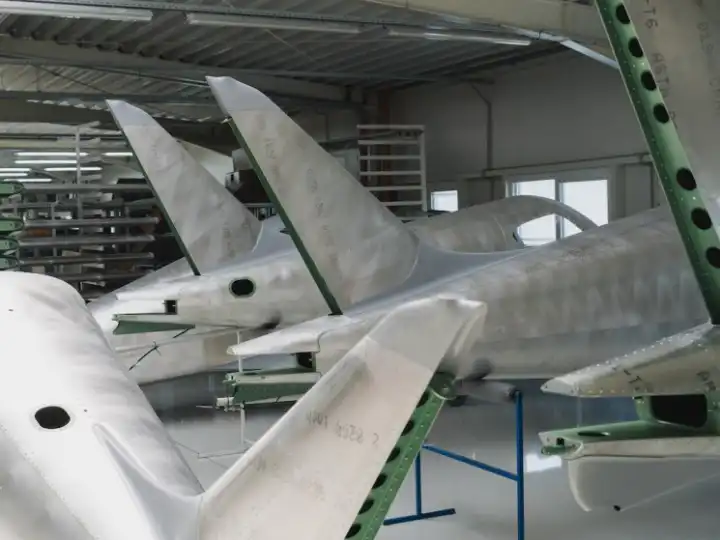 Business
Bristell Aircraft’s smooth ride from passion project to global player
About 15 years ago, Czech aircraft designer Milan Bristela saw a significant jump in the maximum speed at which small planes could travel. “But when I saw the pilots getting out of these aircraft, they would be complaining about back pain,” he says. “We realised that there was no plane on the market that was providing a speedyandcomfortable ride. So we decided to focus on the ergonomics and spaciousness of the cockpit to make people feel more relaxed and safe.”Leaving his corporate job in 2007, Milan teamed up with his son, Martin, and went on to found their own business, Bristell, to address this gap in the market. “At first, the idea was really just to build a few aeroplanes a year,” Martin tells Monocle. “We thought that it would basically be about playing with this idea – and that it would be our job, yes, but also our hobby.”Bristell’s hangar But what began as a passion project in a small, rented workshop space has become Bristell, one of the world’s premium lightweight aircraft manufacturers. Employing about 140 engineers, designers and mechanics, it now has an impressive production floor in a 10,000 sq m factory in southeastern Czechia where aircraft are built from scratch. The company produces more than 110 two-seater planes composed of lightweight aluminium per year. The aircraft pass through a complex process of welding and assembling before being fitted with engines in a cavernous hangar. The finished planes are dispatched to customers in countries from the US to Germany, for training pilots or as private aircraft for customers looking to crisscross long distances with ease. Martin Bristela, co-founder of BristellBristell’s employees are drawn from Czechia’s talent pool “Every day, when I come into work, I take a walk through the factory to see what everyone is up to,” Milan tells Monocle. “My son and I developed every plane that is being constructed here as a prototype. We know exactly how long it takes to put them together because we build all of the models first with our own hands.”Like his father, Martin is closely involved in the day-to-day running of the company. “I make my way through this place once or twice a day too,” he says. “It means we can keep our eye on the quality and make improvements as quickly as possible.”Creativity and ingenious engineering comes naturally to the duo. “I built my first tractor when I was in secondary school,” says Milan. “In communist-era Czechia, you would have to wait years to earn enough money to buy things such as a tractor but we needed them to grow food. So I decided to build one myself. It was a metre wide, two metres long and had a car engine and gearbox. It allowed me to help with farming our land.” Planes’ airframes For both father and son, keeping aviation manufacturing based in Czechia is also a matter of national pride. “Our country has a strong tradition when it comes to aircraft manufacturing and design,” says Martin. “The airfield that we operate out of is owned by aircraft manufacturer Let, which was founded just before the Second World War. About 40km away, we have Zlin, which is famous around the world for how well its planes perform in aerobatic competitions.” “Our mentality is all about creativity,” Milan says of his countrymen and women. “It allows us to develop new things quickly.” Want more stories like these in your inbox?Sign up to Monocle’s email newsletters to stay on top of news and opinion, plus the latest from the magazine, radio, film and shop.
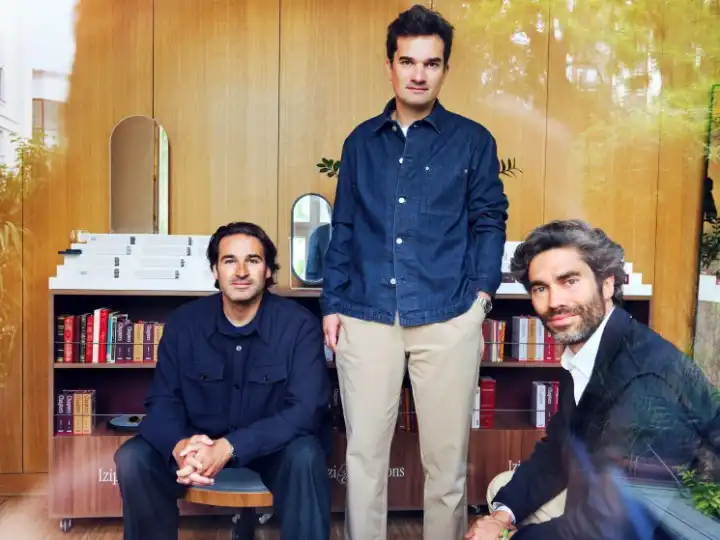 Business
Innovative entrepreneurs Ari S Heckman and Charles Brun bring fresh visions to hospitality and eyewear markets
1.Ari S HeckmanAshWhile most US hospitality brands would be looking for big-city locations, Ash is taking a different path, opening in North American cities overlooked by larger companies. The four properties (a fifth opens this summer in Richmond, Virginia) are the work of Ari S Heckman. Part architect and part interior designer, he is also a property developer, furniture buyer and hotelier. He runs a creative studio in New York – a city where, pointedly, he doesn’t run a hotel.Heckman seeks out what he calls “underdog” cities with overlooked building stock. In 2014, Ash’s first hotel, The Dean, opened in a former brothel in Providence, Rhode Island’s state capital. (It was renamed The Neptune in May 2025.) The Siren in Detroit resides in a 13-storey Italianate Renaissance-style skyscraper, which Ash restored to its 1920s period glory (when the city, perhaps not quite uniquely, was known as “the Paris of the Midwest”). Hotel Ulysses embraces Baltimore’s Gilded Age stateliness with a touch of camp, says Heckman, in homage to hometown filmmaker John Waters.Ash’s shops sell vintage ashtrays, pyjamas and umbrellas, as well as a selection of custom furniture and bath products. Meanwhile, Ash Staging outfits homes for sale or rent in the hotter New York and Los Angeles property markets. Monocle sat down with Heckman to find out more.What drew you to the hotel business?Vibrant cities always have at least one great hotel. They become a living room or embassy for their city – they’re more than just a place for lodging. People used to go to hotels just to send a telegram. I lamented that I grew up in the era of postwar suburbanisation. I was mystified that we had vibrant, walkable urban environments all over the country – not just in New York – and hollowed them out. I found that scandalous and depressing. But I came of age during the first wave of urban revitalisation, which has been an animating force for my career. The prospect of participating in the comeback of the American city by being a hotelier excited me.Your hotels have a cinematic quality. Was that intentional?I want a guest to walk through the front doors and feel an all-encompassing attention to detail. Our scent is filtering through the air; the playlist matches the time of day. Every detail of the interior, from the furniture to the wall finishes, feels super keyed into the building that you’re standing in. The lighting is just so. Those attributes create this sense of fantasy and escapism, which is our value proposition. Obviously, it’s a priority that everyone gets a good night’s sleep but it should feel as though you’re going on a vacation within a vacation or on a trip within your business trip. You’re on set and living in this immersive world. I want to build multifaceted snow globes that someone can inhabit when they visit us.Any favourite designers or furniture makers for your interiors?Everything is custom or vintage. I love acquiring found objects and antiques, so we’re constantly shopping around the world. At our properties you can’t just identify where something came from off the shelf, other than maybe the plumbing fixtures – and we sometimes custom-design even those. For a hotel, that’s a maniacal approach. It’s why the projects take so long. Often something is particular to a hotel and it will never be made again.Why underdog cities?Global cities have become like expensive luxury goods. Creators and coolness have been pushed out. Underdog cities have become the places where culture is being made and nightlife is happening. Opening a hotel in Baltimore or Detroit – I like the idea of changing people’s perception and creating a sense of discovery. Then we become a partial catalyst for other new openings around us. I’m so attracted to cities because they have this unique kinetic energy: activity becomes contagious, like a flywheel effect. That’s harder in a suburb.So no Ash country retreat?Never say never. We are urban-focused but I am interested in other types and styles of hospitality. I would love to do an old motel project. We’re also looking at international growth and expansion to Europe and Latin America. Europe has some fascinating markets and gateway cities such as Genoa and Naples. Even Rome. We model our approach on European hospitality. We’re definitely looking beyond just underdog cities. I like underdog buildings and neighbourhoods too – places where you’re reimagining or doing something unexpected. The definition is becoming more elastic as we mature but the ethos is the same.ash.world2.Charles BrunIzipizi“It’s a friendship story,” says Charles Brun, who co-founded French eyewear brand Izipizi in 2010 with former schoolmates Xavier Aguera and Quentin Couturier. “It’s also a family story.” The trio, who grew up together in Lyon, drew inspiration from their stylish mothers, who lamented the lack of off-the-peg but well-designed spectacles available at petrol stations and pharmacies. “Our idea at the time was to design and create cool reading glasses,” says Brun.Now, 15 years later, the brand is setting its sights on further expansion into the US market. “We love working out of here,” says Brun as he whizzes Monocle through Izipizi’s New York office. It’s not quite as big and impressive as Izipizi House – the company’s HQ in Paris, which has a sunny courtyard – but it’s a nice space for the US arm, which has a team of eight employees. Brun used to travel frequently between France and the US but since appointing Jonathan Crespo – formerly global senior director at Oliver Peoples – as Izipizi’s North America CEO in 2024, he now visits just once a month.Izipizi has a warehouse outside Chicago and the sunnies and specs are now stocked in more than 600 shops in the US, with more partnerships on the way (including with Goop). The brand is also testing the waters with Amazon, which will stock a core collection for a six-month trial. It’s more mass-market than usual for Izipizi, which has mostly leaned towards niche, independent stockists so far – but Brun believes that if you want to bring a European brand into the US market, you have to adapt. “We realised that everybody buys things on Amazon, including our customers,” he says.This is all part of the plan to improve Izipizi’s footprint. “We believe that the US should be our biggest market,” says Brun. Approximately 75 per cent of the brand’s sales are concentrated in Europe but America is the brand’s largest market outside the continent. The team is meeting brokers and agents in New York to scout out locations for potential retail spaces. (Los Angeles and Miami are expected to follow.)When the friends first launched the brand, they favoured selective distribution. “We wanted to be in the best shops around the world,” says Brun. The first major retail breakthrough came when Colette, the iconic Parisian concept shop founded by Colette Roussaux, agreed to stock their wares. “Colette understood the need for stylish options,” he says. The resulting exposure helped them to stake out space in the market. “During fashion week, tastemakers and buyers from across the globe would visit to see what products were featured,” says Brun.Izipizi expanded into other Parisian retailers including Merci and Le Bon Marché. It secured spots in London in department stores such as Harrods and Selfridges, as well as in Asia, which now represents about 10 per cent of the brand’s global turnover. South Korea and Japan are major markets. When it launched a collaboration with New York-based Engineered Garments in Tokyo, the line sold out in three days. But Izipizi turned down many proposals from larger chains. “We didn’t want to damage the brand,” says Brun. “We were in the mindset of building it step by step and making sure that we had the best shops.”What sets the company apart is that it offers sophistication while keeping products affordable, with an average pair costing about €50 or €60. The brand has also remained relevant by offering new riffs on classic designs, as well as dropping fresh products and collections. One big bet is a range developed with a Swiss researcher for those who struggle to fall asleep. The glasses block blue light, aiding the brain’s natural melatonin levels and helping people to doze off. Izipizi tested them on 300 insomniacs over the course of three months. “Eighty per cent of them told us that they loved it,” says Brun.Another focus for the brand is sustainability. It has cut the carbon emissions of producing its glasses nearly in half since 2019, becoming B-Corp certified in 2023. By the end of 2025, the company is aiming for all of its eyewear to be made from bio-based materials. For the past 12 years, it has worked with a family-owned supplier in Taiwan. “We chose it because of its values,” says Brun, who sees this as one of the brand’s best decisions – not least because of the tariffs that the US has imposed on countries including China. “Our philosophy is not to overreact,” says Brun. “Step back, observe and take time before making a decision.”Expansion is crucial for Izipizi but so is staying true to its principles. Despite being available in 90 countries and more than 7,500 shops, the brand is trying to preserve the close-knit, family-like atmosphere that fuelled its launch 15 years ago. “It has been a wonderful adventure and we want it to continue,” says Brun. He believes that a successful company is built on a strong team. “Without partners, I would be nothing. Izipizi wouldn’t be ‘easy peasy’.”izipizi.com
 Business
Barking up the right tree: Inside Japan’s billion-Yen luxury pet lifestyle boom
It’s a sunny April morning in the Japanese capital and the halls of Tokyo Big Sight, the city’s waterfront convention centre, are ringing with a cacophony of barks and yelps. This is Interpets Asia Pacific, Japan’s top pet-products trade show, and the 2025 edition is bigger than ever. Over four days, some 980 exhibitors (including 236 from overseas) and almost 78,000 visitors – industry players, as well as pet owners and their pooches – will pass through the centre to see the latest pet-care innovations. Food, fashion, furniture, hotels and wellness are just some of the sectors on show. The Lion Pet seminar on toothbrushing for dogs is standing room only, there’s a bun fight for chihuahua frocks at canine fashion brand Moncheri and, in the grooming area, toy poodles are being snipped, teased and coiffed in a competition.Loaded pet cartsJapan’s pet-industry numbers are impressive: the country’s pet-product market was estimated to be worth ¥1.9trn (€11.6bn) last year, up 21 per cent from 2019. Pet food accounts for 38 per cent of all sales, while pet supplies rake in 17 per cent. As demographic shifts take their toll, there are now more pets than children in Japan – 15.9 million pets compared to about 14 million people under the age of 15 in 2024 – and even though the number of pets is slightly in decline, the amount of money spent on pet care has been growing every year since the pandemic.The sheer number of exhibitors, particularly in the luxury sector, attests to the sector’s breadth and depth. Between the organic meals, herbal fur packs and full-body hair-drying machines, it’s clear that Japan’s pet world has moved into the “lifestyle” sector. Tavo is showing the latest car seats for dogs and Grand Motor has a full mise en scène for a camper van adapted for pet use, complete with fans, water and beds. OGK Giken is a favourite for its stylish over-the-shoulder pet carriers, while Japanese cycle brand Maruishi is drawing attention for its brown-and-green Pet Porter electric bike with pet-friendly front basket.Pet food is an important sector, encompassing dog-friendly dashi stock, deli dishes and fluffy birthday cakes. Clothes are everywhere too. Tombow, best known in Japan as a school-and-office stationery brand, is showing a collection of climate-sensitive dog jackets and pet harnesses to help hoist ageing dogs along on their daily stroll. Mimimerry is displaying a selection of lace and satin crinoline dresses with ¥50,000 (€307) price tags and names such as Miracle Echelle. Visitors can find everything from Birkin-style dog bags to embroidered bomber jackets for pets.Ready for her close-upWares of dog-clothing brand VivianaCompanies from the wider region are also making their debut. Heaven Yang is the business manager of Guangzhou brand DJJ Dog Shoes, which sells tiny trainers for small dogs, while Velver from Hong Kong makes gold necklaces using the nose prints of pets. “China is upcoming and growing – but we see growth potential for dog shoes in Japan too,” says Yang. “It’s an underdeveloped market.” Meanwhile, Lee Seung Jae, the CEO of Pengineer, is introducing the Abuba, South Korea’s bestselling dog-carrier backpack, to Japan. The company also produces premium dog goggles, which promise safety, comfort and eye protection from dazzling sunlight.Over at Airbuggy – whose ubiquitous state-of-the-art pet carts ferry Japanese dogs around town in enviable splendour – long queues are already forming. The scale of the stand reinforces the brand’s dominance. “We wanted to broaden awareness of the pet-stroller market,” says Airbuggy’s Yoko Shimada. “With more than 150,000 Airbuggy pet-cart users, we also wanted to take the opportunity to provide free maintenance stations for our customers and show them our selection of accessories.”In the basketAs families shrink, dogs are increasingly lavished with attention as though they were beloved offspring. “We are seeing a growing desire for unique, customised products,” says Shimada. “People want to create their own one-of-a-kind stroller where they choose the colours of the frame, carrycot, handle and drink holder, as well as adding studs and Swarovski decorations.”Labradors are trying out Airbuggy’s large Air-Cruiser and there’s a long wait for the photo booth. Ageing is a big topic at the event, with owners seeking ways to extend the life of their canine companions. “It has been more than a decade since dog ownership peaked and many of those pets are getting on,” says Shimada. “We anticipate further growth, especially in sectors such as senior pet-care services and insurance. We also expect a rising demand for products and services tailored to specific categories, such as extra-large or smaller breeds. Internationally, we have begun to expand into key markets including the United States, Asia and Europe. In Europe, we have set up a stock point in the Netherlands and, from June, we will launch e-commerce to serve the broader EU market.”Airbuggy is just one of a number of companies that have adapted human products to meet the demand for pet equivalents. Nappy brand Unicharm is storming the market with its animal nappies – pet-care sales at the company accounted for ¥139bn (€853m) in 2023 (1.7 times greater than 2018), amounting to 15 per cent of total sales.Booth of custom merchandise company Pet Dot ShopLet’s get this show on the roadToothpaste giant Lion is another crossover success story. “People want to live with their dogs as long as possible, so there’s interest in health-related products – particularly, in our case, dental-care items,” says Lion Pet’s Akiko Ebihara. “We’re seeing growing attention being paid to dental brushes with ultra-fine bristles that can be selected according to the dog’s mouth size. We also receive a lot of inquiries not only about the products but also about how to establish toothbrushing as a comfortable, lasting habit, especially when dogs are reluctant.”China’s increasingly affluent and dog-loving middle class is inevitably a big focus of attention. “Overseas, we are currently focused on Asia, particularly China, where we aim to contribute to the development of healthy habits for pets through our strength in oral-healthcare products,” says Ebihara. “In the future, we plan to extend our presence to other countries where many families have pets.”Three wheels good…… four wheels better?This year also sees the debut of two new zones at Interpets: PetTech and Pet Disaster Preparedness. Vets are being coached in the importance of a business continuity plan in case of disasters, while pet owners are trying out a simulated evacuation scenario and being introduced to the burgeoning industry in preserved pet foods, emergency pet supplies and nursing-care products for injured animals.Pet technology is likely to dominate the industry in coming years with GPS tracking, cameras, automatic feeders, smart toys and an array of online services and AI products. Panasonic is showing Ziaino, an air purifier designed to remove pet smells, while house builder Hebel Haus has spotted a niche in the market and is promoting its pet-centric developments.Every day at Interpets, there are talks on business, healthcare and longevity. The Ministry of Agriculture, Forestry and Fisheries discusses pet-food safety laws and there are multiple awards, including one for long-lived dogs, cats and their families.Where Japan leads, others follow and success here points to growth around the region. “The focus on pet wellness and advances in related technologies mean the pet market in Japan will evolve and diversify,” says Ebihara. “There’s a growing sense of pets as ‘family’.”This article originally appeared in the Opportunity Edition newspaper 2025, created in collaboration with UBS for their Asian Investment Conference in Hong Kong
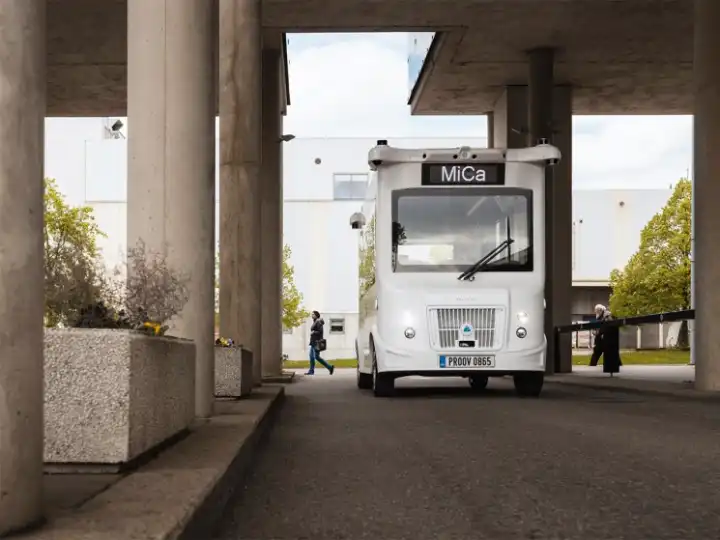 Business
How driverless taxis and remote-controlled cars have shifted into Estonia’s fast lane
Auve Tech: Autonomous last-mile shuttles“These shuttles are essential for getting more people to use public transport,” says Silver Kalve, Auve Tech’s vice president of business development. The firm’s MiCa 2.0 shuttle – a fully electric, low-speed vehicle – eliminates the need for a driver. The cars use lidar (laser-based range detection) and camera fusion combined with AI to identify objects and predict where they will move next. The firm itself has plans to make moves globally, and the fleet is now operating on four continents and road legal in 15 countries. “Estonia has an innovation-driven mindset, along with a very strong digital society,” Kalve tells Monocle. “Autonomous vehicles were allowed on our roads as early as 2017.”Is that MiCa or yours? Auve Tech’s MiCa shuttle is ready to roll(Image: Courtesy of Auve Tech)Bolt: Driverless taxisOperating in 51 countries and with a €2bn annual revenue last year, ride-hailing company Bolt is planning to integrate autonomous vehicles into its platform by 2026. “We see long-term potential,” says Jevgeni Kabanov, Bolt’s president and head of their autonomous vehicle workstream. “[Though] still in their infancy, autonomous vehicles are going to transform how people live and move around cities.” Kabanov is convinced that Estonia’s digital-first attitude makes it a “natural hub for innovation.” But he is also mindful of how the shift to driverless cars might affect Bolt’s drivers. “They’re the backbone of our platform and power local economies.”Elmo: For a car that’s roadworthy and remote-controlledThe firm behind the world’s first road-legal tele-driving technology, achieved a breakthrough in 2024 with its AI-powered SOS braking system. Remote-driven vehicles can now operate without a safety driver at higher speeds and no area restrictions. Launched in Estonia and Finland, Elmo’s technology is now operating on public roads in cities including Paris, Amsterdam and Los Angeles. A practical alternative to fully autonomous vehicles with lower hardware and deployment costs. Read next: Why small electric vehicles are making a big impression in Cuba
 Business
A professional poker player on how to save face and think fast
The way that poker is played today is light years from how it was done in the days of the Wild West and gambling in saloons. I have had a lot of success playing cards but 99 per cent of the decisions that I make are detailed mental calculations based on game theory – not the result of quick wits and intuition. Whether at the poker table or the negotiating table, if you fly by the seat of your pants, you will get crushed.I learned early on that in poker you need to bluff. A lot. Bluffing is a crucial strategy, as much in cards as in negotiations. Studying game theory was the key to learning how to do it well. It’s how I figured out the best way to play certain combinations of cards to get results.Once I had grasped the theory, I realised that it wasn’t really “bluffing” as I’d thought of it at all. I was only ever making the correct plays in response to the evolving situation on the table. That discovery was very liberating for me. There’s nothing wrong with getting caught out with a bluff either. It’s all part of the game.Illustration: Peter ZhaoMy doctorate was about the art of decision-making in moments of uncertainty and I worked with collaborators on Wall Street to better understand the pressures of making complex decisions in high-risk conditions in financial markets. I came to understand that high-stakes poker offers a good metaphor for life: it teaches you how to take calculated risks in everyday settings, how to think through probabilities and work out the value of those risks correctly. Above all, poker also trains you in how to deal with emotions, which is crucial if you want to be a winning player. It’s the perfect learning environment because, unlike in everyday life, you get immediate feedback on your decisions.The lessons of poker can apply far beyond the gaming tables, whether it’s about something innocuous such as choosing which restaurant to go to for dinner or about a big, consequential life decision regarding your health. At the core, it’s all about what kinds of risks are worth taking and which aren’t. I would never fly in a helicopter, for instance, or ride a motorcycle: I have poker to thank for that because examining probabilities has now become second nature to me.The poker skill set is helpful in trying to manage financial risk because you become better at making and executing decisions in the moment. You have to hone your ability to recognise when you’re “on tilt”, as we poker players say, which is another way of describing when you start playing poorly because your emotions have got the better of you. This is when your decision-making suffers.These skills are more crucial than ever. To navigate risky decision-making in the current political and economic climate, I would suggest doing as much work as you can ahead of time: mock up a system in which you write down all of the possible factors that you can think of that might shape the outcome of a decision. Don’t just do this exercise mentally: put pen to paper and run through the situation in a notebook because – take it from me – otherwise you will lie to yourself. Assign probabilities and certainty scores as best and as honestly as you can. Have an open, accurate framework that you can then go back to after you make the decision and evaluate yourself.How did you do? Did you consider all of the right factors and weight them correctly? Were those probabilities accurate? If not, how can you adjust, adapt and do better in future? My approach might sound overly cautious but it has proved successful for me. You don’t need a poker player to tell you that nothing in life is ever totally certain. So you need to hedge some of the time. And my most important lesson learned from years of personal thought, academic research and professional poker? Never, ever bet the house.Konnikova is a professional poker player and the author of ‘The Biggest Bluff: How I Learned to Pay Attention, Master Myself, and Win’, published by Penguin Press.As told to Gregory Scruggs.This article originally appeared in the Opportunity Edition newspaper 2025, created in collaboration with UBS for its Asian Investment Conference in Hong Kong.
 Business
How a pair of socks helped Japan’s FamilyMart convenience store become a fashion powerhouse
While Japan’s more than 50,000 convenience stores –konbini– are an indispensable part of daily life, they’ve tended to stay away from the realm of fashion, beyond offering clean underwear or perhaps an emergency shirt and tie. That all changed in 2021 when FamilyMart – operator of nearly 16,300 convenience stores in Japan – teamed up with the Tokyo fashion designer Hiromichi Ochiai to launch its own intuitively named label, Convenience Wear. The range debuted to instant success. Its unisex crew socks – white with stripes in FamilyMart’s signature green and blue – flew off the shelves. Worn by everyone from school children to the fashion set, more than 1.4 million pairs were sold in a year and the line won a coveted Good Design Award. Convenience stores had never been seen as cool and the new brand’s desirability was a shock to the system. Fashion designer Hiromichi Ochiai(Image: Steffan Dotter)From the outset, Ochiai intended Convenience Wear to be a simple proposition, in keeping with the universality of the convenience store. The decision to start with socks, the most basic staple, was easy. “In Japan,konbinirepresent this feeling of cleanliness, stability and safety,” Ochiai tells Monocle. “So, I wanted to express this very clean image and the sock seemed to be the ideal vehicle. Plus, everyone knows the brand’s iconic colours.” The socks emerged as the hero product: cheap but well made with a thick pile, they’re also antibacterial and deodorising.Ochiai, who has had his own fashion brand, Facetasm, since 2007, also had a clear vision of how he wanted Convenience Wear to appear on the shelves. “In the context of the convenience store, we knew that the design would have to be seen and understood immediately by people of all ages, occupations and nationalities,” he says. Ochiai worked with graphic designer Takahiro Yasuda and his collective, Cekai, to come up with a bold style that stands out among the hundreds of other products. “I requested that the information should be easy to understand and readable in katakana, kanji and English.” The tough, clear-plastic packaging is designed to be reused. “Reusability can be difficult with mass production,” he says. “But I thought of a style that could be opened and resealed.” The packaging also protects the products from wear and tear. “Between the 24-hour-a-day lighting and the dust, akonbiniis a very difficult environment for selling clothes.” Initially the range was limited to the socks and a few essentials – men’s undershirts, women’s tank tops, eco-bags and small hand towels – but the simplicity of the line’s design and purpose has made it easy to expand. You might find sweatshirts, stationery, handkerchiefs, packable nylon jackets and long-sleeved cotton T-shirts.FamilyMart in Tokyo(Image: Sean Pavone/Alamy)Ochiai’s own status in the fashion world has made it easier to find collaborations too. The oversized T-shirts made with Akio Hasegawa, a longtime Monocle stylist, and his brand, Cahlumn, sold out in no time. At the Fuji Rock Festival, staff wore Convenience Wear T-shirts and there were special-edition socks and hand towels. Convenience Wear’s hand towels are made in Imabari, the towel-making centre of Japan. “We’re not particularly focused on ‘made in Japan’,” Ochiai says. “But for the way we wanted to make the pieces and the ability to introduce new colours, Imabari just made sense – they could make high-quality pieces quickly.” Ochiai, who studied at Bunka Fashion College, is bringing his fashion sensibility to the less-than-fashionable shelves of the convenience store. One striking thing about the brand is its unusual colour palette. The basic blacks, whites and greys are all there but they are punctuated with sophisticated pops of colour that call for the confidence of a seasoned designer. “We use the brand to communicate,” says Ochiai. “When it’s winter, we might use warmer colours to indicate that spring is on its way. With Fuji Rock Festival, we used optimistic neon colours to reflect that it’s a friendly, family event.” Ochiai’s own brand, Facetasm, is nothing like Convenience Wear – it’s far more directional and beloved of fashion followers. But he knew what this project called for. “Boys in Japan have always looked at magazines and shops for ideas and trends; I think that the convenience store could be a similar tool,” he says. “We’re trying to build a newkonbiniculture.” Convenience Wear also reflects Japan’s particular style mix – an inimitable blend of high and low. FamilyMart made another unexpected move earlier this year when it announced that streetwear supremo Nigo – of A Bathing Ape and now Human Made fame – was now on board as the wider company’s creative director. Nigo isn’t involved in the Convenience Wear project but his arrival points to an awareness that thekonbinioccupies a unique space in Japanese society; the ideal place to catch the attention of the broadest audience possible. Ochiai says that it’s the democratic nature of the convenience store that makes his concept work. “FamilyMart talks about ‘loving yourself’, buying something for yourself in your own time and at your leisure.”Given the number and ubiquity of FamilyMarts around Japan – something with which no fast-fashion company could compete – the potential for Convenience Wear is huge. “We are already effectively the world’s largest clothing shop,” says Ochiai. The brand strayed into fashion territory with a one-off runway show in 2023, which prompted the creation of a prototype denim jacket. Ochiai, who oversees the creative direction of every product, would love to design trainers but he’s always careful to keep Convenience Wear on the functional side. An accessible price point is key but at a level where the quality still remains high. The next challenge could be to create a Convenience Wear flagship. But how to improve on the existing FamilyMart shops? They’re accessible to all, 24 hours a day. Ochiai keeps an open mind. “Nobody has tried to do what we’re doing in a convenience store,” he says. “It’s a new experience. I’m constantly experimenting with fresh ideas.” FamilyMart in numbers16,295Number of FamilyMart shops in Japan (8,412 overseas)1973Year of launch 15 millionDaily customers (in all shops in Japan)¥3.2trn (€19.6bn)Annual sales (fiscal year: March 2024 to February 2025)family.co.jpThis article originally appeared in the Opportunity Edition newspaper 2025, created in collaboration with UBS for its Asian Investment Conference in Hong Kong.
 Business
Interview: Native Union CEO, Igor Duc, on navigating burnout, Trump’s tariffs and moving manufacturing out of China
Native Union is the French brand that made smartphone cables and chargers a desirable design accessory – available to buy in the Apple shop – rather than freebies found in the bottom of the box. Co-founder and CEO Igor Duc built the business from Hong Kong to be close to his manufacturing partners in China. With revenues of $25m (€22m) a year, it was a winning formula until Donald Trump became president again. These are testing times for the leader of any business that makes all of its products in Asia and sells them in the US, Native Union’s largest market. Tariffs are tying Duc’s company in knots, prompting him to develop other consumer markets outside of the US and to find manufacturers in southeast Asia. “It’s a very hard moment,” says Duc, while sitting on a rock in Hong Kong looking out at the South China Sea.Monocle joins the surfer and watersports enthusiast for an early-morning paddle around the rocky coastline near his home in Clearwater Bay. As the sun shines through the clouds, the 44-year-old Parisian claims to be a little older and wiser during Trump’s second term: less prone to panic, better equipped to avoid burnout and more able to tackle stressful situations. The serial entrepreneur also hopes to solve the universal issue of technology addiction. “I want to create a new product to rebalance tech usage,” he says. “No one has made one yet. If they had, I’d be using it.”Waking up at 06.45 to answer emails on his phone, his day finishes in the same way at 23.30. “The problem of having a global business is that there is zero downtime,” says Duc, listing some of the ways that he has tried to disconnect, from using a dumbphone to locking his devices in a glass jar. For now, nature and sport are the best tonic. Duc moved to a seaside village in eastern Hong Kong 12 years ago, right before the birth of the first of his three children. Kayaks and paddleboards line the beach, while wild boars can be heard grunting in the forested hills. Technology addiction has been on Duc’s mind for the past five years. “I was extremely close to burnout,” he says. There is an obvious irony in that the businessman who has made a big success out of connecting us with technology has failed to find a way of cutting his own cord. But striking a balance between traditional and modern forms of communication strikes to the core of how Native Union began. Duc was running an export furniture brand when, largely for fun, he bought a traditional telephone handset from a market and connected it to his iPhone. He ended up starting a business to produce and sell the gadget with another entrepreneur whom he was sharing an office with. Native Union’s first product, the “MoshiMoshi” handset, sold three-million items in two years before being made obsolete by cheap copycats. Back then, the idea was to allow Blackberry and iPhone users to speak on the phone while using the screen at the same time. Now, 15 years later, Native Union is bringing back its best-selling product for the opposite reason: to allow smartphone users to focus on phone conversations and put their screens away. “The art of the conversation has been diluted,” says Duc. “When you look at the most important talks between Trump and Putin, they are still made with an ergonomic telephone. The microphone is by your mouth and you feel that you are on the phone.” “This one will be even more beautiful than the first one,” he says. Whether version two will be as popular is yet to be seen. At the moment, cables and chargers account for the largest chunk of the firm’s revenue. Magnetic powerbanks are the best-selling single product but that changes with each new launch. Native Union has already moved into bags and, next year, the brand will launch a portable light, which Duc already uses when working at night. By that point, half of all Native Union products will be made outside of China for the first time in the company’s history. Some electronic production has moved to Vietnam, while bags are made in Indonesia. It’s a de-risking strategy rather than a departure. “China is the most advanced place in the world to produce a high-quality technology product,” says Duc, who must work to Apple’s exacting standards in order to stay on the shelves of its shops. Native Union is also making an increasing number of technology-related products and small accessories for European luxury brands. Many of the big houses have come to accept that the best quality in this category is in China, even if only a few are willing to be open about it. As we get back on the water and begin paddling towards the beach, Duc explains that he has no plans to leave Hong Kong. Every few weeks, he boards the high-speed train from Hong Kong to China for a factory visit. “My manufacturing partners do a lot of innovation themselves, so being closer to them means that we are first to see their new materials and techniques.”This article originally appeared in the Opportunity Edition newspaper 2025, created in collaboration with UBS for its Asian Investment Conference in Hong Kong.
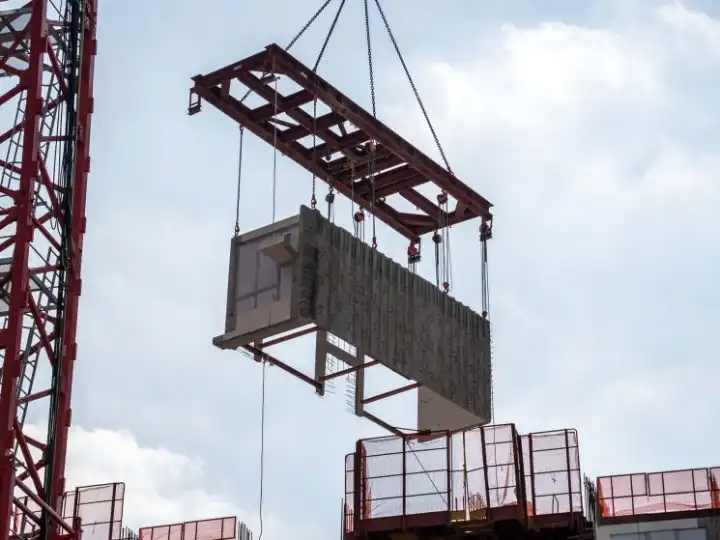 Business
The business agenda: An airborne taxi start-up and a Lego-style construction in Singapore
Urbanism: New YorkBusiness is bloomingOnce the niche fascination of native-plant obsessives, wildflower meadows are poised to go mainstream as more homeowners and landscape designers reconsider the ecological cost of traditional lawns. The trouble is that few have the patience or the time to pull it off. Enter Meadow Lab, a start-up that allows people to roll out a biodiverse native wildflower meadow just as they would a lawn.Launched this year in New York’s Hudson Valley by former Food52 chief commercial officer Claire Chambers, Meadow Lab offers two products: Wildflower Soil, a blend of northeastern native seeds mixed into high-performance soil; and Wildflower Sod, a pre-grown wildflower turf. Both are designed to speed up the notoriously finicky multi-year process of establishing a meadow. “There’s a lawn-conversion conversation happening everywhere,” says Chambers. “But most people who try to start a meadow end up with a horror story.”Her version eliminates early failure points, appealing to designers, developers and homeowners who want ecological impact and instant visual feedback. “It’s a gamechanger,” she says. “You’ve asked for a meadow and so you actually get one.”After a long career that has seen her running ecommerce at Walmart, Chambers is leaning into the back-to-the-land lifestyle and plans to have a network of company-owned farms across the US. “This should feel like a generational business,” she says. “Something built to last.”Aviation: USAFlights of fancyAdam GoldsteinCEO and founder, Archer AviationThe hype around airborne taxis has long outpaced the hardware. But Archer Aviation, a Silicon Valley Evtol (electric vertical take-off and landing) start-up, believes that it’s primed for flight. The plan is for its four-seater, Midnight, to launch in the UAE in December. It aims to eventually run 20-minute hops from Dubai to Abu Dhabi.Flying taxis have been in the works for years but haven’t shown up. Is Archer different?The technology’s ready now. Tesla led a revolution in battery tech that’s made its way into aviation. Governments are working with industry to shape aircraft standards and real capital is coming in.Why the UAE and not the US?From Abu Dhabi Investment Office, Mubdala Investment Company and Etihad Airways to the regulatory authorities, everyone in the UAE said, “We want to make this happen.” It’s is more agile and ambitious. And it’s our gateway to the Gulf, India and Asia.The ‘Midnight’ seats four. Will it work as public transport?We’re looking at $200 (€175) for a 20-minute flight but as we scale that number comes down. We want the price to be closer to that of an Uber Black.What about military use?We’re building an autonomous hybrid Evtol aircraft that can carry significant payloads for surveillance, logistics and tactical mobility together with [US defence start-up] Anduril.Construction: SingaporeStacking upPrefabricated homes have struggled to shake off a reputation for drab uniformity. But Singapore’s developers and designers are showing how prefab can be pretty fabulous – and premium. The city’s skyline now has several silhouettes that are standing due to PPVC, a construction method akin to that of Lego houses: modules are manufactured and finished in a factory before being fused together to make a high-rise.Leading the way is homegrown studio ADDP Architects, which has designed several skyscrapers using this technique. Its 56-storey condominium complex, Avenue South Residence, features some of the world’s tallest prefab buildings.Hang Ping Chin, partner at ADDP, wants to challenge the idea that prefabrication results in cookie-cutter developments. “Building modularly doesn’t mean standardisation,” she says. “In fact, PPVC enables one to experiment freely and test different façades, treatments and high-quality finishes.” The firm’s latest addition to Singapore’s skyline is The Orie, currently under construction, which features eye-catching origami-like folds in its design. It’s pretty far removed from being a mere stack of little boxes.